
African Wild Dog Facts
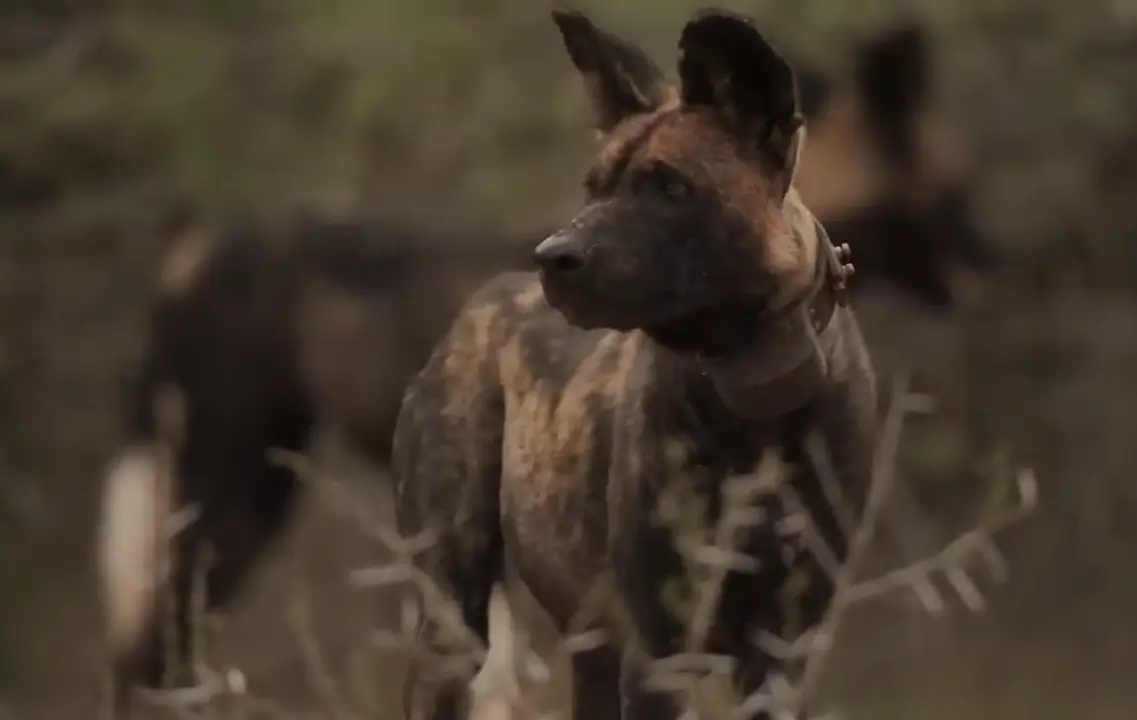
The African wild dog closes roughly 80% of its hunts. Lions manage about 25%. That one number tells you more about this animal than any textbook description, and it is only the beginning of what makes Lycaon pictus strange.
This page collects the verified african wild dog facts worth knowing: the biology, the hunting, the sneeze vote, the population figures that every source seems to report differently, and the myths that refuse to die. Every number here is sourced from published research or the IUCN Red List assessment, and where the science disagrees, this page says so rather than picking whichever figure sounds best.
African Wild Dog Facts at a Glance
| Field | Data |
| Scientific name | Lycaon pictus |
| Common names | Painted dog, painted wolf, Cape hunting dog |
| Family | Canidae |
| Genus | Lycaon (monotypic — no other living species) |
| Height at shoulder | 60–75 cm |
| Weight | 18–34 kg |
| Top speed | ~70 km/h (44 mph) |
| Sustained speed | ~50 km/h over several kilometres |
| Hunt success rate | ~80% |
| Pack size | 6–20 typical, 40+ recorded |
| Litter size | 6–21 pups (largest of any canid) |
| Toes per foot | 4 (unique among canids) |
| Lifespan (wild) | 10–12 years |
| Lifespan (captivity) | Up to 17 years |
| Diet | Strict carnivore |
| IUCN status | Endangered (listed 1990) |
| Population | ~6,600 adults and yearlings |
| Mature breeding adults | ~1,400 |
Lycaon Pictus Facts: The Name and the Family Tree
What “Painted Wolf” Actually Means
Lycaon pictus is Greek and Latin stitched together. Lycaon comes from the Greek for wolf, pictus from the Latin for painted. Painted wolf. It is one of the rare cases where a scientific name is both accurate and beautiful, and it refers to the animal’s blotched, irregular coat.
You will see the same animal called the painted dog, the Cape hunting dog, and the African hunting dog. “Painted wolf” has gained ground over the last decade, helped considerably by the BBC series Dynasties. That shift is deliberate on the part of conservation groups. The word “wild” in “wild dog” reads as vermin to a lot of people, and a species that needs public sympathy cannot afford the association.
Are African Wild Dogs Actually Dogs?
Yes and no, and the distinction matters.
They belong to Canidae, the dog family, alongside wolves, foxes, jackals and your Labrador. But they sit in their own genus, Lycaon, with no other living species in it. The lineage split from the ancestors of wolves and domestic dogs roughly 1.7 million years ago, though genome studies place the date anywhere from about 1.7 to 3 million years back, depending on the method used.
The practical upshot: an African wild dog cannot interbreed with a domestic dog. It cannot be tamed. It cannot be kept. Its entire biology is built around a functioning pack, and outside one, it does not work.
They Are Not Related to Hyenas
This is the single most common error about the species. Hyenas belong to Hyaenidae and are more closely related to cats than to any dog. The resemblance — patchy coat, big ears, pack living, scavenging reputation — is convergent evolution, not shared ancestry. Two animals solving the same problem in the same environment and arriving at similar answers.
10 Facts About African Wild Dogs Most People Have Never Heard
- They vote by sneezing. Before a hunt, the pack holds a rally — greeting, trotting shoulder to shoulder, tails up. During it, individuals sneeze, and the sneezes function as votes. Documented by Walker et al. in Proceedings of the Royal Society B in 2017.
- The vote is weighted. When a dominant dog initiated the rally, roughly three sneezes reached quorum. When a low-ranking dog started it, the pack needed around ten. Influence is unequal, but everybody gets a say.
- No two coats are the same. The black, yellow and white blotching is unique to each animal. Researchers identify individuals across years from photographs alone, the way we use fingerprints.
- They have four toes. Every other canid has five on the front feet, including a dewclaw. Wild dogs have four on each foot, no dewclaw at all — less weight, longer stride, better endurance.
- They feed the sick and injured. A pack member with a broken leg keeps eating, fed by regurgitation for weeks until it recovers. For a solitary predator, that injury is a death sentence. Inside a pack, it often isn’t.
- Pups eat first. At most predator kills, dominant adults feed first. At a wild dog kill, the pups get priority, and the adults wait. There is no clear parallel among Africa’s other large carnivores.
- Their bite is disproportionately powerful. The African wild dog has a bite force quotient of 142 — the highest recorded of any living carnivoran, once you adjust for body mass. A 25 kg animal biting above its weight class.
- The white tail tip is a signal. During chases through long grass, pack members keep formation by tracking the white tail tips moving ahead of them.
- Females leave, males stay. In most mammals, the young males disperse. Here it inverts: young females leave to found or join other packs, while males usually stay with their birth pack for life.
- They roll in elephant dung. The accepted explanation is scent masking before a hunt, cutting how easily prey can smell them coming.
Interesting Facts About African Wild Dogs: The Body
The Coat
The blotching is irregular, asymmetrical, and different on every animal — even littermates. It also differs left to right. This is why field research on this species leans so heavily on photographic ID.
The Ears
Large, round, and oversized for the skull. They do two jobs. They pick up pack contact calls and prey movement across long distances, and they dump heat through a dense network of surface blood vessels. In an animal built to run for kilometres in African daytime heat, the second job may matter more than the first.
The Legs and Feet
Long, lean, lightly built. Nothing about an African wild dog resembles the stocky frame of a wolf. The four-toed foot is the signature: the dewclaw is gone entirely, which is unique among canids and consistent with a body optimised for one thing — sustained running.
Size
Adults stand 60 to 75 cm at the shoulder and weigh 18 to 34 kg. Females run about 3 to 7% lighter than males on average, which is a much smaller sex difference than you see in lions.
African Wild Dog Hunting Facts
The 80% Success Rate
The figure gets quoted constantly, and it deserves context. Reported success rates range from about 60% to over 90%, depending on the study, the prey, and the terrain. Around 80% is a reasonable central estimate, and it is the highest among large African predators by a wide margin.
| Predator | Hunt success rate |
| African wild dog | ~80% |
| Cheetah | ~55% |
| Leopard | ~38% |
| Spotted hyena | ~30% |
| Lion | ~25% |
It Is Endurance, Not Ambush
A cheetah hunt is an explosion — 400 metres, then it’s over. A wild dog hunt is an exhaustion problem. The pack runs at 50 to 60 km/h and maintains that pace for kilometres, rotating fresh runners to the front while tired ones drop back. The impala or kudu doesn’t get caught so much as it runs out of fuel.
That rotation is the whole trick. No lion, leopard or hyena can hold 50 km/h over five kilometres. The wild dog doesn’t need to be faster than its prey. It needs to still be running when the prey stops.
How Fast Can an African Wild Dog Run?
Top speed is about 70 km/h (44 mph), roughly greyhound pace. But top speed is the least interesting number about this animal. The sustained pace is what wins hunts.
After the Kill
The pack feeds immediately and shares without fighting. No rank-based order, no squabbling over portions. Members who stayed behind to guard the den get fed by regurgitation when the hunters return. The system keeps every animal in the pack alive, regardless of whether it could hunt that day.
Wild Dog Facts About Pack Life
A pack usually runs 6 to 20 animals. Superpacks above 40 have been recorded. At the centre is a dominant breeding pair, typically the only two that reproduce; every other adult works as a helper, hunting, guarding and feeding pups.
What is genuinely unusual is what’s missing: aggression. Wolf packs and lion prides settle rank through confrontation. Wild dogs largely don’t. Hierarchy exists, but it is held together by grooming, greeting rituals and social bonds rather than violence. For a predator this effective, they are remarkably bad at fighting each other.
Litters are enormous — 6 to 21 pups, the largest of any canid. Subordinate females are hormonally suppressed and usually do not breed, but once pups arrive, every adult in the pack becomes a caregiver.
How Many African Wild Dogs Are Left?
Roughly 6,600 adults and yearlings, of which only about 1,400 are mature breeding adults, are spread across around 660 packs in fragmented subpopulations. That is the IUCN Red List assessment, and it is the figure this page uses.
Why Every Source Gives You a Different Number
Search this question, and you will get 1,400, 3,000, 5,500, 6,600 and “fewer than 7,000” from sources that all look credible. They are not contradicting each other. They are counting different things.
- ~6,600 counts all adults and yearlings.
- ~1,400 counts only mature individuals — animals capable of breeding this season. Because a pack has one breeding pair and a crowd of non-breeding helpers, this number is far smaller, and it is the one the IUCN uses to assess extinction risk.
- The 3,000–5,500 range comes from older or more conservative surveys.
If you want the honest one-line answer: about 6,600 animals exist, but only about 1,400 of them can actually make more. That second number is why the species is Endangered.
For scale, an estimated 500,000 wild dogs roamed sub-Saharan Africa a century ago. Today’s population is around 1.3% of that.
Where They Survive
Historically, the species ranged across much of sub-Saharan Africa, in some 39 countries. Today, meaningful populations persist in about 14.
- Botswana — the Okavango Delta and Linyanti hold the largest population, roughly 700 animals, about 30% of the global total.
- Tanzania — Nyerere (formerly Selous) and Ruaha.
- Zimbabwe — Mana Pools and Hwange.
- South Africa — Kruger, Hluhluwe-iMfolozi, Madikwe.
- Zambia, Kenya, Mozambique, Namibia — smaller groups linked by corridors.
Why Are African Wild Dogs Endangered?
The IUCN listed the species as Endangered in 1990. It has remained there ever since, making it one of the longest-standing large-carnivore listings on the Red List. Only the Ethiopian wolf is in worse shape among African carnivores.
Space. A single pack needs 400 to 1,500 km² and may cover 50 km in a day. Roads, farms and settlements slice that up, and a fragmented population loses gene flow and can’t recover from local crashes.
Persecution. Farmers shot and poisoned wild dogs as vermin for most of the 20th century, largely on the belief that they take livestock. They rarely do — leopards and hyenas cause most of the losses wild dogs get blamed for.
Disease. Rabies, canine distemper, and parvovirus spread by domestic dogs can wipe out a whole pack in weeks. A distemper outbreak wiped out the entire wild dog population of Kenya’s Maasai Mara in 1991.
Lions and hyenas. Lions kill wild dogs on sight. Hyenas shadow packs, and steal kills. Where lion density is high, pup survival drops hard.
African Wild Dog Fun Facts for Kids
Here are the fun facts about African wild dogs that tend to land best with younger readers — short version, for a school report or a curious eight-year-old:
- African wild dogs are painted — every single one has a different pattern, like a fingerprint you can see from across the savanna.
- They have four toes on each foot. Your dog at home has five on its front paws.
- They sneeze to vote. If enough dogs sneeze, the pack goes hunting.
- They sound like birds, chirping and twittering to each other. The pups make a soft “hoo” call.
- They are brilliant hunters — they catch about 8 out of every 10 animals they chase. Lions only catch about 2 or 3.
- They can run as fast as a greyhound, about 44 mph.
- The puppies eat first, before any of the grown-ups. The adults wait for their turn.
- If a dog gets hurt, the pack brings it food until it gets better. They don’t leave anyone behind.
- A mum can have up to 21 puppies at once — more than any other kind of wild dog or wolf.
- There are only about 6,600 left in the whole world, which is why people work so hard to protect them.
Painted Dog Facts vs the Myths
“They’re just African hyenas.” No. Different family, not close relatives. Hyenas are closer to cats.
“They’re wolves.” Also no. Same family, but the lineages split well over a million years ago. Wolves ambush more; wild dogs run prey down. Wolves fight over rank; wild dogs mostly don’t.
“They kill livestock.” Rarely. This myth has probably killed more wild dogs than any disease.
“You could tame one.” You could not. They aren’t domesticated, they can’t interbreed with domestic dogs, and it’s illegal nearly everywhere.
“They’re dangerous to people.” There is no confirmed record of an unprovoked attack on a human in the scientific literature. Packs avoid people.
Frequently Asked Questions About African Wild Dogs
Are African wild dogs dangerous to humans?
No. There are no confirmed unprovoked attacks on people in the scientific literature. Packs are shy around humans and avoid contact. They are vastly more at risk from us than we are from them.
How many African wild dogs are left in the wild?
About 6,600 adults and yearlings, of which roughly 1,400 are mature breeding adults, across around 660 packs in fragmented subpopulations in about 14 countries.
Why are they called painted wolves?
Lycaon pictus translates as “painted wolf”. The name refers to the unique blotched coat. Conservation groups promote it because “wild dog” carries vermin associations that cost the species public support.
How fast can African wild dogs run?
About 70 km/h (44 mph) flat out. More importantly, they sustain roughly 50 km/h for several kilometres, which no other African predator can match.
Are African wild dogs related to hyenas?
No. Wild dogs are canids. Hyenas are Hyaenidae and sit closer to cats. The similarity is convergent evolution.
Can you keep an African wild dog as a pet?
No, and it’s illegal in most countries. They cannot be domesticated, and their biology depends on living inside a functioning pack.
Why do African wild dogs roll in elephant dung?
Most likely scent masking before a hunt, reducing how easily prey detects them by smell. Some researchers suggest a secondary social bonding role.
Are African wild dogs nocturnal?
No, they’re crepuscular — most active at dawn and dusk. They avoid midday heat and generally don’t hunt in full darkness, when lions are most active.