
African Wild Dog
The African wild dog is an unusually effective pack hunter, but its success rate varies sharply by habitat and by how researchers define a hunt. Older plains studies produced the famous figure of roughly 80 percent, while GPS-collar research in woodland found much lower success per individual chase. Our guide to African wild dog hunting explains the evidence in detail.
Fewer than 6,600 African wild dogs survive across all of sub-Saharan Africa today. A century ago, packs lived in about 39 countries. Now the IUCN confirms them in only 19. The IUCN Red List has classified this species as Endangered since 1990.
This guide covers everything you need to know. From the biology and hunting behavior of the painted wolf (Lycaon pictus) to pack dynamics, habitat, and the conservation work that keeps this species from vanishing, every section below draws on published research and field data.
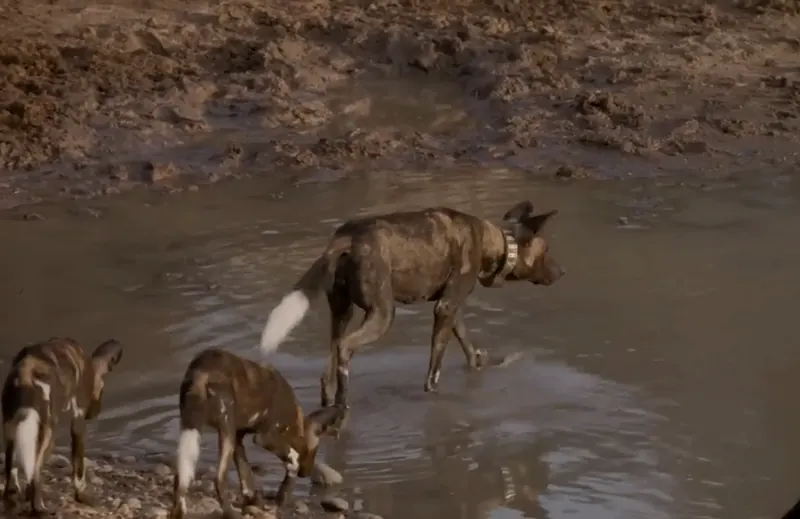
What Is the African Wild Dog?
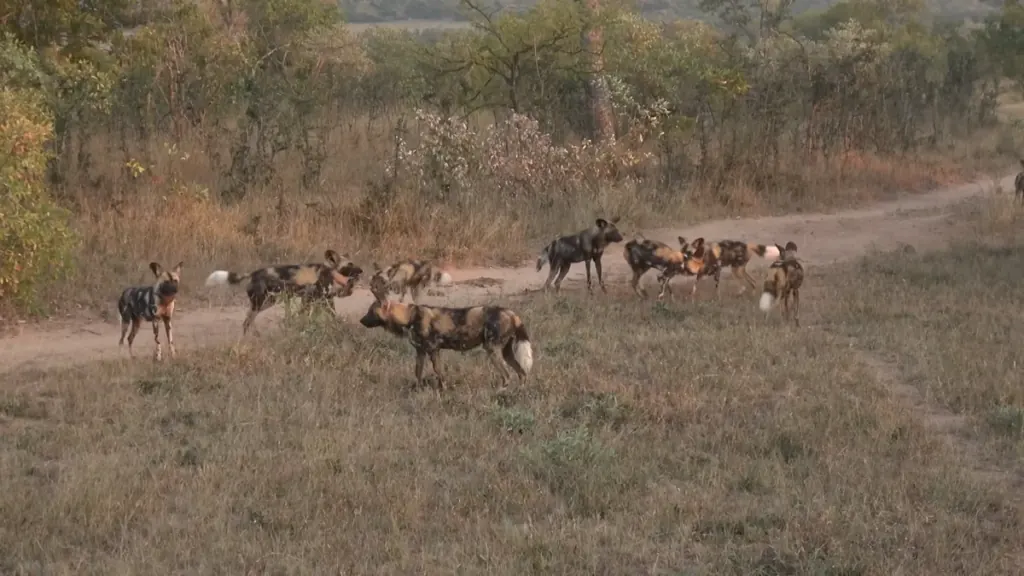
The African wild dog (Lycaon pictus) is the largest wild canid native to Africa. It belongs to its own genus, Lycaon, and has no other living relatives within that group. The evolutionary split between this species and wolves happened roughly 1.7 million years ago, according to genome studies published in Current Biology.
Its scientific name translates to “painted wolf” in a mix of Greek and Latin. You will also hear people call it the painted dog, Cape hunting dog, or African hunting dog. The name “painted wolf” has gained popularity in recent years, partly through David Attenborough’s BBC documentary series Dynasties.
One common question comes up often: are African wild dogs actually dogs? They belong to the Canidae family, which includes wolves, foxes, and domestic dogs. However, they sit in a completely separate genus. They cannot interbreed with domestic dogs. They cannot be domesticated. And despite what many people assume, they share no close connection with hyenas, which belong to a different family entirely and sit closer to cats on the evolutionary tree.
“The famous 80 percent hunting-success figure comes from particular field conditions; modern GPS studies show that success varies substantially by habitat and by what researchers count as a hunt.”
The complete case for Lycaon pictusAppearance and the Painted Coat
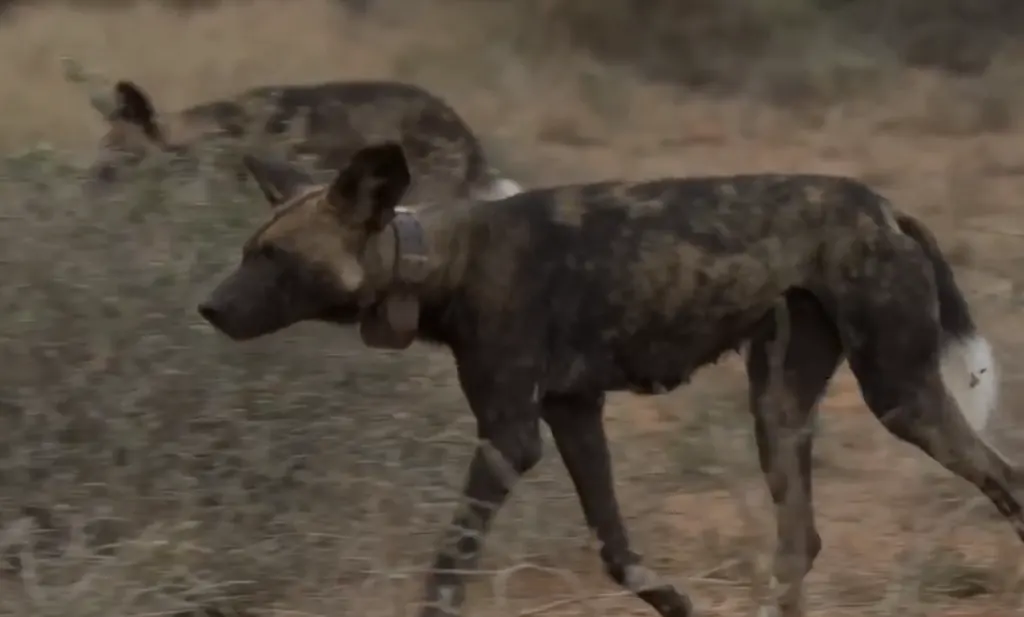
Every African wild dog carries a coat of irregular black, yellow, and white patches. No two animals share the same pattern. Researchers use these markings to identify individual animals across years, similar to how fingerprints work for humans.
Their ears stand out immediately. Large, rounded, and almost oversized for the skull, they serve two jobs. First, they pick up sounds from prey and pack members across long distances. Second, they help regulate body temperature by releasing heat through a network of blood vessels.
Then there are the feet. Every other canid species has five toes on its front paws, including a dewclaw. The African wild dog has only four toes on each foot with no dewclaw at all. This adaptation reduces drag and increases stride length, which makes them faster and more efficient over long distances.
Adults stand between 60 and 75 cm at the shoulder. Males typically weigh 20 to 34 kg. Females run slightly smaller, around 3 to 7 percent lighter on average. Their lean, long-legged build looks nothing like the stocky frame of a wolf or the compact shape of a domestic dog. Everything about their body points toward one purpose: sustained running.
How African Wild Dogs Hunt
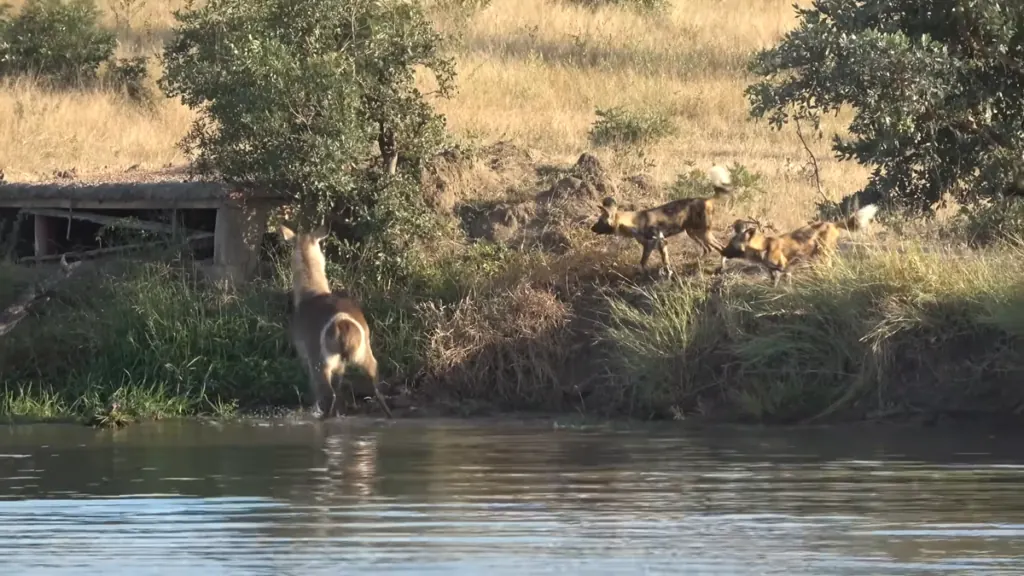
African wild dogs are highly effective pack hunters, but there is no single success rate that applies across Africa. Reported figures vary with habitat, prey, pack size, and whether researchers measure individual chases or whole-pack hunting outcomes. See our detailed guide to how African wild dogs hunt and what the success-rate studies actually show.
| Predator | Success rate | Visual |
|---|---|---|
| African wild dog | ~80% | |
| Cheetah | ~55% | |
| Leopard | ~38% | |
| Spotted hyena | ~30% | |
| Lion | ~25% |
The Pursuit
Wild dogs hunt primarily at dawn and dusk. They are crepuscular, not nocturnal. A typical hunt starts with the pack fanning out and moving toward prey. Once they select a target, the chase begins.
This is not a sprint like a cheetah ambush. It is an endurance event. The pack runs at 50 to 60 km/h and sustains that pace over several kilometers. They take turns at the front, rotating fresh runners into the lead position while others drop back to recover. The prey animal, usually an impala, kudu, or wildebeest calf, simply runs out of energy. For the full prey list, see what African wild dogs eat.
Their top speed reaches 70 km/h in short bursts. But sustained pace is what separates them from every other predator on the plains. No lion, leopard, or hyena can maintain 50 km/h over 5 kilometers.
After the Kill
Once the pack brings down prey, they share the food immediately. No individual eats first based on rank. No animal fights for a larger portion. Pack members that stayed behind to guard pups or care for injured companions receive food through regurgitation when the hunters return.
This cooperative feeding system is central to how the African wild dog operates as a species. It keeps every member of the pack fed, regardless of their ability to participate in the hunt on that particular day.
Pack Structure and Social Behavior
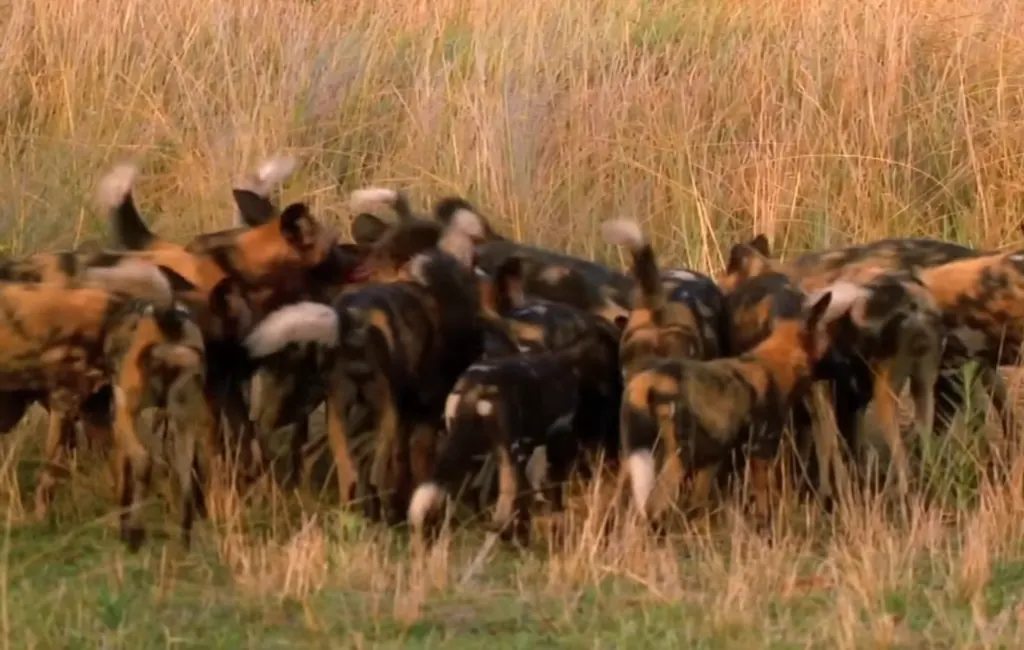
A typical pack contains 6 to 20 individuals, though documented superpacks have exceeded 40 members. At the center sits a dominant breeding pair, usually the only male and female that produce offspring. Every other adult in the group acts as a helper, hunting, protecting territory, and feeding pups.
What sets this social structure apart from wolves and lions is the near-complete absence of aggression. Wild dogs do not fight for rank through regular confrontations. Hierarchy exists, but the pack maintains it through social bonds, grooming, and greeting rituals rather than violence.
The Sneeze Vote
“Before a hunt, wild dogs vote by sneezing — one of the most advanced collective decision-making systems ever recorded in a non-human animal.”
Proceedings of the Royal Society B, 2017Before a hunt begins, the pack holds a rally. Members greet each other with high energy, trotting shoulder to shoulder, tails held high. During this rally, individual dogs sneeze. Those sneezes function as votes.
A 2017 study published in the Proceedings of the Royal Society B documented this behavior in detail. The dominant pair needed only about three sneezes to reach a quorum and trigger the hunt. Lower-ranking members needed closer to ten. The system works like a weighted democracy, where the alpha pair carries more individual influence, but the group still participates in the decision.
Care for the Sick and Injured
African wild dogs also stand out as one of the few predator species that consistently care for injured or sick pack members over extended periods. A broken leg, which would kill any solitary hunter within days, does not have to be fatal inside a wild dog pack. The injured animal continues to receive food through regurgitation, sometimes for weeks, until it recovers.
10 African Wild Dog Facts Most People Do Not Know
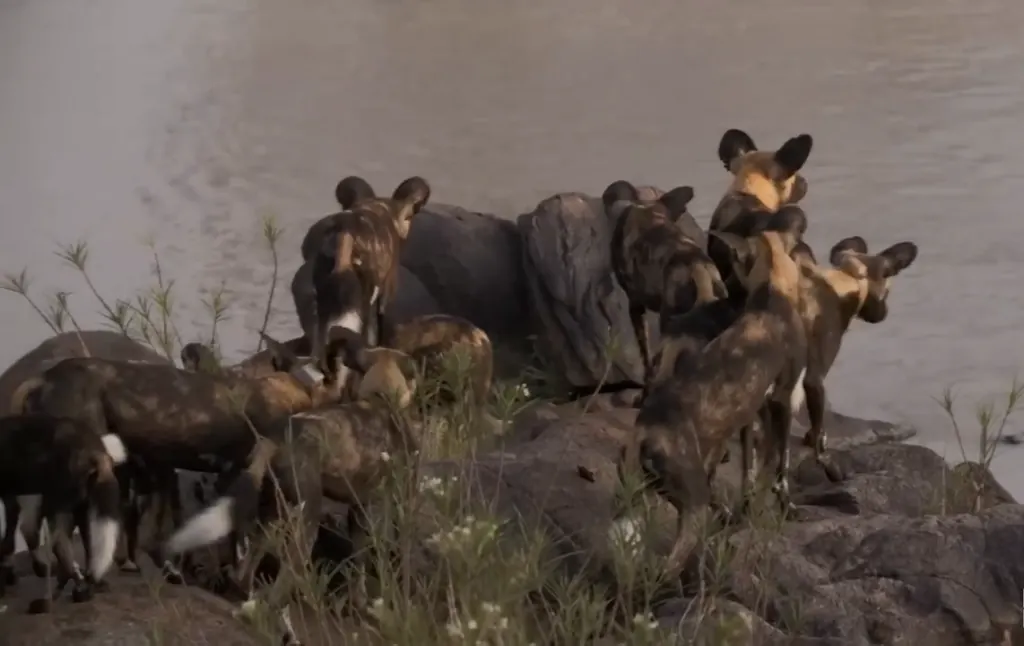
- 01They vote by sneezing.Before every hunt, the pack holds a rally. Individual dogs sneeze to signal their readiness. Enough sneezes trigger the group to move. The dominant pair needs fewer sneezes to start a hunt than lower-ranking members.
- 02No two have the same coat.The tricolor blotch pattern on every African wild dog is completely unique. Field researchers identify individuals across multiple years using coat photographs alone.
- 03They have only four toes.Every other canid has five toes on its front feet, including a dewclaw. Wild dogs have four on each foot, an adaptation for endurance running that reduces weight and increases stride.
- 04They feed their sick and injured.A pack member with a broken leg continues to receive food through regurgitation. This level of cooperative care is almost unheard of among large predators.
- 05A pack can cover 50 km in a day.Their annual home range can span 1,500 square kilometers, larger than the entire area of Greater London.
- 06Pups eat first at every kill.Unlike most predator species where dominant adults eat first, African wild dog pups get priority at the carcass. The rest of the pack steps back and waits.
- 07The white tail tip works as a signal.During high-speed chases through long grass, pack members track each other by watching the white tip of the tail moving ahead.
- 08They roll in elephant dung before hunts.The most accepted explanation is scent masking, which reduces how easily prey can detect them by smell.
- 09Females leave the pack, not males.In most mammal species, young males disperse. In African wild dog packs, young females leave to join other groups or form new packs. Males typically stay with their birth pack for life.
- 10Their bite force ranks among the highest of all carnivores.Despite their lean frame, the African wild dog has a bite force quotient of 142, the highest recorded among carnivorous mammals when adjusted for body mass.
Where Do African Wild Dogs Live?
African wild dogs once ranged across nearly the entire continent. Historical records place populations in 39 countries, from the southern tip of Africa to the edges of the Sahara. Today, the 2020 IUCN assessment confirms them in only 19 countries, and most of those hold small, fragmented groups. Our guide to where African wild dogs live lists every country and habitat type.
The species does not require a single type of terrain. Packs live in open savannas, sparse woodlands, scrublands, and even mountainous areas. What they require above all else is space. A single pack can occupy a territory of 400 to 1,500 square kilometers. Some packs cover 50 kilometers in a single day of hunting and travel.
Stronghold Countries
Botswana holds one of the largest populations, centered on the Okavango Delta and the Linyanti area. Published estimates vary, from about one fifth to one third of all wild dogs left in Africa. Our guide to African wild dogs in Botswana compares those figures. Tanzania supports significant numbers in Nyerere National Park (formerly Selous) and Ruaha National Park.
Zimbabwe remains a key stronghold, particularly Mana Pools and Hwange National Park, where the Painted Dog Conservation organization runs active protection and rehabilitation programs. South Africa maintains populations in Kruger National Park (approximately 550 animals), Hluhluwe-iMfolozi, and the Madikwe Game Reserve.
Zambia, Kenya, Mozambique, and Namibia also hold smaller but important groups that connect through wildlife corridors.
Are African Wild Dogs Endangered?
Yes. The IUCN has classified the African wild dog as Endangered since 1990, making it one of the longest-standing large carnivore listings on the Red List. Fewer than 6,600 individuals remain across the continent. Of those, only around 1,400 qualify as mature breeding adults.
That number makes the African wild dog the second most threatened carnivore in Africa, behind only the Ethiopian wolf, which has fewer than 500 individuals left.
The decline has been steep and sustained. A century ago, an estimated 500,000 wild dogs roamed sub-Saharan Africa. Today’s population represents roughly 1.3 percent of that original number.
Why Are African Wild Dogs Endangered?
Four main threats drive the ongoing decline.
Habitat loss and fragmentation. Human settlements, agriculture, and road construction continue to carve up wild dog territories across the continent. Packs need vast areas to survive, and fragmented landscapes cut off gene flow between populations.
Human persecution. Farmers have shot and poisoned African wild dogs for over a century. Much of this killing stems from the false belief that wild dogs regularly attack livestock. In reality, leopards and hyenas cause most livestock losses in areas where wild dogs are blamed.
Infectious disease. Rabies, canine distemper, and parvovirus all pose serious risks. A single disease outbreak can eliminate an entire pack within weeks. In 1991, a canine distemper outbreak in Kenya’s Maasai Mara wiped out the entire local wild dog population.
Competition with lions and hyenas. Lions actively kill wild dogs on sight and steal their kills. Spotted hyenas operate as kleptoparasites, harassing packs and taking freshly killed prey. In areas with high lion density, wild dog pup survival drops significantly.
Conservation and How to Help
Several organizations across Africa work directly to protect the African wild dog through field research, anti-poaching patrols, disease vaccination, de-snaring operations, and community education.
Painted Dog Conservation operates from Hwange National Park in Zimbabwe. They run anti-poaching teams, a rehabilitation facility for injured dogs, and education programs in surrounding communities.
The Endangered Wildlife Trust in South Africa monitors populations across the country and manages conflict between wild dogs and farming communities.
The Wildlife Conservation Network’s Painted Dog Fund is the only global fund entirely focused on this single species. 100 percent of donations go directly to field projects.
You do not have to travel to Africa to make a difference. Donating to these organizations, raising awareness on World Painted Dog Day (August 26), or supporting volunteer programs all contribute to keeping this species alive.
African Wild Dog vs Other Predators
People frequently confuse African wild dogs with other animals, particularly spotted hyenas. This section clarifies the key differences.
African Wild Dog vs Hyena
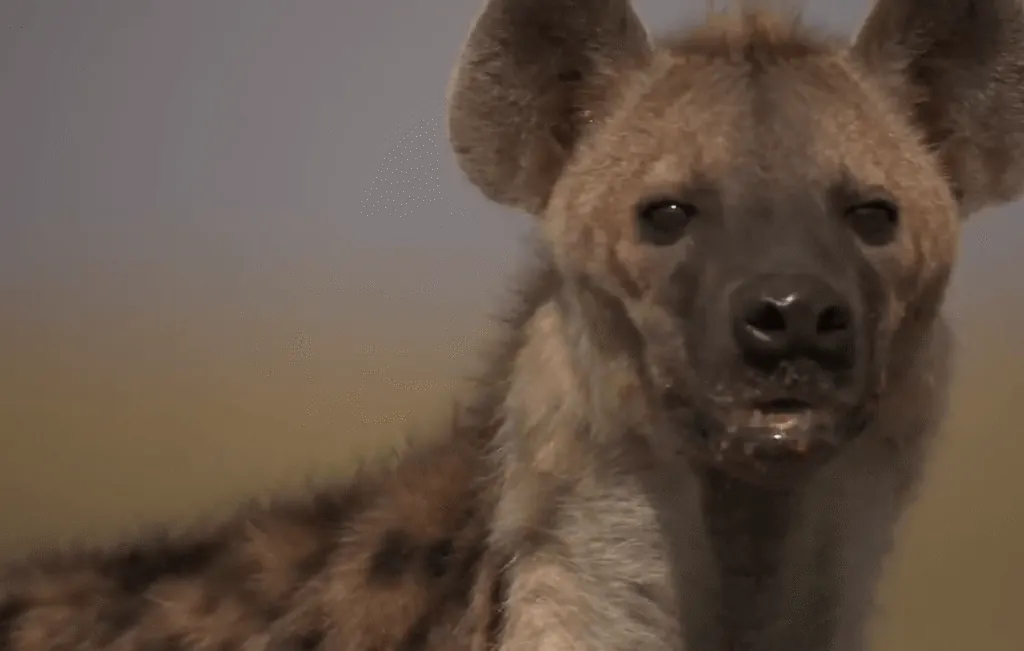
Despite some visual similarity, wild dogs and hyenas are not related at all. Wild dogs belong to the family Canidae. Hyenas belong to Hyaenidae and share closer evolutionary ties with cats than with any canid. Wild dogs are leaner, have rounded ears, and carry a tricolor coat. Hyenas are bulkier, have pointed ears, and display a brown spotted pattern.
African Wild Dog vs Wolf
African wild dogs and gray wolves share a distant common ancestor, but the lineage split happened roughly 1.7 million years ago. Both species live in packs and hunt cooperatively. However, wolf packs use ambush tactics more often, while wild dogs rely on endurance pursuit. Wolf packs also show more internal aggression over rank and food.
African Wild Dog vs Cheetah
The cheetah is a sprinter. The African wild dog relies more on repeated pursuit and pack-level hunting. Cheetahs reach very high speeds in short bursts, while wild dogs combine speed, stamina, and multiple attackers. The cheetah often hunts alone or in small coalitions. Wild dogs usually hunt in packs, although the degree of chase coordination varies by habitat.
African Wild Dog vs Domestic Dog
African wild dogs cannot breed with domestic dogs. They sit in a completely separate genus (Lycaon vs Canis). You cannot train, tame, or domesticate them. Their social instincts, territorial needs, and pack-dependent survival make them fundamentally different from any breed of pet dog.
African Wild Dog Photo Gallery
Every image below is a placeholder. Click any one in the editor and choose Replace to upload your own photograph — the layout and captions stay exactly as they are.
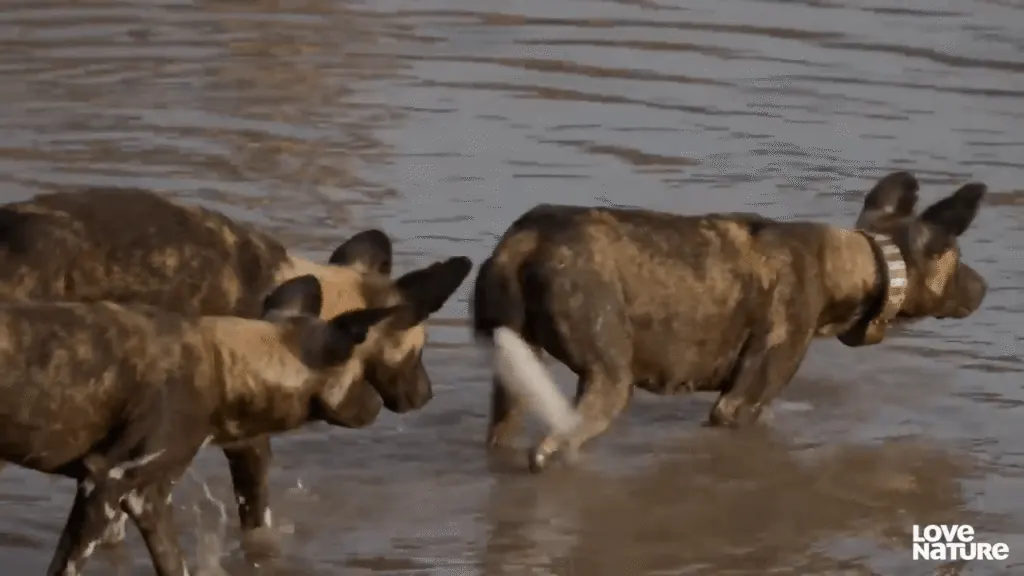
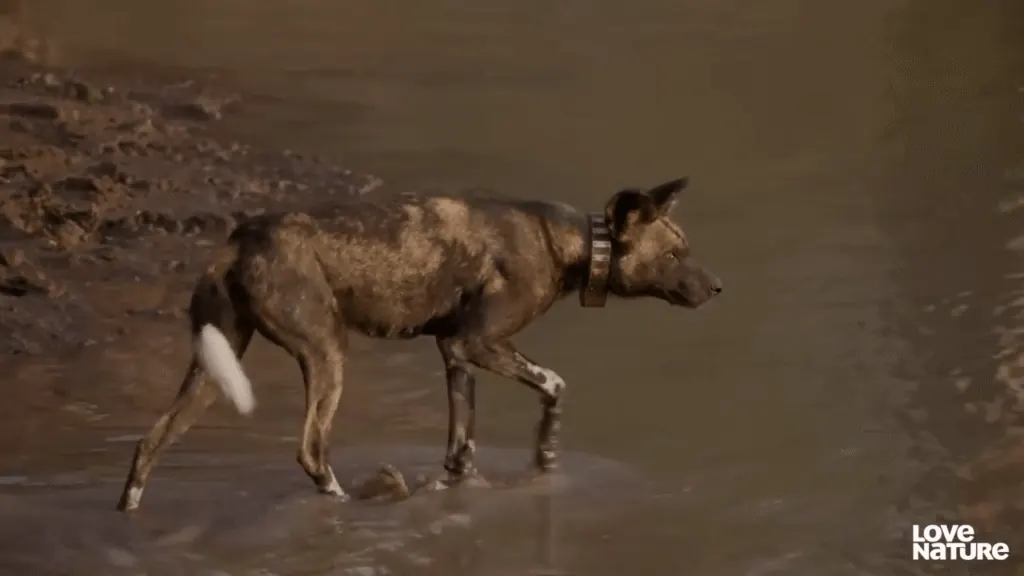
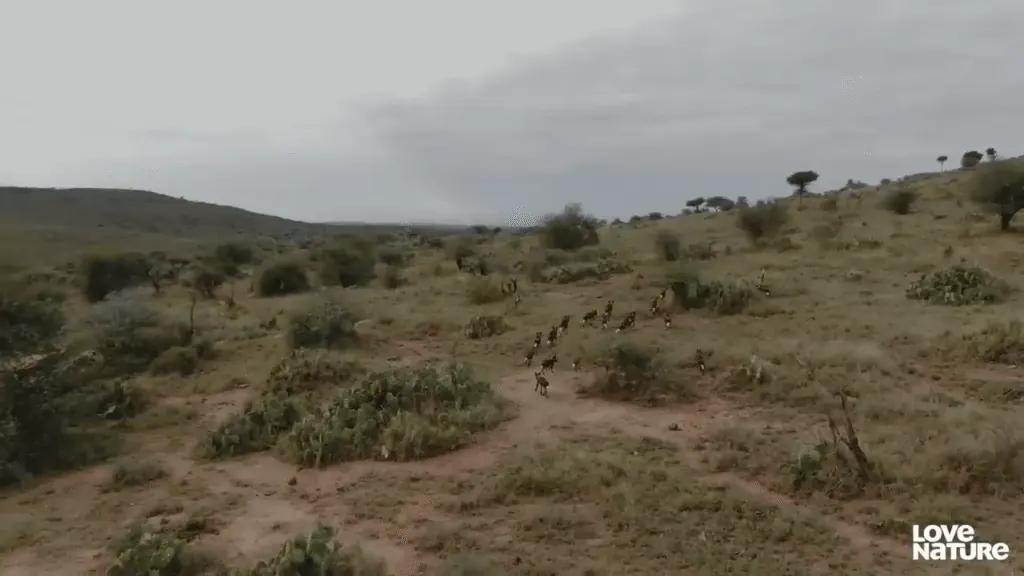
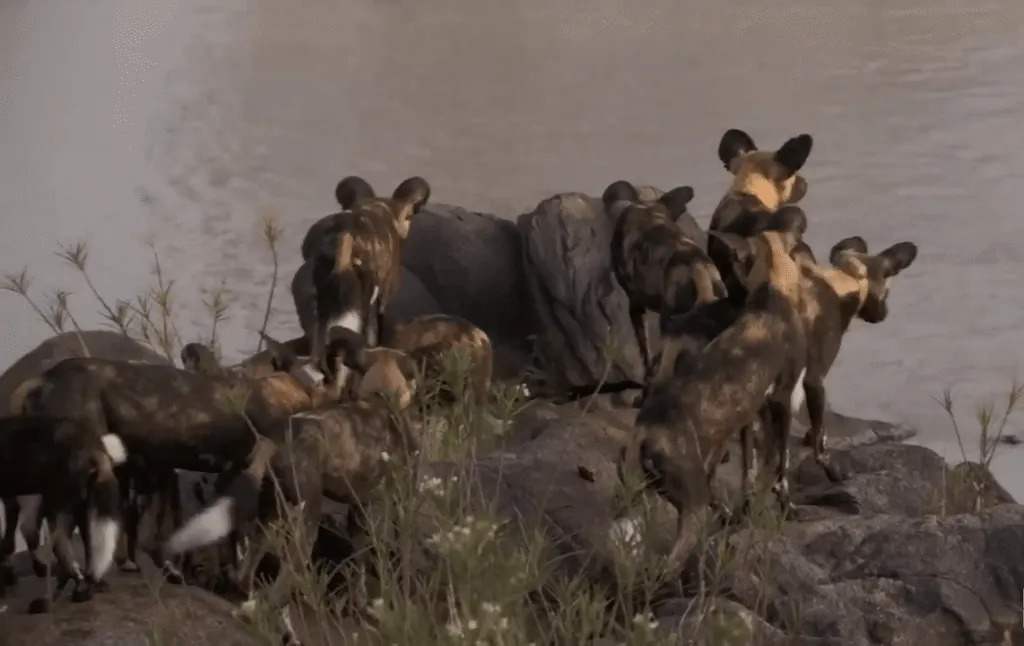
Frequently Asked Questions About African Wild Dogs
Are African wild dogs dangerous to humans?
African wild dogs pose no recorded threat to humans. No confirmed unprovoked attacks on people exist in the scientific literature. In the wild, packs are generally shy around humans and move away from direct contact rather than approaching. They are far more at risk from us than we are from them. Read more in our guide: are African wild dogs dangerous to humans?
Can you keep an African wild dog as a pet?
No. It is illegal in most countries. African wild dogs have complex social needs that no domestic environment can meet. They cannot be domesticated, tamed, or trained like a pet dog. Their entire biology depends on living within a functioning pack.
How fast can African wild dogs run?
Their documented top speed reaches approximately 70 km/h (44 mph). More importantly, they sustain speeds of around 50 km/h over several kilometers during a hunt. That combination of speed and endurance is something no other African predator matches.
What is the difference between a wild dog and a hyena?
They are not related. African wild dogs are canids (family Canidae). Hyenas belong to family Hyaenidae and are closer to cats on the evolutionary tree. The visual similarity comes from convergent evolution, not shared ancestry.
Why are African wild dogs called painted wolves?
The scientific name Lycaon pictus translates to “painted wolf” from Greek and Latin. The name references their irregular tricolor coat, where every individual carries a unique pattern. Conservation groups have promoted “painted wolf” and “painted dog” as alternative common names because the word “wild” in “wild dog” carries negative associations that can hurt public support.
How many African wild dogs are left in the wild?
Current estimates place the total population at approximately 6,600 individuals, with only around 1,400 considered mature breeding adults. These animals are spread across fragmented populations in 19 countries, mostly in southern and eastern Africa.
Do African wild dogs eat their prey alive?
African wild dogs begin feeding quickly after bringing down prey. They do not suffocate prey the way lions do with a throat bite. Their method is faster than it appears. A pack of 10 or more dogs can consume a medium-sized antelope in under 15 minutes.
Where is the best place to see African wild dogs on safari?
Botswana’s Okavango Delta holds the largest population. Mana Pools in Zimbabwe is famous for on-foot encounters. South Luangwa in Zambia offers excellent dry-season sightings. The denning season from May to September provides the most reliable viewing.