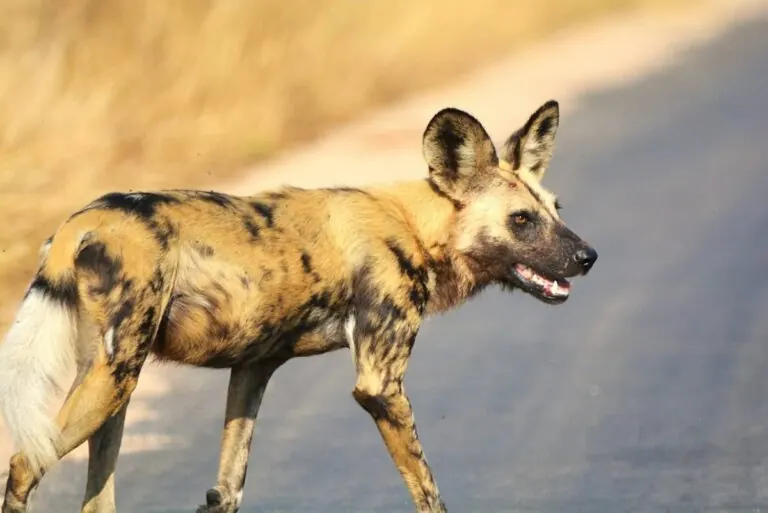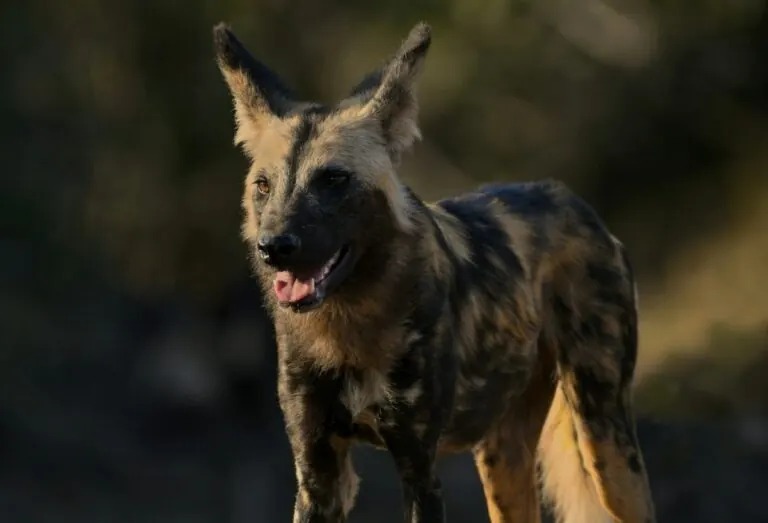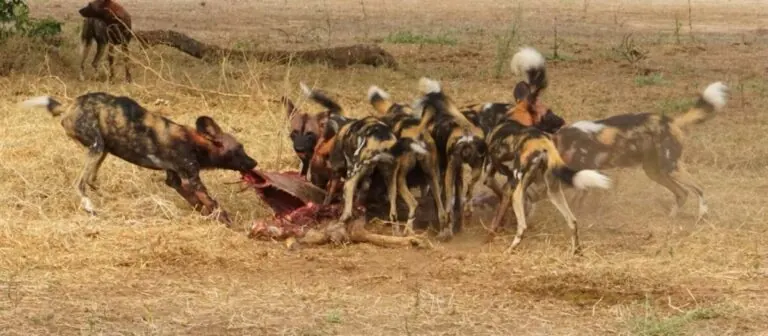
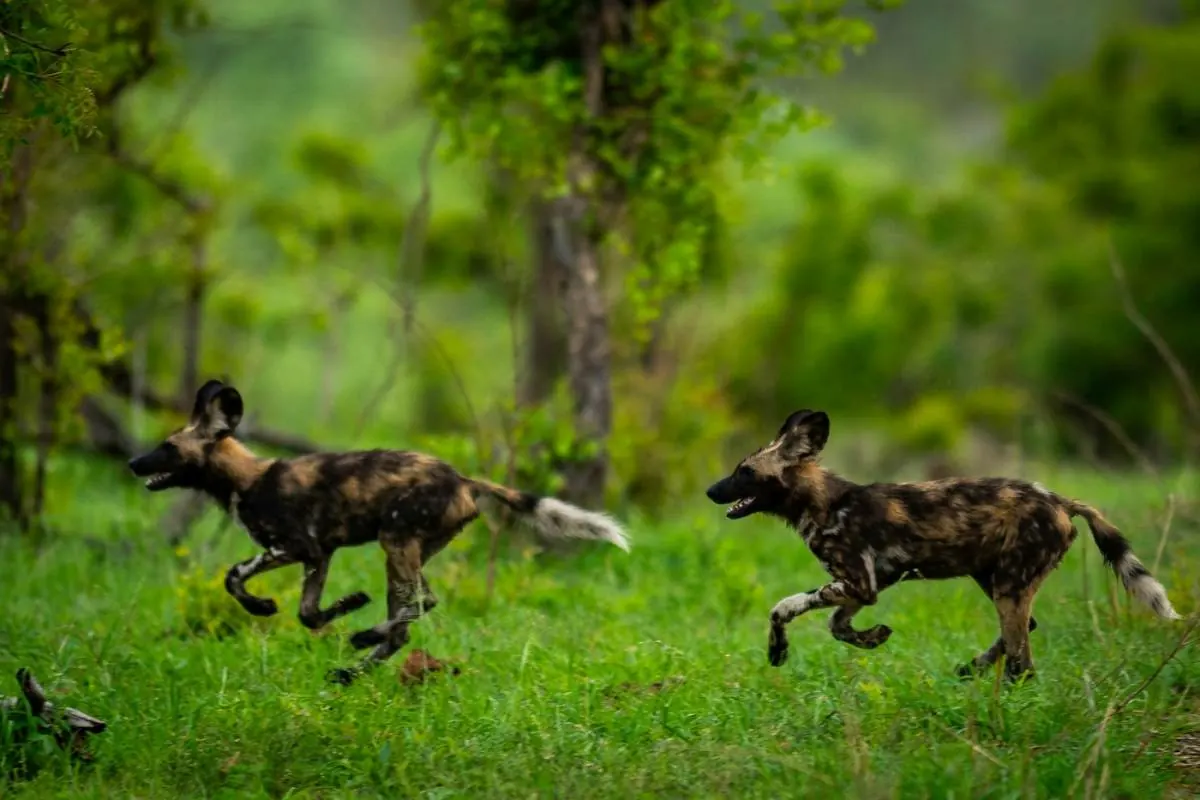
African wild dog hunting relies on wearing prey down rather than ambushing it. The pack picks a target and chases it at up to 66 km/h (41 mph). They keep going until the animal tires. Then the whole pack feeds together, often within 15 minutes.
Most articles stop there and repeat one number: an 80% success rate. Two GPS studies have since shown that the truth depends heavily on where the pack lives. This guide explains how a hunt unfolds from the pre-hunt rally to the chase, takedown and feeding, and what GPS-collar studies reveal about success rates.
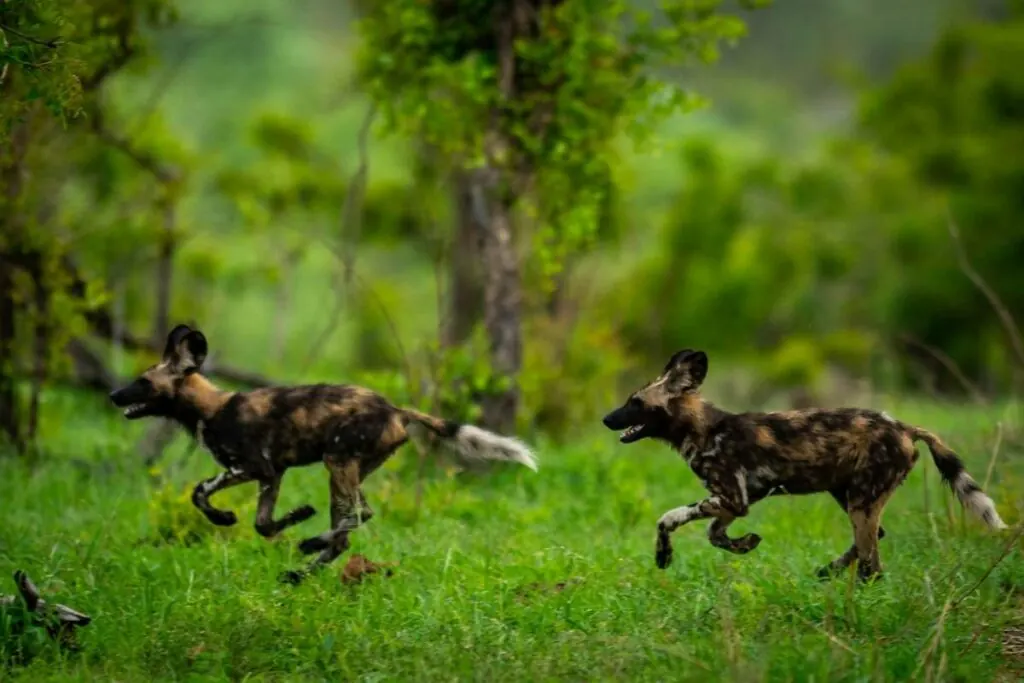
How do African wild dogs hunt?
A hunt follows the same rough pattern across Africa:
- The pack wakes and greets each other in an excited rally.
- The dogs move off together, usually at dawn or dusk.
- One dog spots prey, and the pack closes in without a sound.
- The chase starts, and the prey runs.
- The dogs take turns at the front while the prey tires.
- They grab the animal by the legs, belly and rump until it goes down.
- The pack eats fast, before hyenas or lions arrive.
The whole thing rarely takes long. In Botswana, GPS collars recorded chases averaging just 446 meters.
The rally: how the pack decides to hunt
Before a hunt, wild dogs greet each other with a burst of whining, licking and tail wagging. Researchers call this a rally. It works like a vote.
A 2017 study by Walker and colleagues, published in Proceedings of the Royal Society B, observed 68 pre-hunt rallies at the Botswana Predator Conservation Trust. The team found that the dogs sneeze during these greetings. The number of sneezes predicts whether the pack moves off. When a dominant dog started the rally, about three sneezes were enough. When a subordinate started it, the pack needed at least ten before anyone moved. View the study.
So the pack hunts when enough members agree. This is one of the clearest examples of quorum decision-making in a wild mammal.
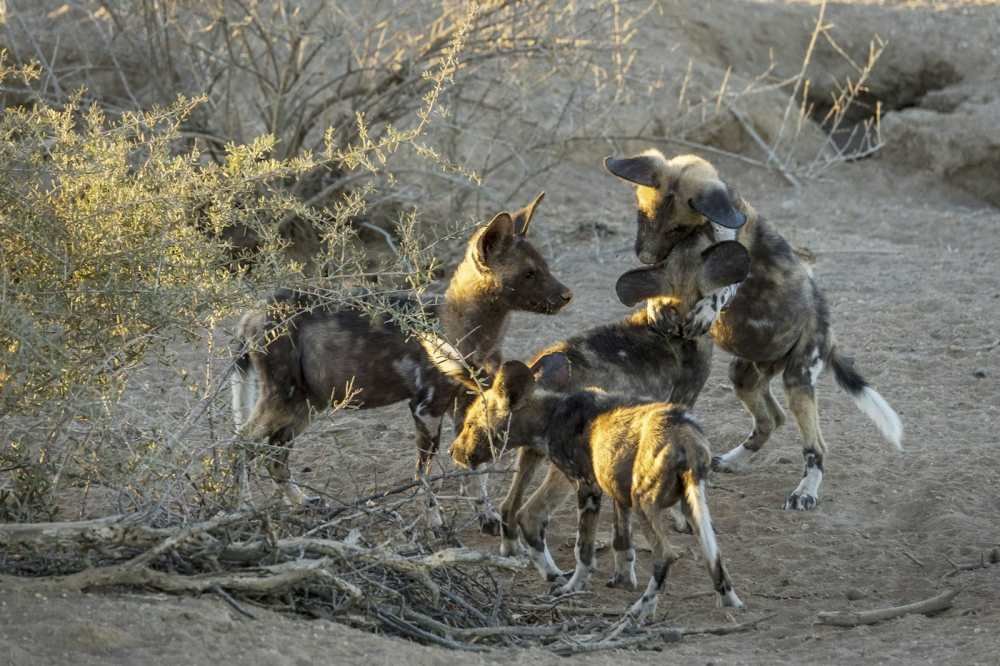
When do wild dogs hunt?
African wild dog hunting happens mostly in the early morning and late afternoon. Those hours are cooler, and lions are less active then.
Packs also hunt at night, but mainly when the moon is bright. On dark nights they usually rest. Midday hunts are rare, because the heat costs them too much water and energy.
Pups change the pattern, too. While a pack has small pups at a den, the adults hunt close to home and carry food back.
African wild dog hunting: speed, distance and stamina
Wild dogs reach about 66 km/h (41 mph) in short bursts. Cheetahs are far faster, but they quit after a few hundred meters. Wild dogs maintain the chase instead, gradually exhausting their prey.
The distance varies by habitat:
- On the open plains of East Africa, packs run long, coordinated chases after a single animal.
- In thick woodland, chases are short and scrappy. The Botswana pack averaged 446 meters per chase and made 2.43 chases per dog each day.
Zambian data shows how much ground they cover. In a 2025 study there, collared dogs moved an average of 15.5 km a day. Where prey had been depleted, they worked two to three times harder for the same food.
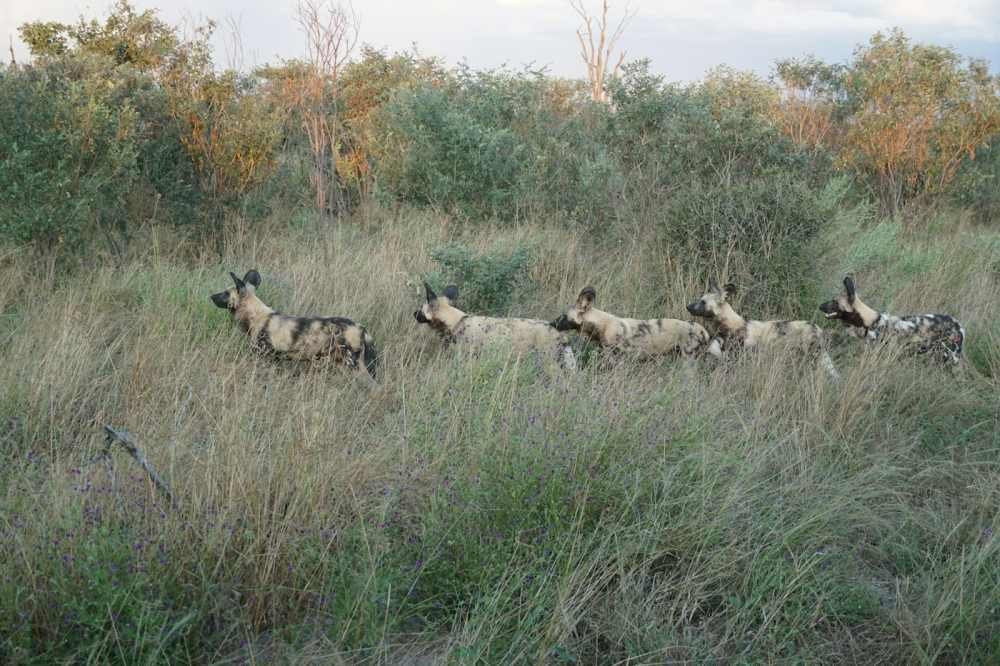
The takedown
Wild dogs don’t use a single killing bite. Instead, several dogs grab the prey by the legs, belly and rump until it stops running. For a closer look at the killing method and when feeding begins, see whether African wild dogs eat their prey alive.
Males usually take on dangerous prey. With a warthog, for example, one dog grabs the nose while the others work from behind.
Medium antelope usually die within two to five minutes. A wildebeest can take half an hour to pull down, which is why packs prefer calves. Our guide to what African wild dogs eat lists the prey they choose in each region.
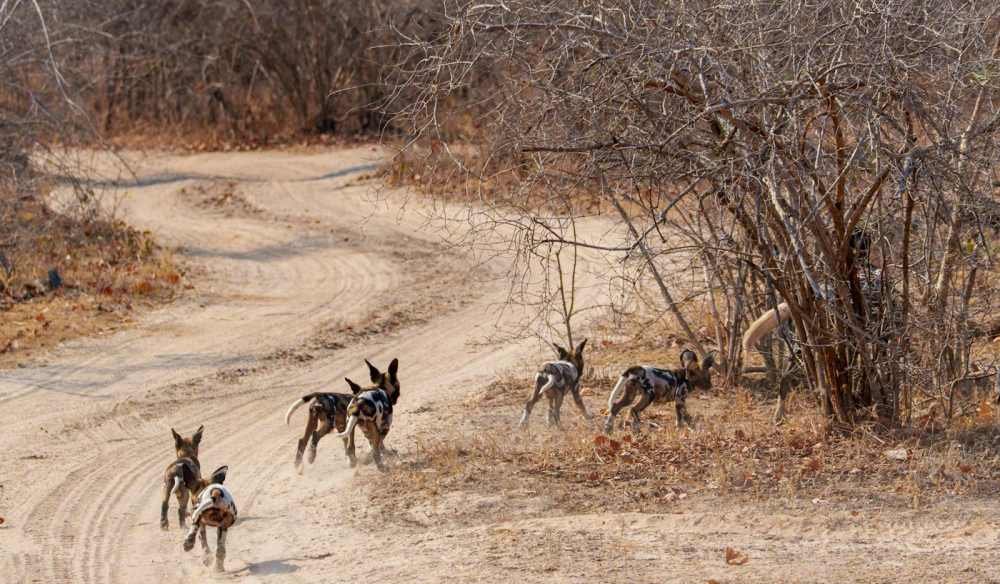
The truth about the 80% success rate
Almost every article claims wild dogs succeed in 80% of hunts. The figure comes from early work on the short-grass plains of East Africa, where conditions suit long chases.
Later research paints a messier picture:
| Study or source | Where | Success rate |
|---|---|---|
| Classic plains observations | East Africa | 60% to 90% of chases |
| Hubel et al. 2016, GPS collars | Okavango, Botswana | 15.5% per individual chase |
| Review of published rates | Across Africa | About 31% on average, ranging from 21% to 100% |
| Creel & Creel, pack size effect | Selous, Tanzania | Rises from 42% with 3 adults to 67% with 20 |
So which number is right? All of them, depending on the habitat and on what you count.
Hubel and colleagues reported these Botswana results in a 2016 Nature Communications study that tracked every member of one pack through 1,119 chases. Individual dogs failed most of the time. Even so, the pack still killed roughly once a day. Several dogs chase at once, so one of them usually connects. The researchers called it additive opportunistic capture rather than tightly coordinated teamwork. African wild dog hunting is still cooperative at the pack level, but not every chase involves fixed roles or synchronized attacks. In some habitats, several dogs pursue prey at the same time, increasing the pack’s overall chance of making a kill. Read the study.
On open plains, packs do coordinate more, and the classic high figures hold up better there.
How wild dogs compare with other predators
| Predator | Hunting style | Reported success rate |
|---|---|---|
| African wild dog | Endurance chase by the pack | About 31% on average, up to 90% on open plains |
| Cheetah | Sprint over a short distance | About 43% on average |
| Lion | Stalk and ambush, often in groups | 8% to 57%, near 28% overall in one study |
| Spotted hyena | Chase, often in clans | About 31% |
| Leopard | Solitary stalk and pounce | 14% to 38% |
Wild dogs don’t win on raw success rate. They win on cost. A pack shares every kill and feeds its pups first. One short chase can feed 10 or 20 animals.
Why pack size matters so much
Bigger packs eat better. In the Selous, success climbed from 42% in a pack of three adults to 67% in a pack of twenty.
Extra dogs help in three ways. More dogs means more chases at once. They also pull down large prey faster. Finally, a big pack can drive hyenas away from a carcass.
That’s also why losing adults hurts so much. A snare or a road death doesn’t just cost one dog. It cuts the whole pack’s food supply.
Losing the kill: hyenas and lions
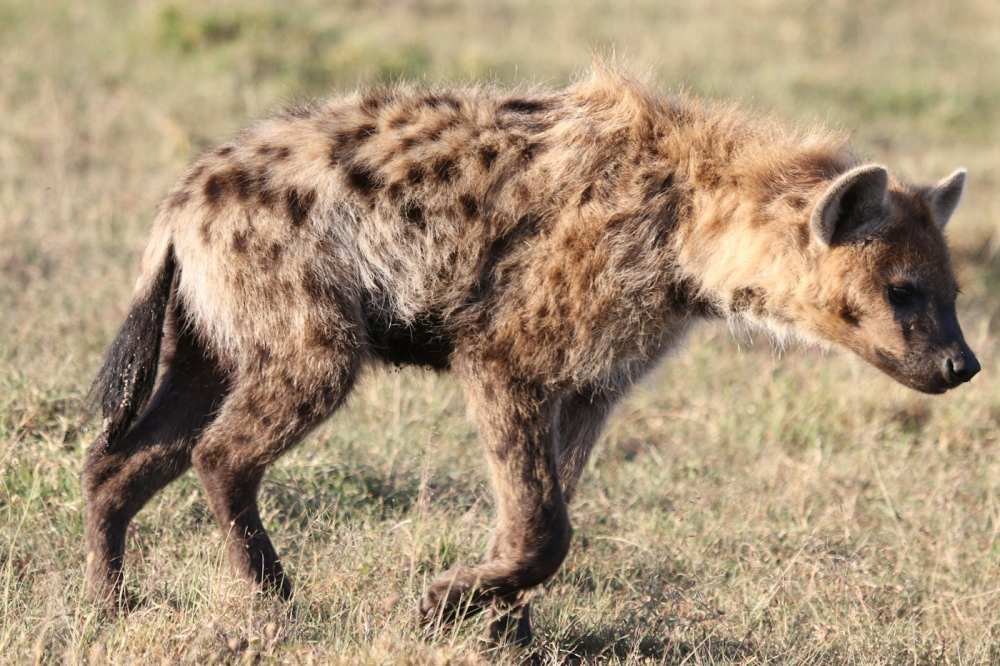
Spotted hyenas follow wild dog packs and try to take their kills. In the Selous Game Reserve, packs lost about 2% of kills to hyenas and under 1% to lions.
Those figures sound small, but each loss is expensive. Hunting burns energy fast, so a stolen meal means the pack has to hunt again. This is why wild dogs bolt their food and can finish a Thomson’s gazelle in about 15 minutes.
Lions are worse news than hyenas. They kill wild dogs outright, so packs avoid areas where lions are dense. In the Zambian study, hunting effort went up where lion use was high.
How pups learn to hunt
Pups stay at the den for about three months. During that time, adults hunt and bring food back in their stomachs, then bring it up for the pups.
Once the pups leave the den, they follow the pack. At a kill, the adults stand back and let them eat first. Young dogs join chases as they grow, and they learn by trying, failing and copying older dogs.
Do African wild dogs hunt alone?
Rarely, and mostly for small prey. A single dog can catch a hare, a spring hare or a ground bird.
Anything bigger needs the pack. A lone dog also has no chance of defending a kill from hyenas.
African wild dog hunting FAQs
How do African wild dogs hunt their prey?
They pick a target, chase it at up to 66 km/h and take turns leading the chase. Once the prey tires, several dogs grab it by the legs, belly and rump. The pack then eats fast, before scavengers arrive.
What is the African wild dog hunting success rate?
It depends on the habitat. Reviews put the average near 31%. Early plains studies recorded 60% to 90%, while GPS collars in Botswana woodland recorded only 15.5% per individual chase.
How fast can African wild dogs run?
They reach about 66 km/h (41 mph) in short bursts. Their advantage comes from stamina, since they hold a fast pace far longer than a cheetah can.
How long do African wild dogs chase their prey?
In woodland, chases average about 446 meters and last well under a minute. On open plains, pursuits can last much longer, sometimes 10 minutes or more.
Do African wild dogs hunt at night?
Sometimes. They hunt mainly at dawn and dusk, plus moonlit nights. On dark nights, packs usually rest.
Why do African wild dogs sneeze before hunting?
Sneezes act as votes during the rally. When enough dogs sneeze, the pack sets off. A rally started by a dominant dog needs about three sneezes. One started by a subordinate needs at least ten.
For more on the species, read our 30 African wild dog facts.