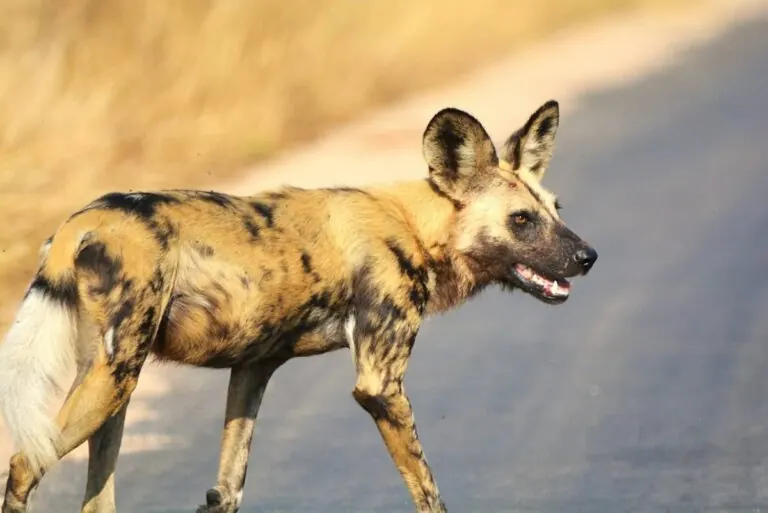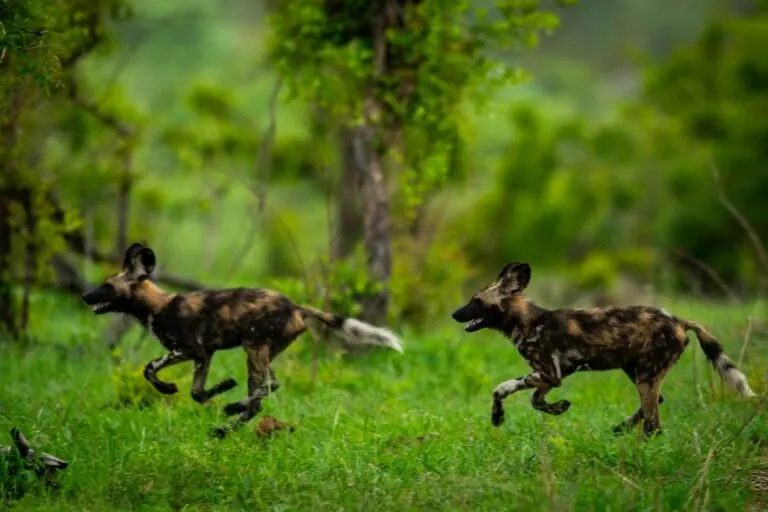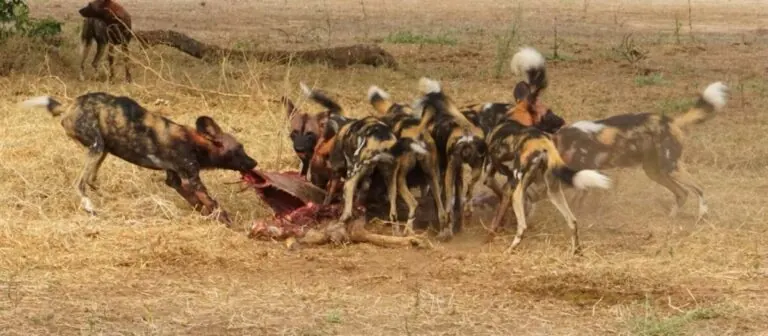
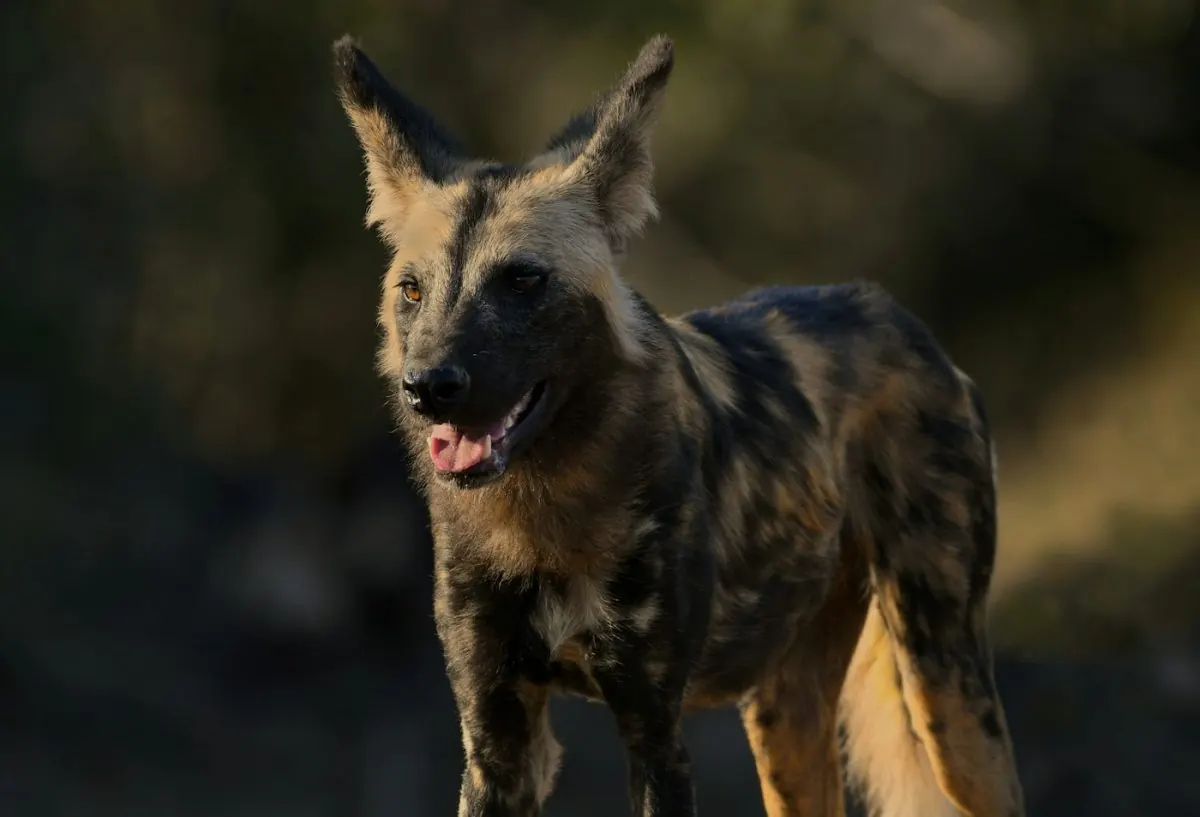
Do African wild dogs eat their prey alive? Yes, they often do. African wild dogs have no killing bite, so they start feeding while the animal is still alive. For a medium antelope, though, death usually comes within two to five minutes. They may begin feeding before the prey is biologically dead, although exactly how long it remains conscious is difficult to determine.
That short answer can be disturbing, and it has shaped the species’ reputation for over a century. The full picture is more nuanced than the footage often suggests.
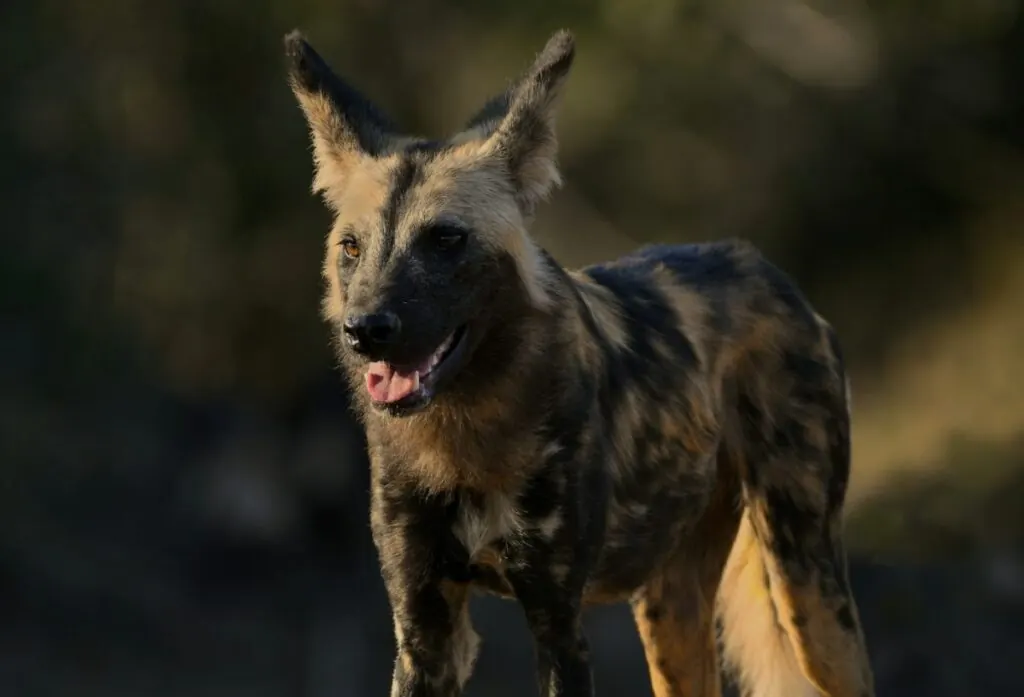
How do African wild dogs eat their prey alive?
Wild dogs weigh only 20 to 30 kilograms (44 to 66 pounds). They have no claws for holding prey. They are also too light to pin a big antelope and suffocate it, the way a lion does.
So the pack does it another way. Several dogs bite the legs, belly and rump of the running animal until it slows and goes down. Then they start feeding at once, usually at the soft belly.
This is why the question do African wild dogs eat their prey alive has a qualified yes: feeding can begin before death. The animal dies from blood loss and shock, not from a bite to the throat. With a medium antelope, that takes a couple of minutes. A wildebeest can take up to half an hour to pull down, which is one reason packs prefer calves.
Why they don’t kill first and eat later
African wild dog speed helps protect the meal. Spotted hyenas follow wild dog packs and steal kills, and lions take them too.
In Tanzania’s Selous Game Reserve, packs lost about 2% of their kills to hyenas and under 1% to lions. Every minute a pack spends on a kill raises the risk. As a result, wild dogs eat fast and can finish a Thomson’s gazelle in about 15 minutes.
There’s a second reason. Hunting costs them a lot of energy, so they can’t afford wasted effort. Our guide to how African wild dogs hunt explains the energy math behind the chase.
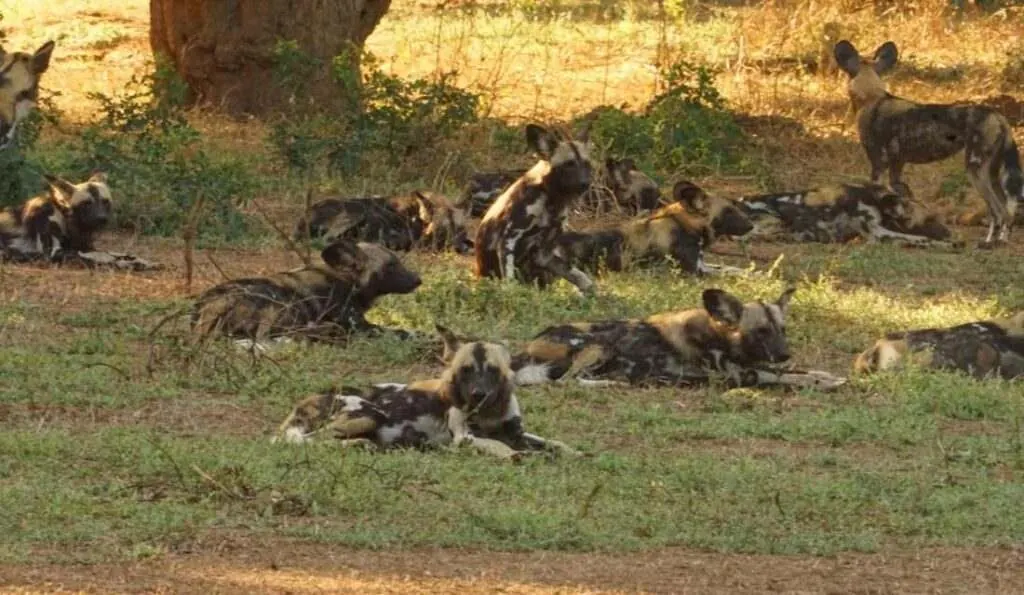
Is African wild dog hunting cruel?
It looks worse. Whether it is worse depends on how long the animal stays conscious. Nobody can measure that precisely.
| Predator | How it kills | What that means for the prey |
|---|---|---|
| African wild dog | Bites to legs, belly and rump; feeding starts at once | Death from blood loss and shock, often within a few minutes for medium prey |
| Lion | Bite to the throat or muzzle to suffocate large prey | Struggle can last several minutes while the lion holds on |
| Leopard | Throat bite, then the carcass is dragged away | Similar suffocation, often quicker on small prey |
| Cheetah | Throat clamp on the run | Suffocation, though hyenas often interrupt the process |
| Spotted hyena | Bites to the hindquarters and belly, feeding starts at once | Much like the wild dog method |
Lions and leopards look tidier because the prey is held still. However, suffocation also takes minutes, and lions often lose their grip and start again.
So wild dogs aren’t unusual among African predators. They just do their killing in the open, in daylight, where cameras catch it.
The disemboweling myth
Plenty of pages claim wild dogs open the belly for fun, or eat animals alive to keep the meat fresh. Neither claim has evidence behind it.
Field observations show a simpler explanation. The belly is one of the softest parts of an antelope, so feeding often begins there. This is a feeding strategy, not evidence of deliberate torture.
The behavior can look harsh to human observers, but predators are responding to feeding pressure and competition rather than trying to prolong suffering. A wild dog that hesitates risks losing the meal to hyenas or other competitors.
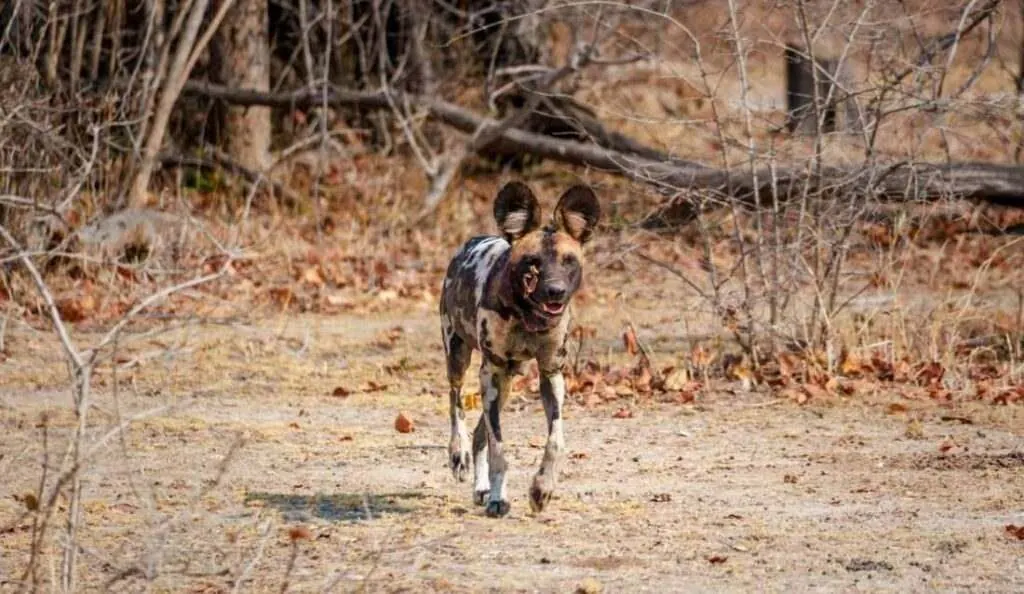
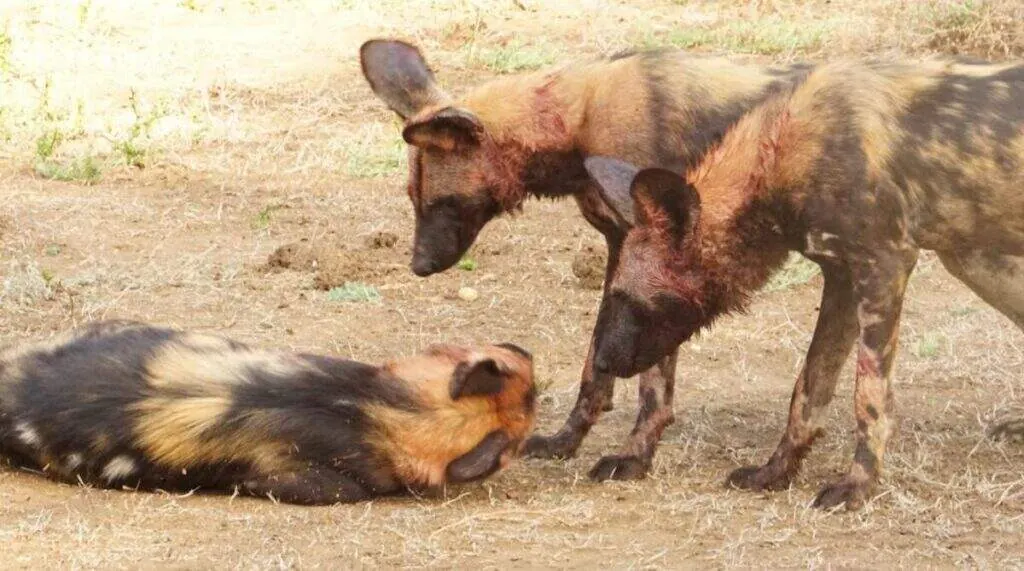
Where the bad reputation came from
Colonial hunters and early game wardens wrote about wild dogs as vermin. They described the killing method in vivid terms and used it to justify shooting packs on sight.
Game wardens in several reserves shot packs as vermin well into the twentieth century. Those attitudes cost the species dearly, and the population is still paying. Fewer than 7,000 remain, and the IUCN lists them as Endangered.
You can read more about that in our guide on whether African wild dogs are dangerous.
How long does the prey suffer?
Field accounts and study data point to these rough timings:
- Small prey such as a hare or a dik-dik: dead in seconds, often swallowed whole.
- Medium antelope such as impala or gazelle: usually two to five minutes.
- Large prey such as wildebeest or zebra: up to half an hour to bring down, and rare in any case.
Pack size matters as well. More dogs mean more bites at once, so a big pack ends it faster than a pair.
Do wild dogs eat other animals alive too?
The method stays the same whatever the prey. However, small animals die almost immediately, since a single dog can kill and swallow them in one go.
Wild dogs don’t play with prey the way cats often do. They also don’t store food or return to old carcasses, apart from the odd stolen one.
Do African wild dogs eat their own pack members?
No. Wild dogs feed injured or sick pack members rather than abandoning them. Adults carry food back in their stomachs and regurgitate it for pups, babysitters and injured pack members.
That side of them rarely makes the videos. Even so, it’s why biologists call them Africa’s most cooperative predator.
Killing method FAQs
Do African wild dogs eat their prey alive?
Often, yes. They start feeding before the animal dies, because they have no killing bite. Medium antelope usually die of blood loss and shock within two to five minutes.
Why do African wild dogs eat prey alive?
Speed protects the meal from hyenas and lions, which follow packs and steal kills. Feeding straight away also suits animals that burn a lot of energy hunting.
Do African wild dogs kill quickly?
For their usual prey, yes. Small animals die in seconds, and medium antelope in a few minutes. Large prey such as wildebeest takes much longer, so packs mostly avoid it.
Are African wild dogs cruel?
The behavior can look harsh to human observers, but wild dogs kill to feed and face strong competition from scavengers and larger predators. Their method is a feeding strategy rather than evidence of deliberate cruelty.
Do African wild dogs disembowel their prey?
They open the belly first because it’s the softest part of the carcass. There’s no evidence that they open it on purpose to prolong death.
For more on their prey and their hunts, see our guides to what African wild dogs eat and how they hunt.