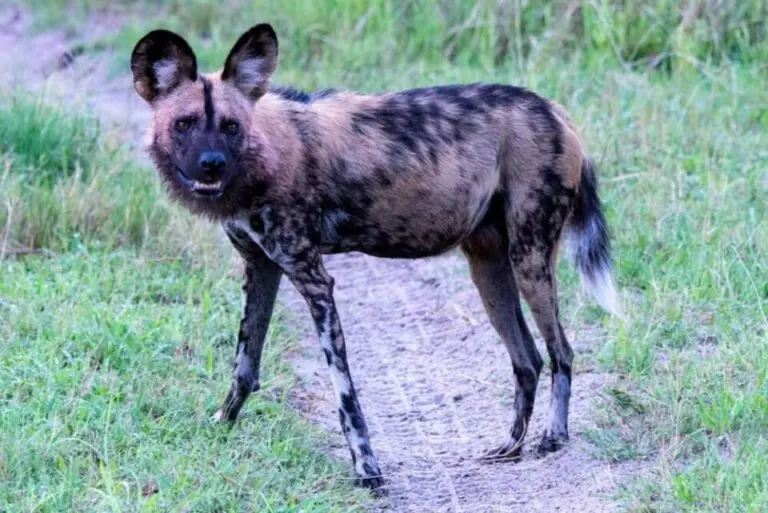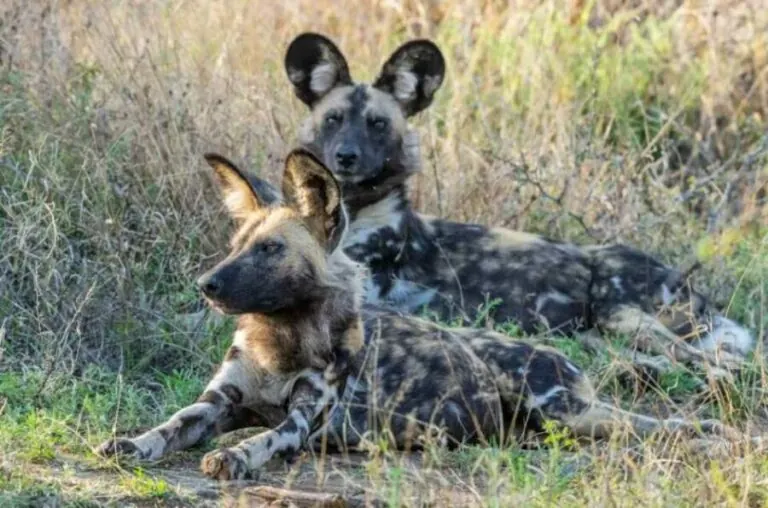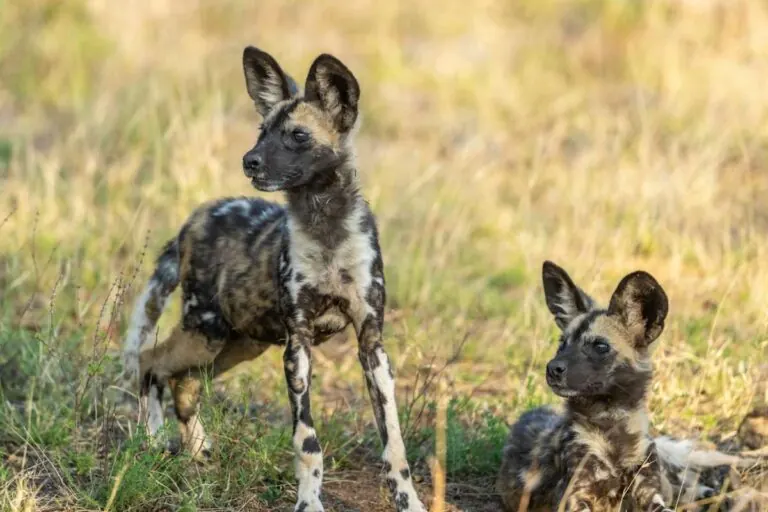
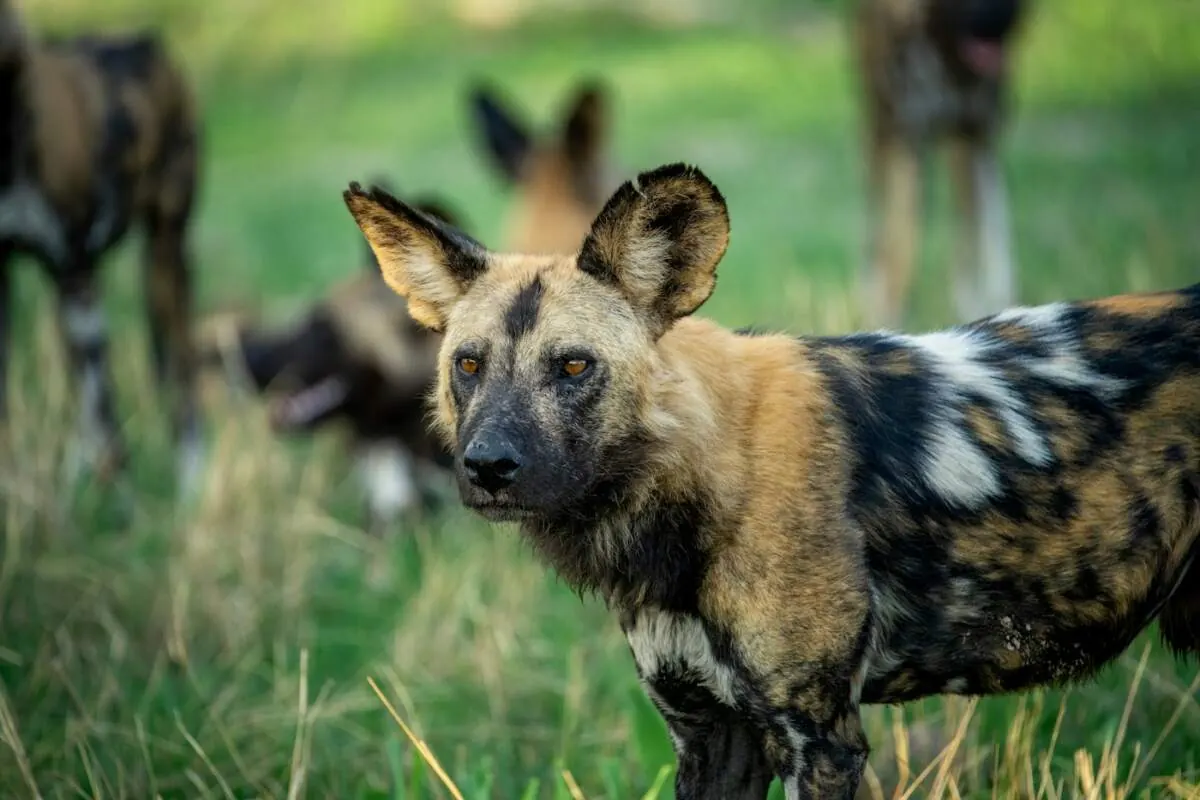
Are African wild dogs dangerous to humans? No, not in the wild. Long-term wild dog researchers report no attacks on people, and the only fatal case on record happened inside a zoo enclosure in 2012.
So you can relax if you’re heading on safari. A pack of painted dogs will usually watch you for a moment and then trot off. To them, people are something to avoid. This guide answers the question in full: are African wild dogs dangerous, and to whom?
Are African wild dogs dangerous? The short answer
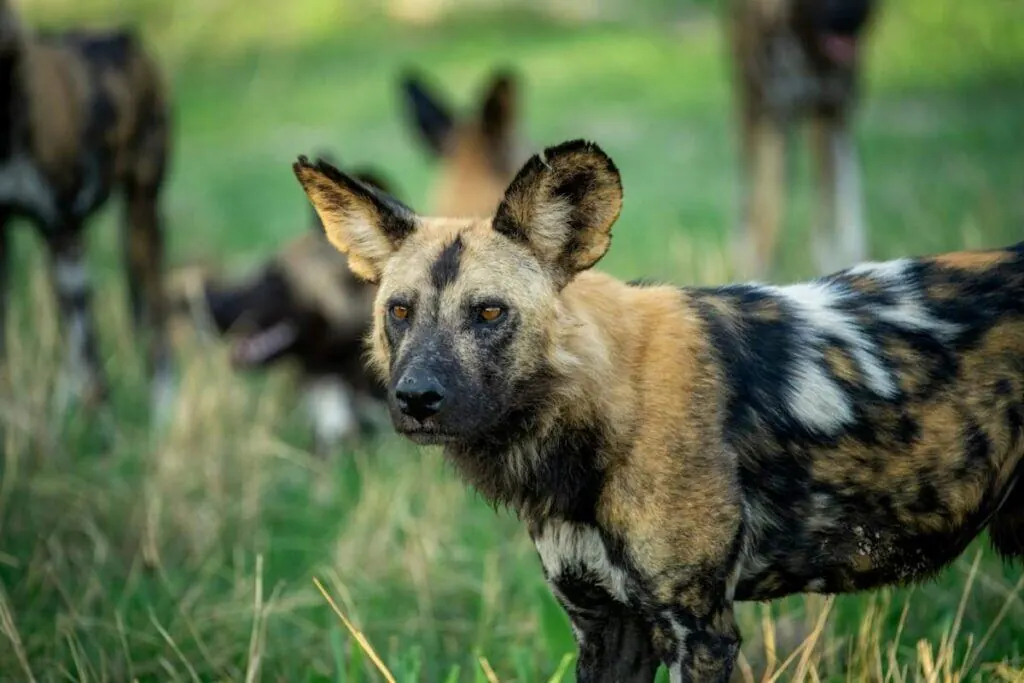
So, are African wild dogs dangerous? They are to their prey, but not to humans. In the wild, they keep their distance from people on foot and ignore people in vehicles. In fact, the danger mostly flows the other way. Humans kill far more wild dogs than wild dogs kill anything we own.
This table shows the risk in each situation you’re likely to face.
| Situation | Risk to you | Why |
|---|---|---|
| Watching a pack from a safari vehicle | Very low | Packs usually ignore vehicles and often rest close to them. |
| Meeting a pack on foot in the bush | Low | Wild dogs are wary of people and move away. |
| Walking near an active den with pups | Low, but give space | Adults may bark an alarm and stay close to the pups. |
| Falling into a zoo enclosure | High | Captive dogs have lost their fear of people. |
| Keeping a wild dog as a pet | High | They are wild pack hunters, not domestic dogs. |
Has an African wild dog ever attacked a human?
In the wild, there is no documented attack on a person. Professor Rosie Woodroffe of the Zoological Society of London has studied wild dogs in Kenya for years. In a 2012 interview with National Geographic, she said she had never heard of an attack on people. She added that she has walked up to wild dogs many times without feeling threatened.
Her study area makes that claim hard to dismiss. In northern Kenya, children herding goats and walking to school meet wild dogs on foot regularly. Even so, local people there are not afraid of them.
The Pittsburgh Zoo tragedy
The one fatal case happened in captivity. On 4 November 2012, three-year-old Maddox Derkosh fell into the painted dog exhibit at the Pittsburgh Zoo. His mother had lifted him onto a railing above the enclosure. He slipped, bounced off a safety net and fell 14 feet into the pen.
The pack of 11 dogs attacked him, and he died from his injuries. Police shot one dog during the rescue. Afterward, the zoo closed the exhibit and moved the remaining ten dogs elsewhere. It later settled a wrongful death lawsuit with the family.
That case is why people still ask: are African wild dogs dangerous? Woodroffe saw it as a captive animal problem, not a sign that wild dogs hunt people. She explained that zoo dogs see people at close range every day, so their natural fear fades. She also doubted it was a predatory attack at all.
Why wild dogs don’t treat people as prey
Several things keep humans off the menu.
First, people are the wrong shape and size. Wild dogs mostly hunt antelope that weigh 15 to 200 kilograms (33 to 441 pounds). Impala top that list. You can see the full list in our guide to what African wild dogs eat. An upright human doesn’t look or move like any of those animals.
Second, wild dogs have learned to fear us. Farmers have shot, poisoned and trapped them for generations, and packs still die in snares today. As a result, wild populations tend to keep well away from people on foot.
Third, they hunt by chasing prey that flees. A person who stands still and stays calm gives a pack nothing to chase.
Are painted dogs aggressive?
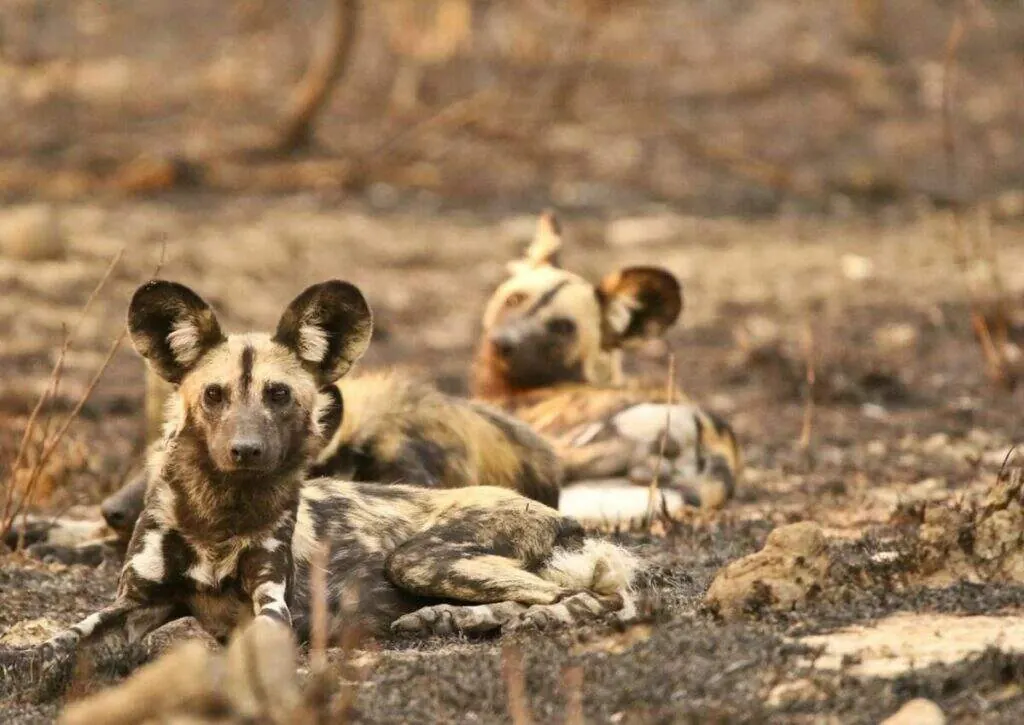
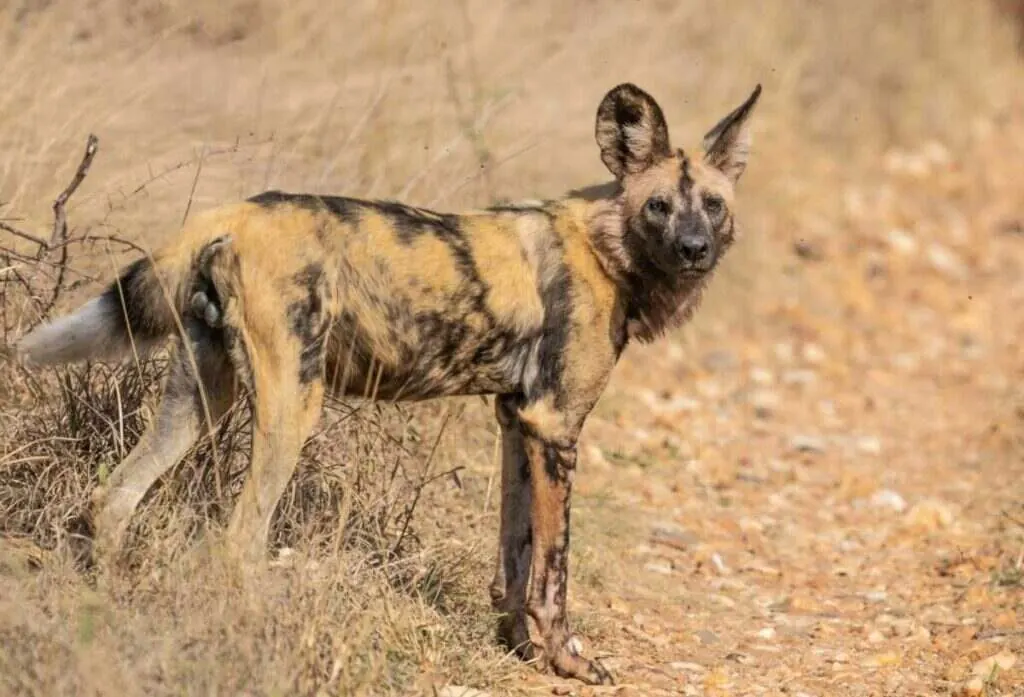
Not toward people, and not much toward each other either. Inside the pack, wild dogs are among the most cooperative carnivores in Africa. Pups eat first at a kill, and adults bring food back for sick or injured pack members. You can read more about this in our 30 African wild dog facts.
Between packs, it’s a different matter. Rival packs can fight hard over territory. Wild dogs also mob hyenas to protect a kill. That aggression stays inside the animal world, though, and it doesn’t carry over to humans.
Are African wild dogs dangerous to livestock or pets?
Sometimes, but far less often than farmers fear. A 2005 study led by Rosie Woodroffe tracked wild dogs across livestock areas in northern Kenya. It found about one attack on livestock per 1,000 square kilometers (386 square miles) each year.
When attacks did happen, the dogs killed an average of 3.2 sheep or goats, or 1.3 cattle. The cost also depended on wild prey. Where antelope remained, losses came to about US$3.40 per wild dog each year. Where wild prey had gone, that figure jumped to US$389.
In other words, wild dogs turn to livestock mainly when their natural food disappears. Traditional herding, with people and dogs guarding the flock, also keeps losses low.
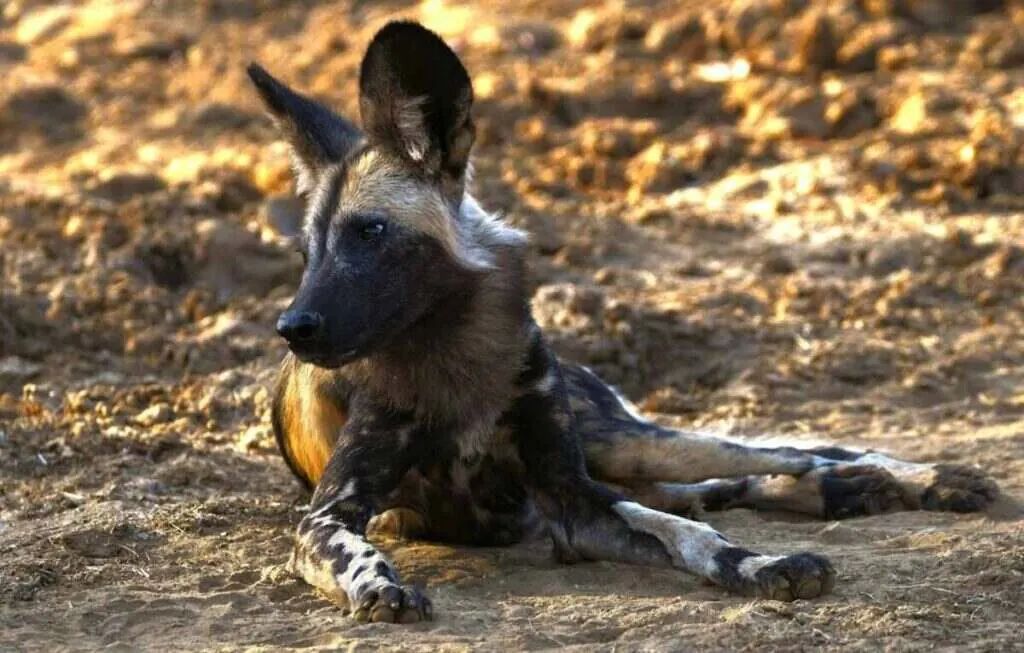
Pet dogs face a different risk. Domestic dogs can pass rabies and canine distemper to wild dogs, and outbreaks have wiped out whole packs. For that reason, some conservation projects vaccinate domestic dogs living near wild dog areas.
Humans are the bigger danger
People usually ask, are African wild dogs dangerous to us. The traffic runs the other way, though. Only about 6,600 adults survive in 39 subpopulations, and the IUCN lists the species as Endangered. Their main threats are habitat loss, snares, road traffic, shooting and disease from domestic dogs.
So if you ask who is dangerous to whom, people come out well ahead. Are African wild dogs dangerous to us? Far less than we are to them.
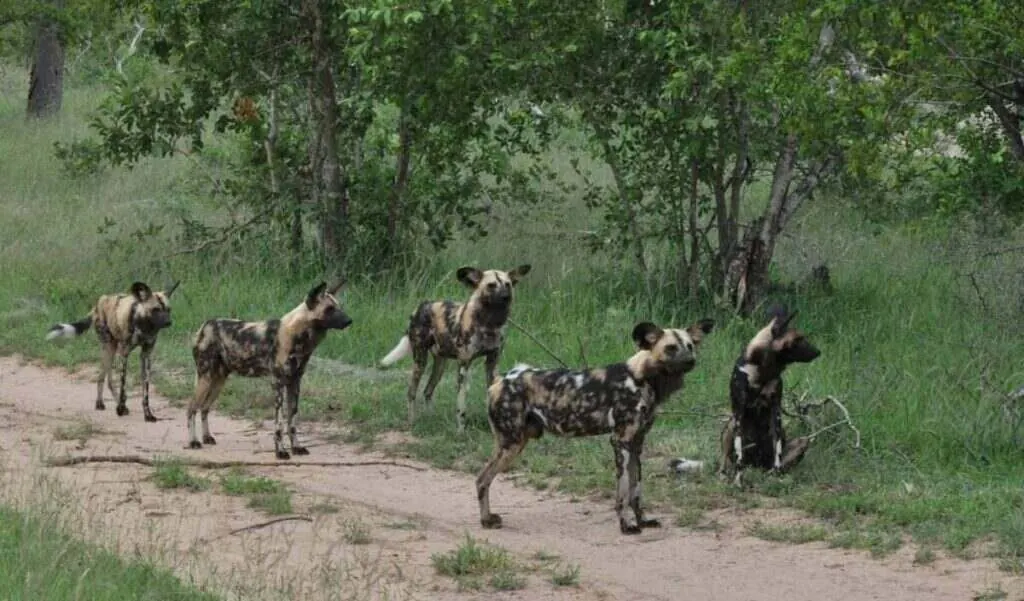
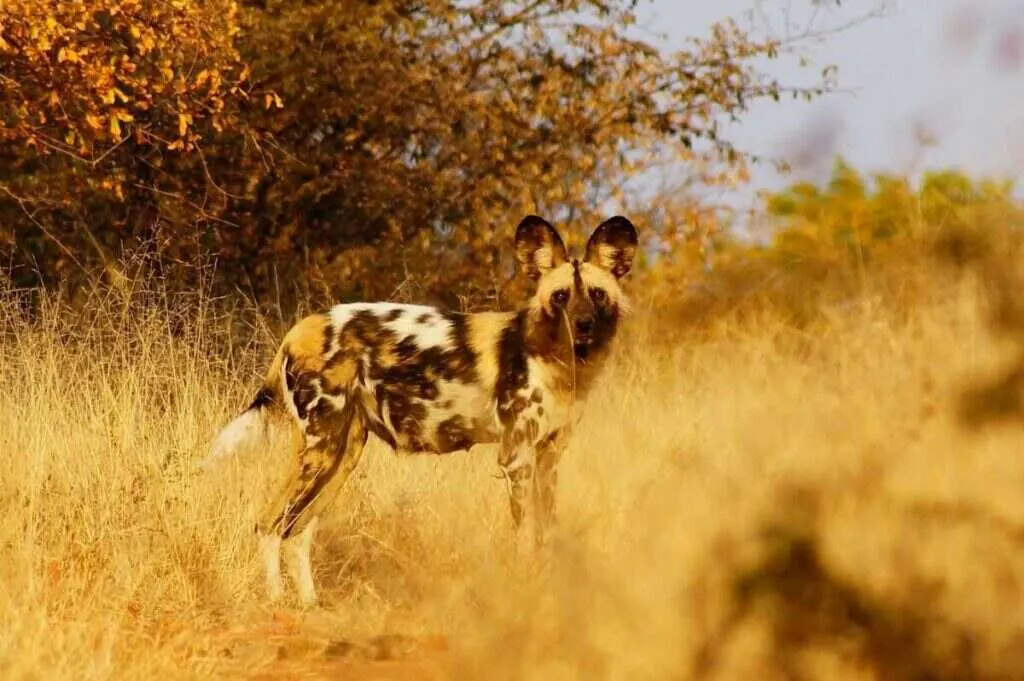
Safari safety: are African wild dogs dangerous on foot?
Are African wild dogs dangerous on foot? Not in practice, and you need no special precautions to watch them from a vehicle. Still, a few sensible rules protect both you and the pack.
- Stay seated inside the vehicle and keep your arms in.
- Let your guide choose the distance, especially near a den with pups.
- Keep your voice low and avoid sudden movements.
- Never feed wild dogs or leave food out at camp.
- On a walking safari, stay behind your guide and stand still if a pack approaches.
- Don’t run from a pack, because running triggers a chase response in most predators.
- Leave pet dogs at home when you visit areas with wild dogs.
Follow these and your sighting will stay calm. More importantly, the pack won’t learn to link people with food, which keeps both sides safe.
Are African wild dogs dangerous? FAQs
Are African wild dogs dangerous to humans?
No. Long-term researchers report no attacks on people in the wild, and packs move away from people on foot. The only fatal case on record happened in a zoo enclosure in 2012.
Can African wild dogs kill a human?
A pack could physically kill a person, as the 2012 Pittsburgh Zoo case showed. In the wild, there is no documented case of wild dogs killing or attacking a person.
Are African wild dogs dangerous on safari?
No. Packs rest and hunt close to safari vehicles without showing interest in the people inside. Your guide will keep a respectful distance, especially around dens.
Are African wild dogs dangerous to children?
There are no recorded attacks on children in the wild. In northern Kenya, children walk to school and herd goats in wild dog country, and local families are not afraid of them.
Are African wild dogs dangerous to dogs and livestock?
Rarely. One Kenyan study recorded about one livestock attack per 1,000 square kilometres a year. The bigger issue is disease, because domestic dogs pass rabies and distemper to wild packs.
Should you be afraid of African wild dogs?
There is no need to fear them. Respect them as wild predators and give them space. If you meet a pack on foot, stand still, stay calm and let the dogs move away.
Can you keep an African wild dog as a pet?
No. They are wild, endangered pack animals that need a large territory and a family group. Even zoos keep them in large enclosures and in whole packs.