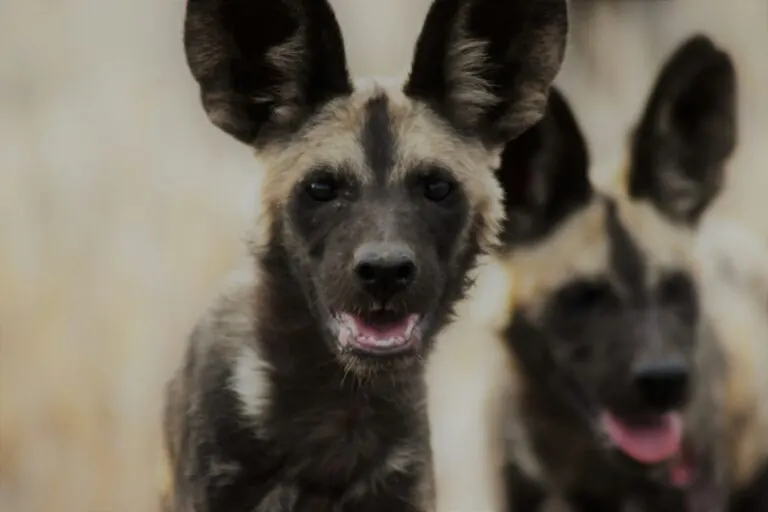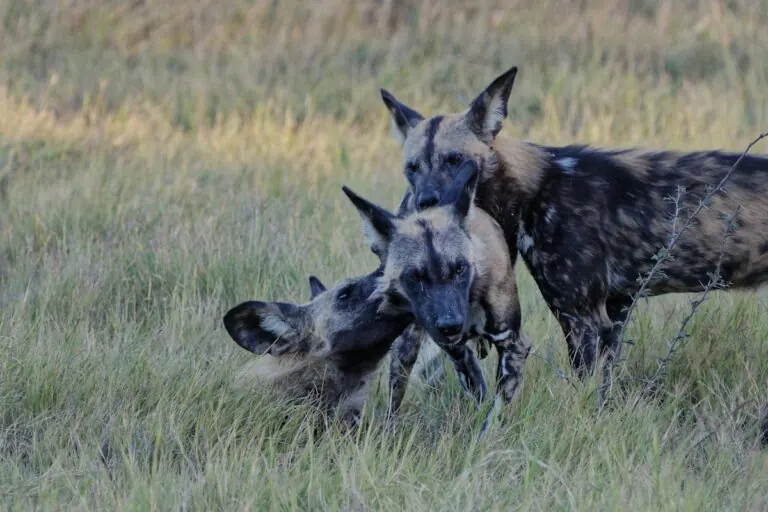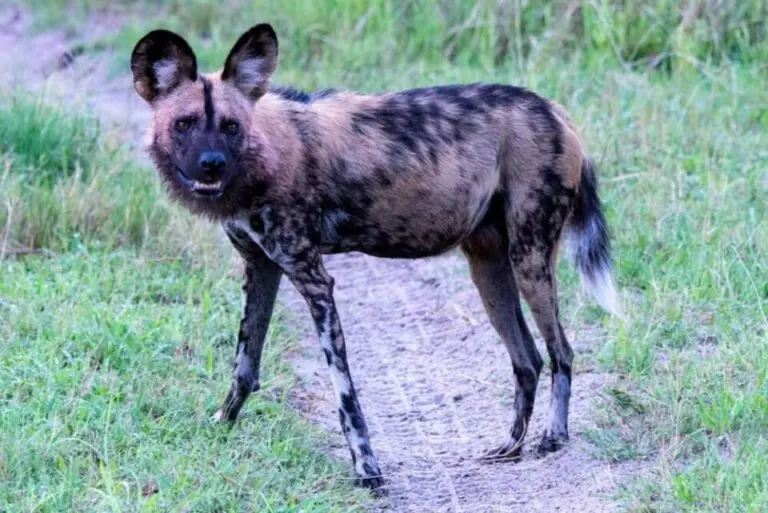
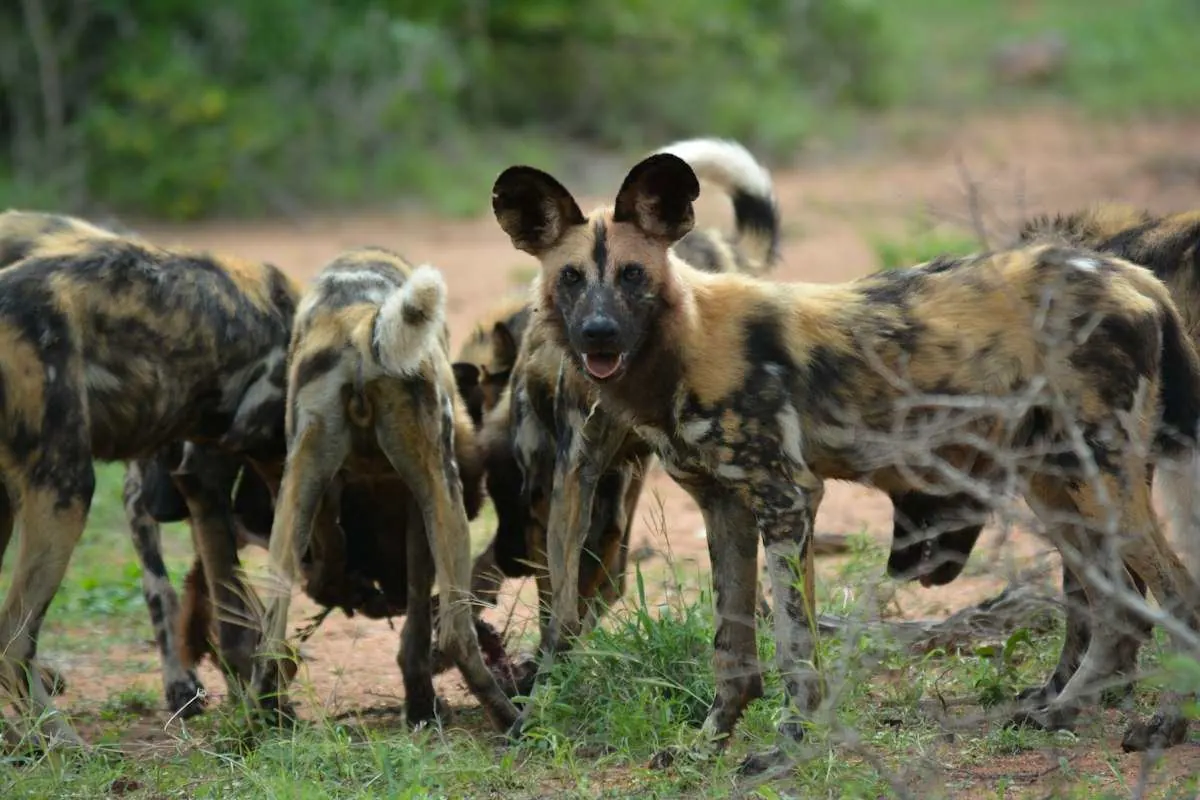
An African wild dog pack is a family group built around one breeding pair. The rest of the pack is usually their grown offspring and a few of their brothers or sisters. Most packs have about 6 to 15 adults, plus pups in a good year. Every dog helps to hunt, feed the young and guard the den. And compared with wolves or hyenas, pack members fight very little.
How do African wild dog packs work?
An African wild dog pack works as a cooperative family. One dominant pair breeds, and the other adults help raise their pups. The pack hunts together, shares every kill and feeds the young, the sick and the injured. Ranks exist, but the dogs keep order through greetings and body language rather than fights.
A typical pack includes:
- The alpha pair: one dominant male and one dominant female
- Adult helpers: often the pair’s older offspring and their siblings
- Yearlings: young dogs between one and two years old
- Pups: the current litter, which can hold 10 or more young
In many packs, the adult males are brothers. The adult females are often sisters who came from a different pack. This mix comes from the way young dogs leave home to form new packs.
The alpha pair: the African wild dog alpha male and female
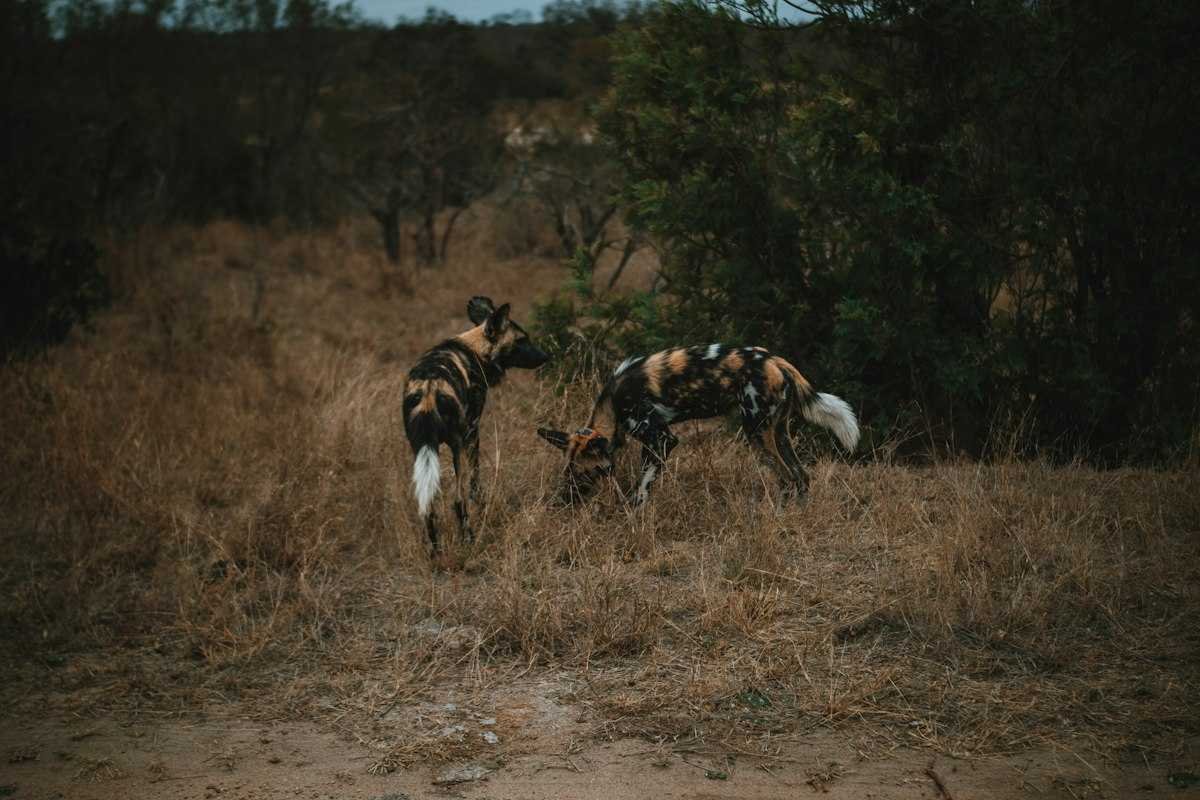
Most established packs have one dominant breeding pair. The African Wildlife Foundation notes that this pair often remains together for years and usually produces the pack’s pups.
Why usually only the alpha pair breeds
In most packs, only the alpha female has pups. The alpha male is usually the father. So the whole pack puts its effort into one litter each year. However, a lower-ranking female sometimes breeds too. When that happens, the alpha female may take over the pups, drive them off or even kill them. That is one of the few times you see serious conflict inside a pack.
How an alpha is chosen
The biggest or strongest dog does not always become the alpha. Dr Gregory Rasmussen of Painted Dog Research in Zimbabwe has recorded an alpha male with only three legs. He has also seen one with no tail. So pack leadership appears to depend on social relationships and experience rather than body size alone.
What happens when an alpha dies
The loss of a dominant breeder can destabilize a pack and may cause it to split, although succession is possible when another suitable adult is present. The effect is often greatest when the breeding female is lost because reproduction and pup care are central to pack stability.
African wild dog pack size
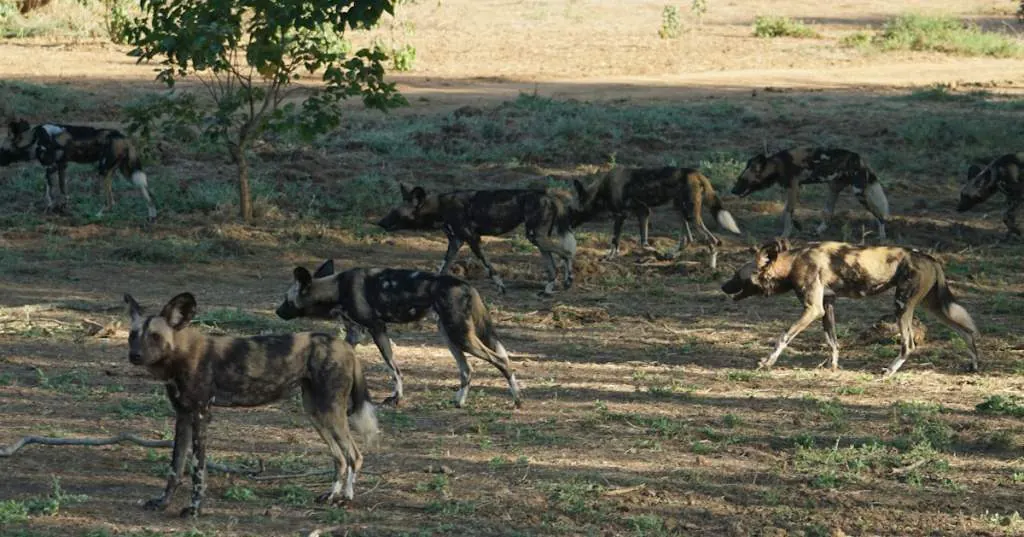
Pack size changes a lot through the year and between regions.
| Pack detail | Typical figure |
|---|---|
| Average adults and yearlings | About 10 |
| Common range | 6–15 adults |
| Smallest packs | 2–3 dogs |
| Large modern packs | 30–50, including pups |
| Historic records | Up to about 100 |
| Average litter size | About 10 pups |
Average pack size
The WWF puts the average at around 10 dogs. That number rises sharply after a litter is born, then drops again as pups die or young adults leave.
Largest African wild dog pack recorded
Historic records describe packs of up to about 100 dogs. Today, packs of 30 to 50 are rare. Most of those large counts include a big litter of pups that has not yet thinned out.
Why small packs struggle
A pack with only two or three adults has a hard time. It cannot guard the den while also hunting. It also loses kills to spotted hyenas more often, because a few dogs cannot chase them off. As a result, small packs raise fewer pups, and many do not last long.
Wild dog pack hierarchy: is there a pecking order?
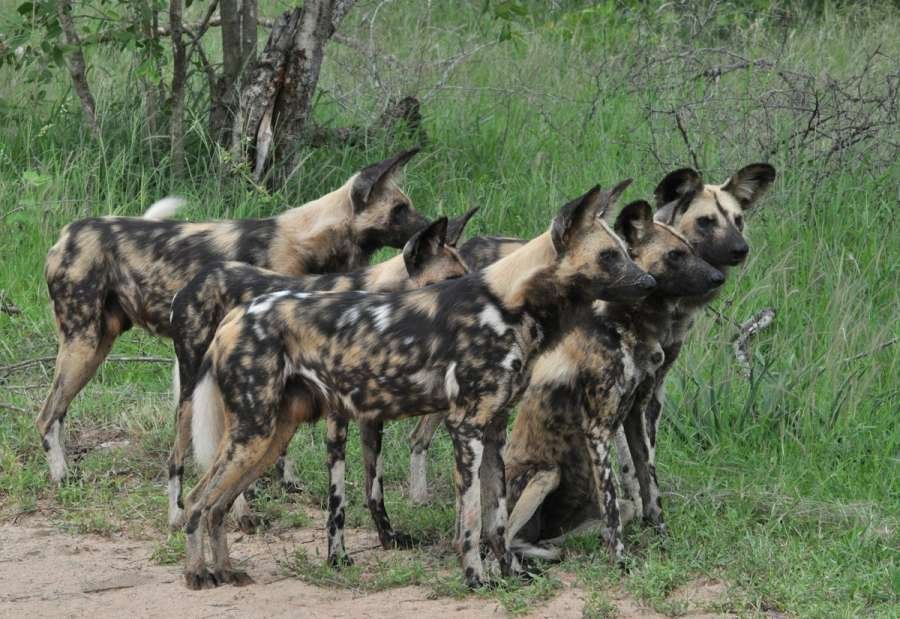
Yes, but it is mild. The African wild dog pack has a clear order, though you rarely see dogs fight to prove it.
Separate ranks for males and females
Males and females each have their own ranking. The alpha male is at the top of the male order, and the alpha female leads the females. So a dog mostly competes with others of the same sex.
How rank shows up
Lower-ranking dogs show respect through body language. They lower the head, arch the back and tuck the tail. Meanwhile, they lick and nuzzle the face of a higher-ranking dog. These greetings happen many times a day, which keeps the peace before any tension can build.
Do African wild dogs fight for dominance?
They rarely fight over rank. Painted Dog Research describes a system where “fighting is rare to non-existent”, and etiquette keeps order instead. The main exception is conflict between breeding females over pups. Fights between males for the top spot are uncommon, though they can happen when a new group joins.
Roles inside the pack
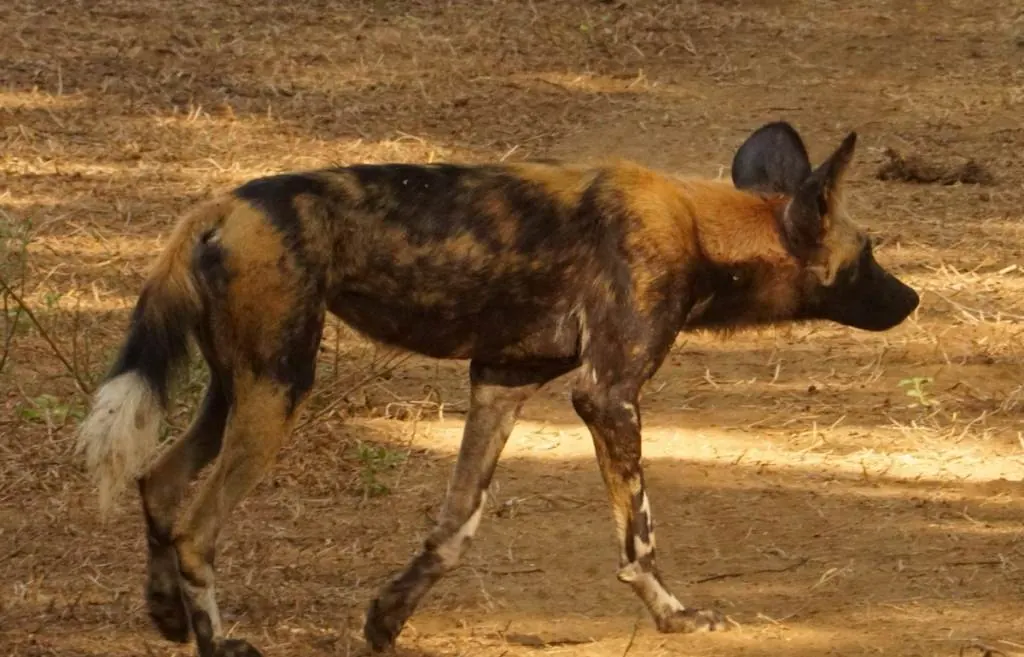
Every adult in a wild dog pack has work to do. The roles change from day to day rather than staying fixed.
Hunters
Most adults take part in a hunt. They chase as a group, with the lead position changing during the chase. Our guide to African wild dog hunting covers the chase step by step.
Babysitters at the den
While the pups are small, one or two adults stay behind at the den. These babysitters guard the pups from hyenas, lions and other threats. They can be male or female, and the role often rotates.
Food sharing
Wild dogs can bring food back from a kill and regurgitate it for pups, babysitters and other pack members that stayed behind. This food sharing helps animals that did not take part in the hunt. You can read more in our guide to what African wild dogs eat.
Care for sick and injured dogs
Pack members may also feed dogs that are injured, sick or old, showing how strongly survival depends on cooperation within the group.
Pups come first in the pack
Pups receive unusually strong support from the whole pack. Adults bring food back to the den, guard the young and often allow pups priority at kills. Detailed breeding, denning and pup-development stages are a separate part of African wild dog biology and are better covered in a dedicated guide to African wild dog pups.
How the pack makes decisions
Before moving off, African wild dogs often gather in social rallies that include close contact, calls and repeated sneezes. Research in Botswana found that sneezing can act as a quorum signal linked to group departure, showing that pack movement is influenced by social signaling as well as dominance.
Leaving the pack: dispersal and new packs
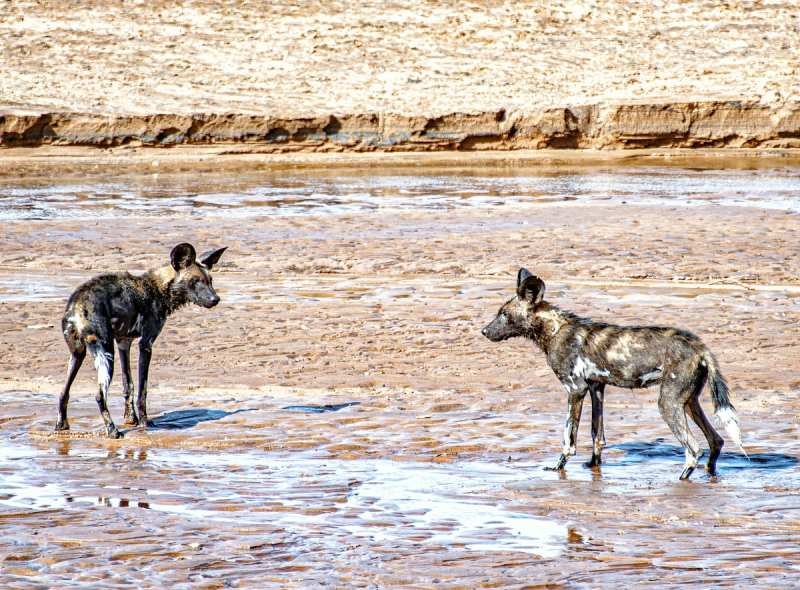
Young adults do not stay in their birth pack forever. Most leave to find mates and start their own packs.
When they leave
Females often leave at about 2 to 3 years old. Males tend to leave later, at around 3 to 4 years. Some males never leave at all and stay on as helpers.
How they travel
Dogs leave in small groups of the same sex, often brothers or sisters together. Males can travel 240 km or more from their birth range. Females tend to settle closer to home.
How a new pack forms
A group of brothers meets a group of unrelated sisters. If the two groups accept each other, they form a new pack. Then one male and one female rise to become the new alpha pair. Because the males and females come from different families, this system keeps inbreeding low.
How wild dog packs differ from other social carnivores
African wild dogs are notable for strong cooperation, low levels of serious within-pack aggression and extensive care for young and vulnerable members. Wolves and spotted hyenas are also highly social, but their group structure, feeding order and dominance systems differ in important ways.
African wild dog pack FAQs
How many African wild dogs are in a pack?
Most packs have about 6 to 15 adults, with an average of around 10. After a litter is born, a pack can grow to 30 or more for a short time.
Do African wild dogs have an alpha?
Most established packs have a dominant male and female breeding pair. They usually produce the pups, while the rest of the pack helps with hunting and pup care.
Do African wild dog packs fight each other?
They usually avoid each other. However, fights between neighboring packs do happen, mainly at territory edges. Some of these clashes end in serious injury or death.
Can an African wild dog survive alone?
A lone wild dog struggles to survive for long. It cannot hunt large prey on its own and has no help against hyenas or lions. Most single dogs are dispersers looking for a new group to join.
What is a group of African wild dogs called?
A group of African wild dogs is called a pack.
What is the largest African wild dog pack recorded?
Historic records describe packs of up to about 100 dogs. Today, the largest packs usually reach 30 to 50, including pups.
Are African wild dog packs related?
Mostly, yes. The males in a pack are often brothers. The females are often sisters from another pack, which keeps the pack’s gene pool healthy.
For the wider picture, read our 30 African wild dog facts. You can also find out whether African wild dogs are dangerous to humans.