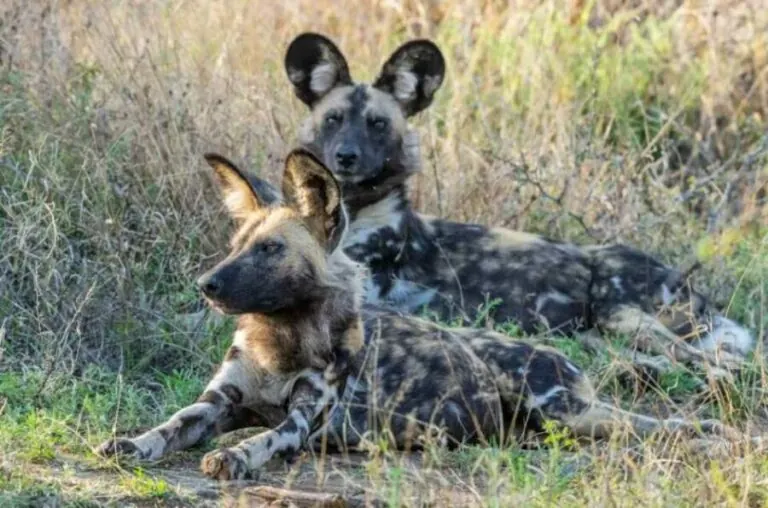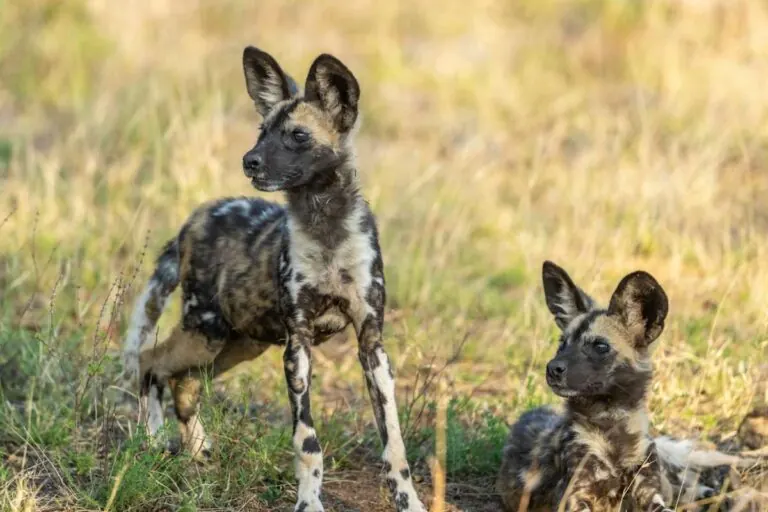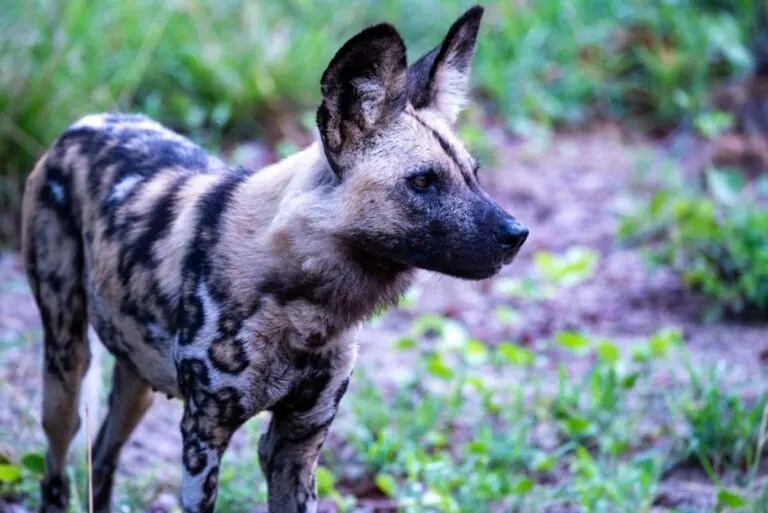
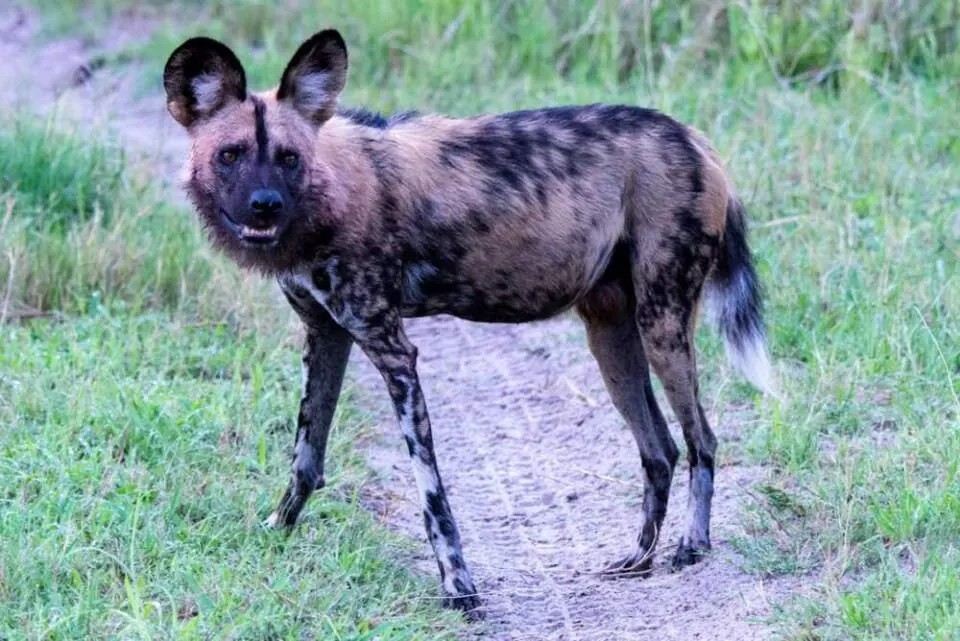
How many African wild dogs are left? The latest IUCN estimate is 1,676 mature African wild dogs, assessed in 2025. That figure counts the breeding population, not every living dog. So the commonly quoted 6,600 is a different measure: an older adult estimate from 2020.
The 2025 IUCN assessment is the latest global assessment identified in our research checked on 1 October 2026. We did not identify a newer, independently verified global estimate covering all ages. The figures below therefore separate the latest breeding estimate from older adult counts; they do not provide a newly verified total across all ages.
African wild dogs, also called painted dogs, are the species Lycaon pictus. Their remaining numbers are best understood by separating breeders, adults, packs and pups.
What is the latest African wild dog population estimate?
These are the key figures to distinguish when reading population reports:
| Population measure | Published estimate | Evidence date | How to interpret it |
|---|---|---|---|
| Mature individuals | 1,676 | 2025 IUCN assessment | Estimated breeding population; excludes many living dogs |
| Packs worldwide | Fewer than 700 | Canid Specialist Group summary of the 2025 reassessment | Social groups, not individual animals |
| Older adult population estimate | Approximately 6,600 | 2020 IUCN publication | An older, broader measure; not a new 2026 census |
A pack can include breeders, other adults, yearlings and pups. The mature-individual estimate therefore represents only part of the living population. The table separates the available measures instead of combining them into a misleading total.
A publication date is also different from a survey date. The latest assessment draws on evidence collected over time; it is not a simultaneous count of every pack in 2025 or 2026.
What does “mature individuals” mean?
For this species, the assessment counts the dominant breeding pair and makes allowances for additional breeders. It does not simply count every sexually mature adult. The approach is explained in the current IUCN population methodology.
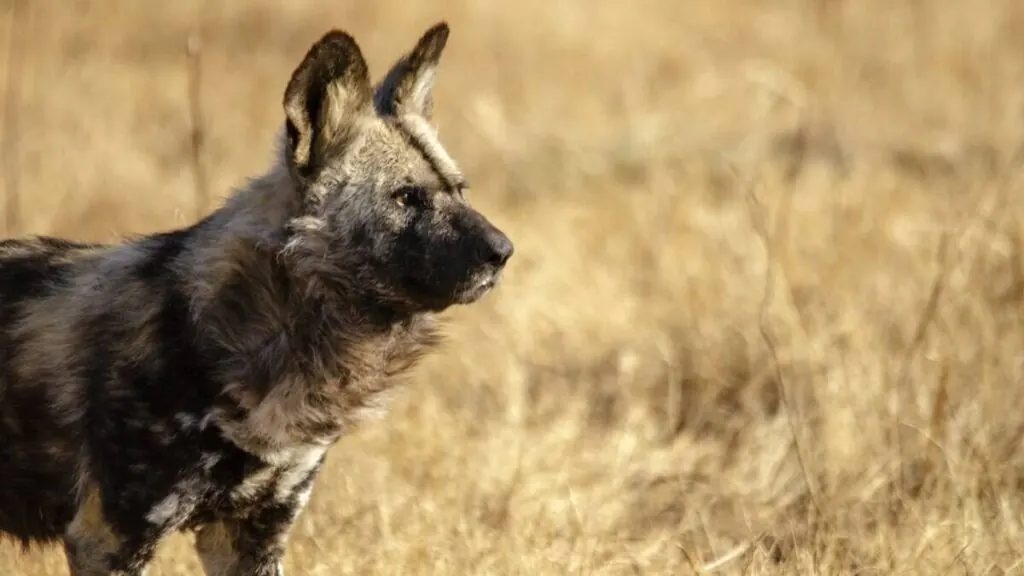
For example, seeing ten adult dogs together does not establish that there are ten breeding individuals. Some pack members may help the group without reproducing that year. Our guide to African wild dog pack structure explains their roles.
When comparing figures, check the age category, the geographic area and the observation period. A count of adults in one reserve answers a different question from a global estimate of breeders.
Why do sources disagree on how many African wild dogs are left?
Older estimates remain widely quoted
The 2020 IUCN publication reported approximately 6,600 adults, including 1,409 mature individuals. Those figures continue to circulate in wildlife profiles and conservation introductions.
An article published recently can still repeat an older estimate. The date beside the headline tells you when the article appeared, not necessarily when its population evidence was collected or reassessed.
The older adult figure provides historical context, but it does not establish how many dogs of all ages are alive in 2026.
New survey coverage can change the estimate
The IUCN SSC Canid Specialist Group’s reassessment summary explains that previously undocumented packs, particularly in Angola, improved knowledge of the population. Their inclusion does not demonstrate that those packs were newly born or that the species recovered.
Finding animals and gaining animals are different events. If a survey reaches a previously poorly studied area, the published estimate may increase while conditions elsewhere deteriorate.
Counting methods can change too
A revised calculation can change an estimate even without equivalent changes on the ground. That is why comparisons need compatible definitions and methods, as well as the same population boundaries.
Is the African wild dog population increasing or decreasing?
The latest global assessment lists the population trend as decreasing. A higher published breeding estimate does not demonstrate recovery: additional survey coverage and revised treatment of subdominant reproduction affected the comparison, according to the 2025 assessment’s trend analysis.
Better knowledge and better conservation outcomes are different achievements. Finding a previously undocumented pack improves the estimate; showing that a monitored population has grown requires repeated, comparable observations.
Local gains can still matter. A successful litter or restoration project may improve conditions in one place without reversing the wider trend. Recovery needs to persist beyond a single survey or breeding season.
Where do the remaining African wild dogs live?
The latest assessment identifies important strongholds in:
- Kavango–Zambezi Transfrontier Conservation Area (KAZA): a landscape spanning parts of Angola, Botswana, Namibia, Zambia and Zimbabwe.
- Selous–Nyerere, southern Tanzania: an important eastern African landscape.
These are landscapes, not interchangeable country totals. Packs may move across borders, and conditions can differ substantially between populations within the same country.
A 2026 study in Ecology documented long-distance dispersal between distant ecosystems in Zambia. Such movement helps explain why conservation also needs to protect the land between reserves. Travelling successfully does not, by itself, establish that dogs formed a new breeding pack.
Our guide to where African wild dogs live provides the wider distribution and habitat context.
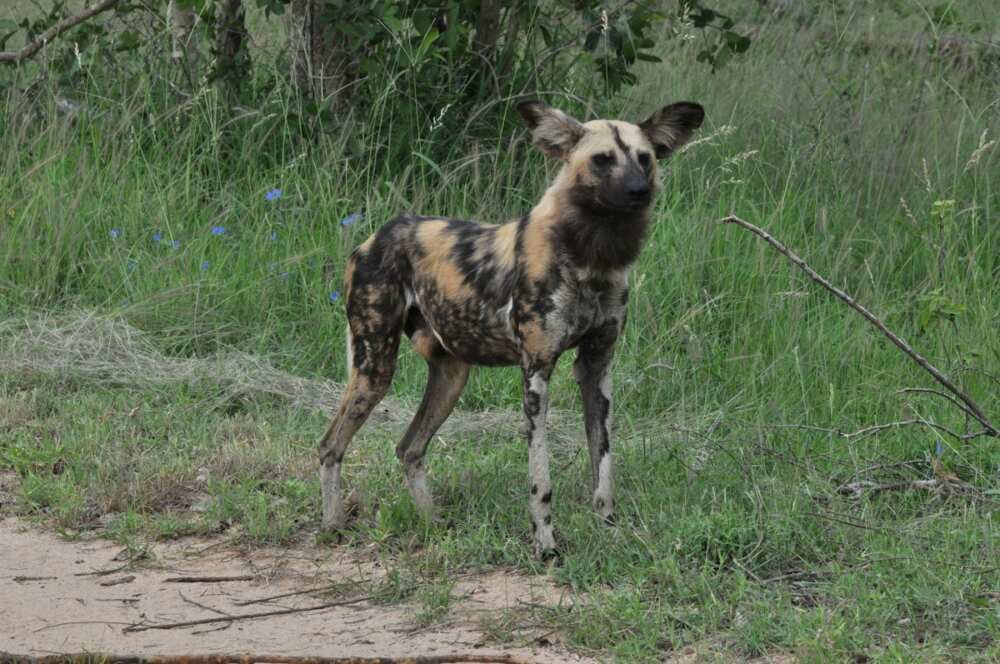
How do researchers estimate African wild dog numbers?
Researchers need more than a collection of sightings. The same pack can appear repeatedly, some dogs remain undetected, and survey effort varies across a landscape.
Camera traps and individual identification
A 2025 camera-trap study of the Selous–Nyerere landscape used seven surveys conducted between 2020 and 2022. The researchers applied spatially explicit capture–recapture modelling to estimate adult-and-yearling density in a sampled part of Selous Game Reserve.
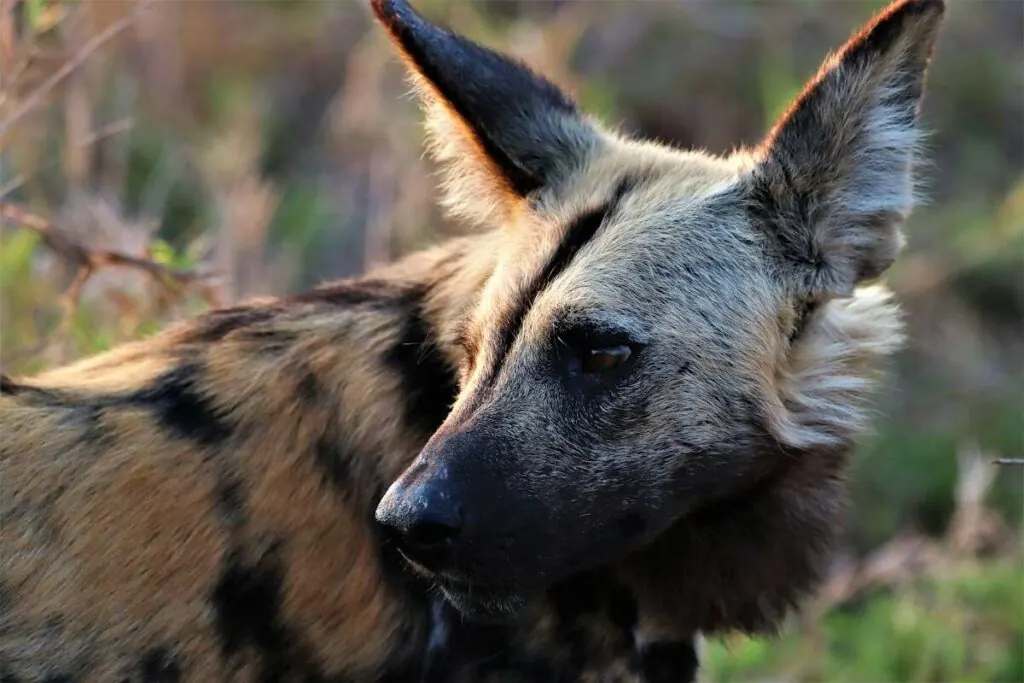
The study reported an adjusted density of 2.14 adults and yearlings per 100 square kilometres, with a 95% confidence interval of 1.42–3.21. This is a local density estimate with uncertainty, not the global population.
Capture–recapture methods use repeated detections of identifiable animals to account for individuals that were probably present but not photographed. Spatial models also consider where those detections occurred.
The confidence interval is essential context. It shows that the researchers did not claim to know one exact density without uncertainty. Multiplying that local result by all potential habitat in Tanzania—or across Africa—would require assumptions the result itself does not justify.
Combining complementary evidence
Some methods are especially useful for finding animals rather than estimating their total abundance. A 2025 detection-dog study, for example, used scat searches alongside camera traps and genetic verification to investigate wild dog presence and a shared marking site.
A confirmed presence record answers “Were wild dogs here?” It does not automatically answer “How many live throughout this landscape?” Good monitoring separates those questions and chooses methods appropriate to each.
Visitor photographs can help monitoring teams identify animals, but several sightings may involve the same dogs. Repeated sightings are therefore not necessarily additional individuals.
Why can local population numbers change quickly?
The Canid Specialist Group’s recent update describes boom-and-bust population dynamics and vulnerability to disease, snares, road deaths and conflict.
For monitoring, a change in the number seen requires investigation. Dogs may have died, moved beyond the survey boundary, formed a new pack or simply escaped detection. Those explanations lead to different conclusions about conservation progress.
Timing also affects what a visitor sees. A pack photographed with a new litter may look much larger than it did before breeding. That photograph does not establish how many pups will survive to adulthood or join future breeding groups. Our article on African wild dog pups explains their development.
Tracking identities and age categories helps distinguish deaths, movement and new births from changes in detection.
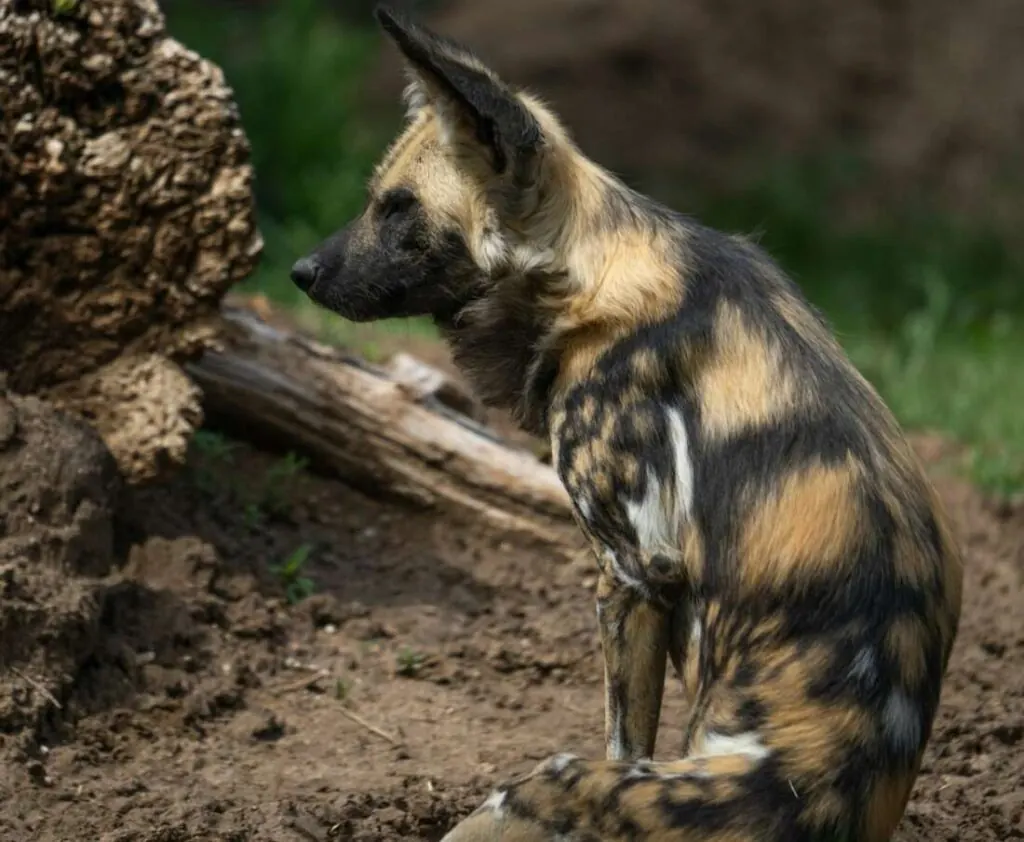
Are African wild dogs close to extinction?
African wild dogs remain globally Endangered, as confirmed in the Canid Specialist Group’s reassessment summary. That status signals serious extinction risk, but it does not provide a countdown or an exact year when the species might disappear.
Local extinction and global extinction are different. Dogs can disappear from one protected area while persisting elsewhere. They can also return through a carefully managed reintroduction.
In an announcement dated 24 April 2026, African Parks reported the translocation of 20 wild dogs in two packs to Zimbabwe’s Matusadona National Park during February 2026, following decades of local absence.
That is a concrete restoration milestone. Because the animals were moved from another population, the transfer itself does not add 20 newly born dogs to the global total. Long-term success depends on what happens after release, including survival and reproduction.
What would population recovery look like?
Lasting recovery would involve packs surviving and breeding over several years, young dogs reaching older age classes, and dispersers establishing new breeding groups. Comparable surveys are needed to distinguish those changes from better detection.
A translocation can restore a species locally, while births and survival determine what follows. Protecting individual dogs, maintaining functioning packs and securing movement routes all contribute to that longer-term outcome. Until then, the answer to how many African wild dogs are left stays an estimate. The latest global figure is 1,676 breeders.
Frequently asked questions
How many African wild dogs are left in 2026?
The latest identified global estimate is u003cstrongu003e1,676 mature individualsu003c/strongu003e, from the 2025 IUCN assessment. It covers the breeding population, not all ages, and is not a separate 2026 census. A newer verified all-age global total was not identified in this research.
Are there only 1,676 African wild dogs alive?
No. Mature individuals are only one population category. Other adults, yearlings and pups cannot be treated as absent simply because they are outside the breeding estimate.
Why do websites say 6,600 African wild dogs remain?
Approximately u003cstrongu003e6,600 adultsu003c/strongu003e was reported in the u003ca href=u0022https://doi.org/10.2305/IUCN.UK.2020-1.RLTS.T12436A166502262.enu0022u003e2020 IUCN publicationu003c/au003e. It is an older adult estimate, rather than a new count covering every age class in 2026.
How many African wild dog packs remain?
The u003ca href=u0022https://canids.org/canidnews/2026-0.pdfu0022u003eCanid Specialist Group’s summary of the 2025 reassessmentu003c/au003e reports u003cstrongu003efewer than 700 packs worldwideu003c/strongu003e. Packs vary in membership, so multiplying this figure by an assumed pack size would not produce a reliable new global total.
Does a higher population estimate prove recovery?
No. Surveys can find previously undocumented animals, and calculation methods can change. Population growth needs evidence from comparable observations over time.
Do the wild population figures include zoo animals?
No. The figures discussed here concern wild populations. Captive populations are a separate measure and should not be added to a wild estimate without changing its definition.
Can researchers give an exact live total?
A global estimate is more appropriate than an exact live count. Animals can remain undetected, surveys cover different periods, and births, deaths and movements occur between observations.