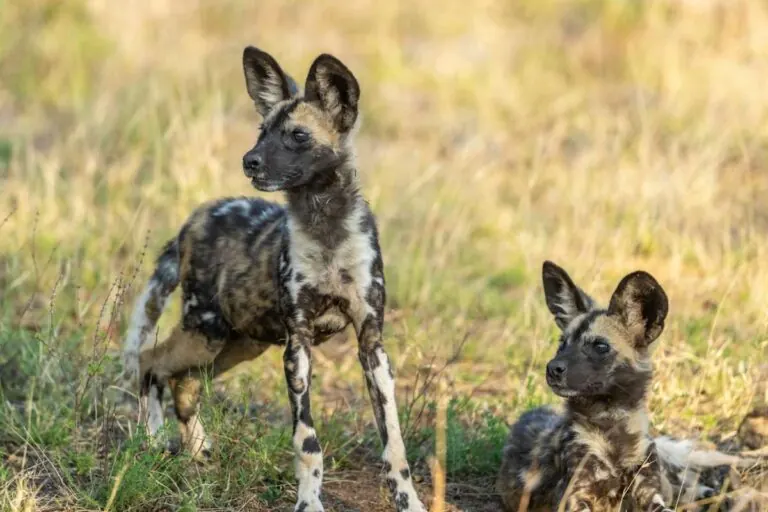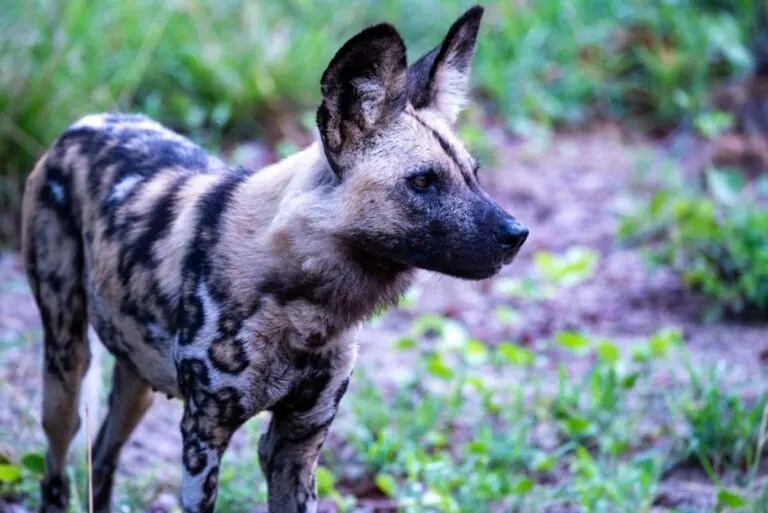
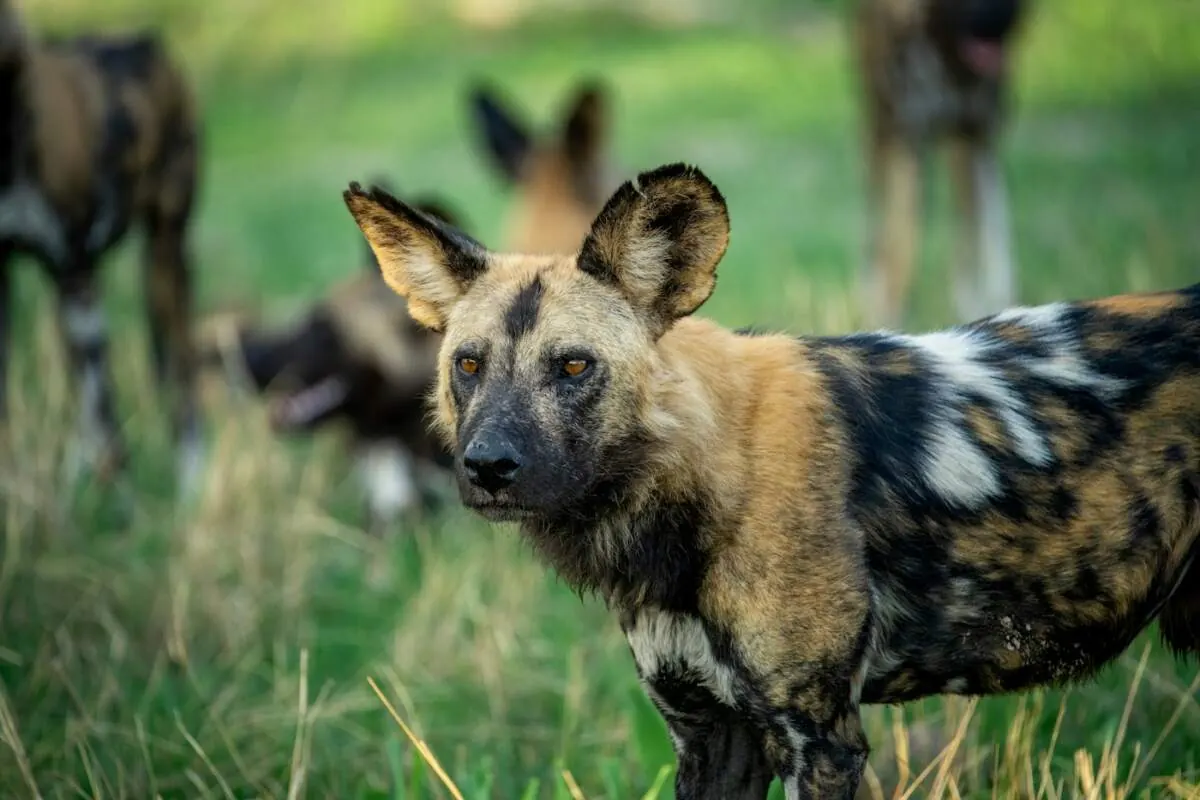
African wild dogs live only in sub-Saharan Africa, in 19 countries (IUCN 2020). Most of the remaining dogs are in southern Africa and the southern part of East Africa. That count comes from the 2020 IUCN Red List assessment by Rosie Woodroffe and Claudio Sillero-Zubiri. It found about 6,600 adults, including roughly 1,400 mature, breeding-age dogs.
The habitat is wider than most people expect. African wild dogs are also called painted dogs or painted wolves (Lycaon pictus). They use savanna, woodland, semi-desert and even mountain forest. They have been recorded from sea level to about 4,000 meters (13,100 feet). Thick bush also suits them better than open plains, for reasons we explain below.
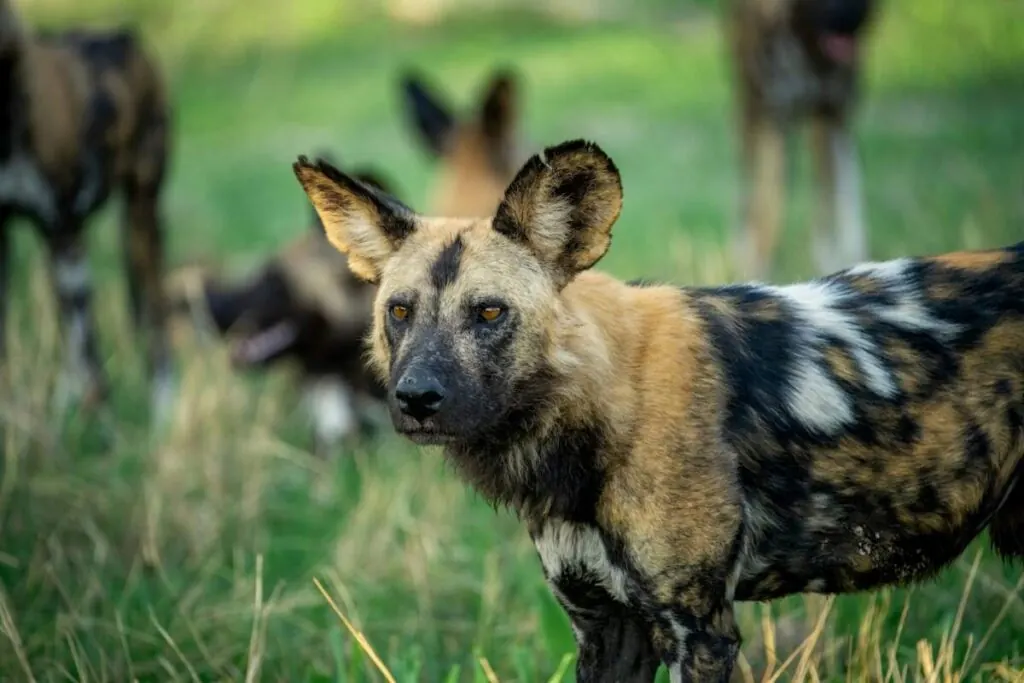
Where do African wild dogs live? Quick facts
Here are the main facts in one place.
| Question | Answer |
|---|---|
| Continent | Africa, south of the Sahara |
| Countries with wild dogs today | 19 (IUCN 2020) |
| Countries where they may be extinct | 7 more |
| Main habitats | Savanna, woodland, semi-desert, short-grass plains, upland forest |
| Elevation | Sea level to about 4,000 m (13,100 ft) |
| Largest populations | Northern Botswana, western Zimbabwe, eastern Namibia, western Zambia, southern Tanzania |
| Adults left in the wild | About 6,600 (roughly 1,400 mature), in 39 separate subpopulations (IUCN 2020) |
| Status | Endangered |
So the species still covers a large part of Africa on a map. In practice, though, it survives in scattered islands of safe land. The biggest of those islands holds only about 250 breeding-age dogs.
What countries do African wild dogs live in?
African wild dogs live in 19 countries, according to the IUCN. Here is the full list, grouped by region. Most of them are in southern Africa. However, small groups hang on in East, Central and West Africa too.
| Region | Countries with wild dogs (2020) |
|---|---|
| Southern Africa (8) | Angola, Botswana, Malawi, Mozambique, Namibia, South Africa, Zambia, Zimbabwe |
| East Africa (5) | Ethiopia, Kenya, South Sudan, Sudan, Tanzania |
| Central Africa (2) | Central African Republic, Chad |
| West Africa (4) | Benin, Burkina Faso, Niger, Senegal |
Southern Africa is the stronghold. Botswana, Zimbabwe, Zambia and Namibia share the largest connected population. South Africa holds a smaller number, mostly in Kruger and in fenced reserves. There, conservation teams move dogs between reserves to keep packs healthy.
East Africa holds the next biggest share. Southern Tanzania is the core. In Kenya, most packs live on community and private land in Laikipia and Samburu, outside national parks. Ethiopia and South Sudan have small groups that few researchers have studied.
Central and West Africa hold the fewest dogs. Chad and the Central African Republic have scattered packs. In West Africa, only a few dozen adults survive, all inside protected parks.
The IUCN also lists 7 countries where wild dogs are “possibly extinct”. These are the Democratic Republic of the Congo, Côte d’Ivoire, Guinea-Bissau, Mali, Nigeria, Togo and Uganda. In other words, nobody has confirmed a resident pack there in years.
You may see a lower figure, such as 14 countries, on other sites. Those numbers come from older or partial counts. The 2020 IUCN assessment is the most recent full review we could find, and it lists 19. It also keeps the species listed as Endangered.
African wild dog range map: then and now
Wild dogs once lived across most of Africa south of the Sahara. Older accounts place them in about 39 countries. You can find more numbers like this in our African wild dog facts. By 2020, the IUCN could confirm them in only 19.
So what happened? Farmers shot and poisoned them for decades. Then roads, fences and farms split their land into small pieces. As a result, the modern range map looks like a scatter of dots, not one large block.
The gaps matter. A pack cut off in a small reserve can’t swap members with other packs. Over time, that isolated group becomes easy to lose to one disease outbreak.
African wild dog habitat: what kind of land do they need?
African wild dogs don’t need one type of habitat. Instead, they need three things: enough medium-sized prey, a lot of space, and few people. Where those three line up, painted dogs can live in very different kinds of country.
Savanna and open woodland
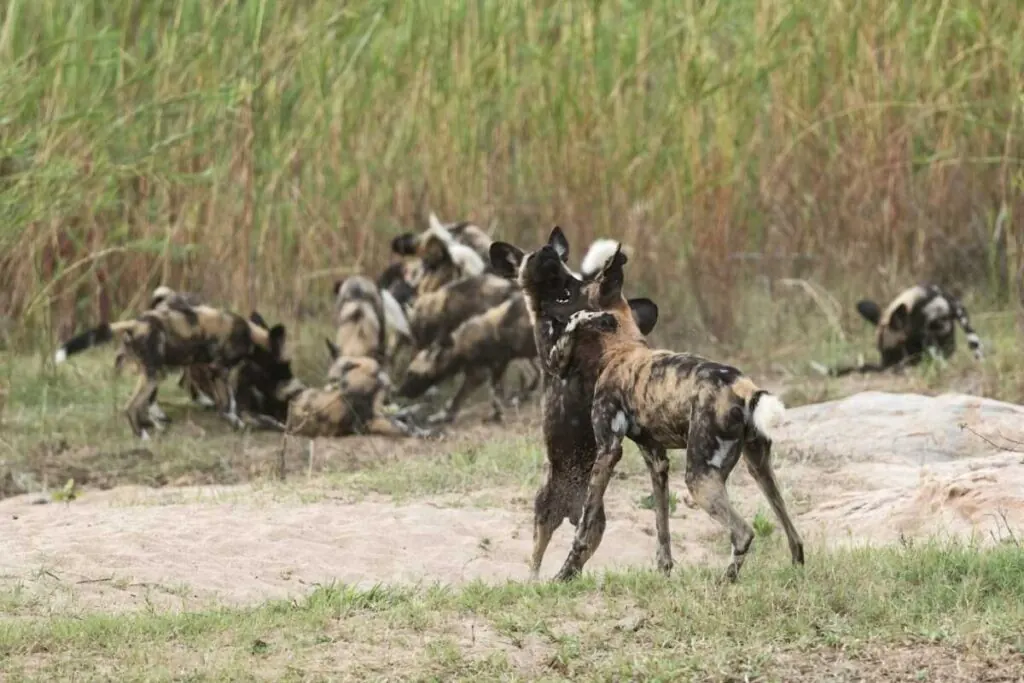
This is the classic wild dog habitat. Mixed grass and trees give cover for a chase and plenty of impala and kudu. Mopane and miombo woodland in Botswana, Zimbabwe and Zambia hold many of the healthiest packs.
Short-grass plains
Open plains look ideal for a fast runner. Yet wild dogs often struggle there, because lions and hyenas are common on open ground. The Serengeti once had well-known packs, but they vanished from the central plains in the early 1990s.
Semi-desert and dry scrub
Wild dogs also use dry scrub and semi-desert country. They turn up on the drier edges of Botswana and in eastern Namibia. Packs there move farther each day, because prey is thin on the ground.
Upland and mountain forest
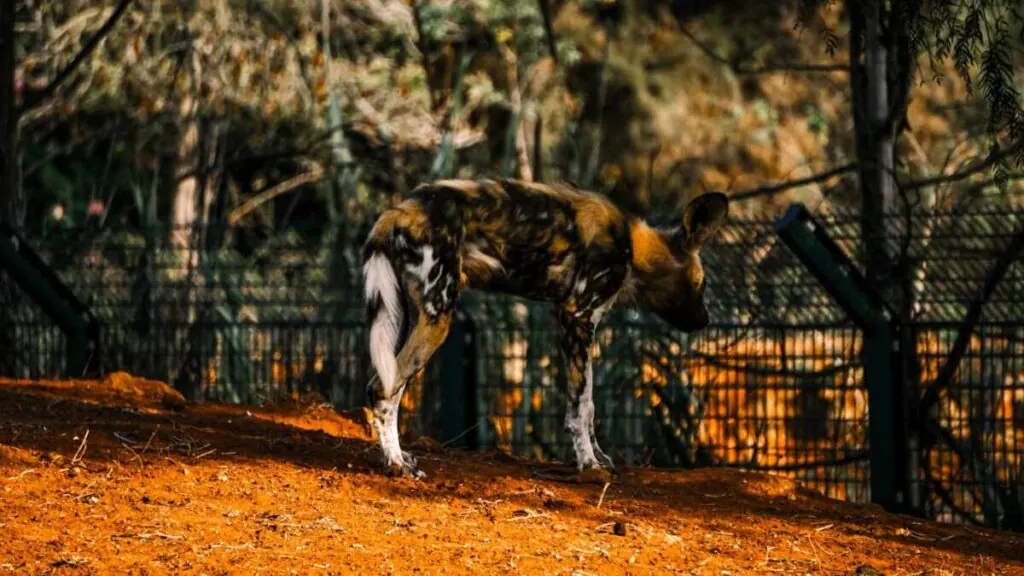
Some packs live in forest, which surprises many readers. In Ethiopia’s Harenna Forest, wild dogs have been recorded at up to 2,400 meters (7,900 feet). Kenya’s Ngare Ndare Forest also holds a small forest population.
Floodplains and wetland edges
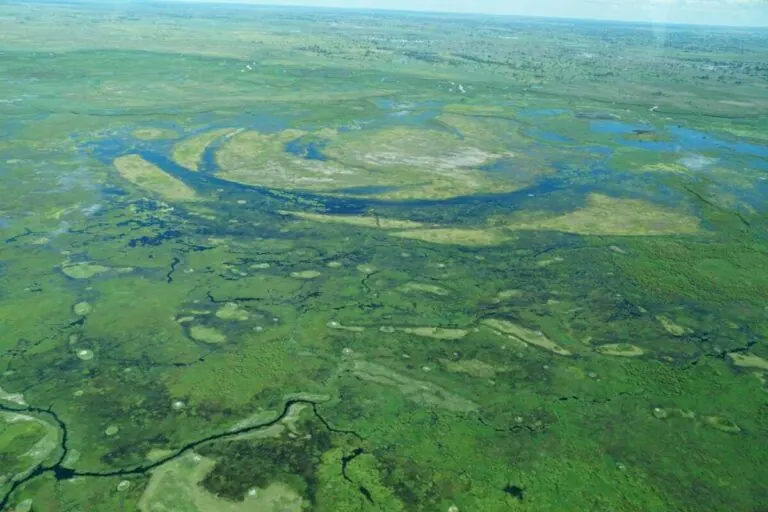
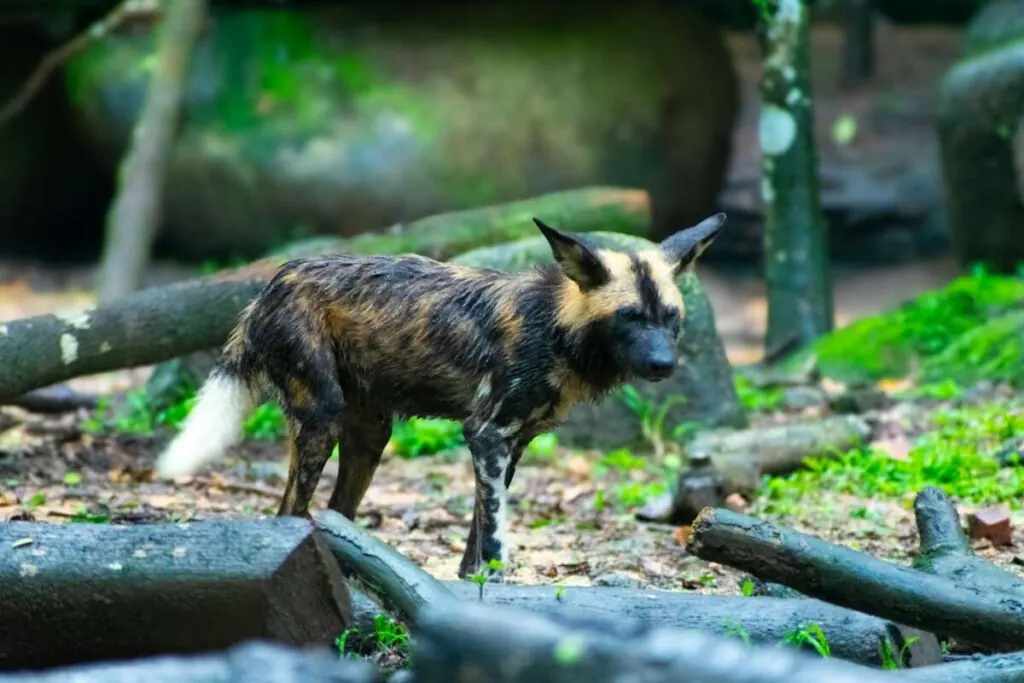
In Botswana’s Okavango Delta, packs live on dry islands between water channels. They hunt the red lechwe and impala that graze the floodplain edges. In the wet months, rising water pushes packs onto the larger islands and dry tongues of land.
Do African wild dogs live in the desert?
They live in semi-desert, but rarely in true desert. A population survived just west of Algeria’s Hoggar Mountains into the 20th century. Today, though, experts think wild dogs have died out across that whole Saharan region.
Deserts fail wild dogs for a simple reason. There is too little prey spread over too much ground. A pack also needs to feed pups at a den for weeks, and that is hard where food is scarce.
How high up can African wild dogs live?
The IUCN gives their elevation range as sea level to about 4,000 meters (13,100 feet). In Ethiopia, packs use land between 1,900 and 2,800 meters (6,200 to 9,200 feet). One dog was found at about 4,050 meters (13,300 feet) on the Sanetti Plateau in the Bale Mountains.
Farther south, wild dogs have been recorded at 1,800 meters (5,900 feet) in Zimbabwe. Older reports even describe dogs high on Mount Kilimanjaro. So cold nights and thin air don’t stop them, as long as prey is there.
Why thick bush suits wild dogs better than open plains
Most people picture wild dogs racing across open grassland. However, the IUCN notes that wild dogs reach their highest numbers in thicker bush, not on open plains. That pattern comes down to their rivals.
Lions kill wild dogs, and they kill pups at dens. Spotted hyenas steal kills, and a small pack can lose much of its food this way. Both rivals do well on open plains, where prey herds gather and a kill is easy to spot from far away.
Thick bush changes the odds. A pack can make a kill and eat fast before hyenas find it. It is also easier to keep a den out of sight. In short, cover protects both the food and the pups. You can read how a chase and kill work in our guide to how African wild dogs hunt.
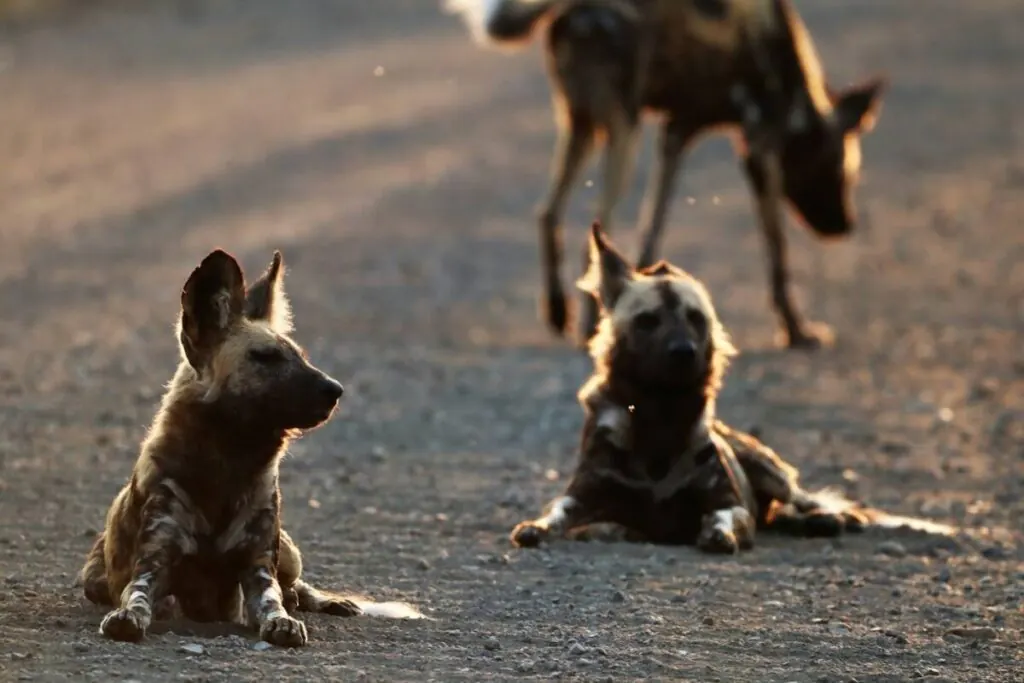
How much space does a pack need?
A lot. A single pack often uses several hundred square kilometers, and in dry areas it needs far more. That is why wild dogs are rare even in big parks. It also explains why fences and farms hit them so hard.
Where are the largest populations today?
The largest populations are in southern Africa and southern East Africa. The IUCN names northern Botswana, western Zimbabwe, eastern Namibia and western Zambia first. Together, these areas form one connected block of wild land.
That block is the Kavango-Zambezi Transfrontier Conservation Area, or KAZA. It covers about 520,000 square kilometers (200,800 square miles) across five countries. In 2021, a University of Zurich team tracked dispersing dogs with GPS collars there. They found northern Botswana worked as the hub that linked packs across the whole area.
Other strongholds include:
- Southern Tanzania, around Nyerere National Park (formerly part of the Selous) and Ruaha
- Kruger National Park and nearby reserves in South Africa
- Northern Mozambique, including the Niassa Special Reserve
- Parts of Kenya’s Laikipia and Samburu country
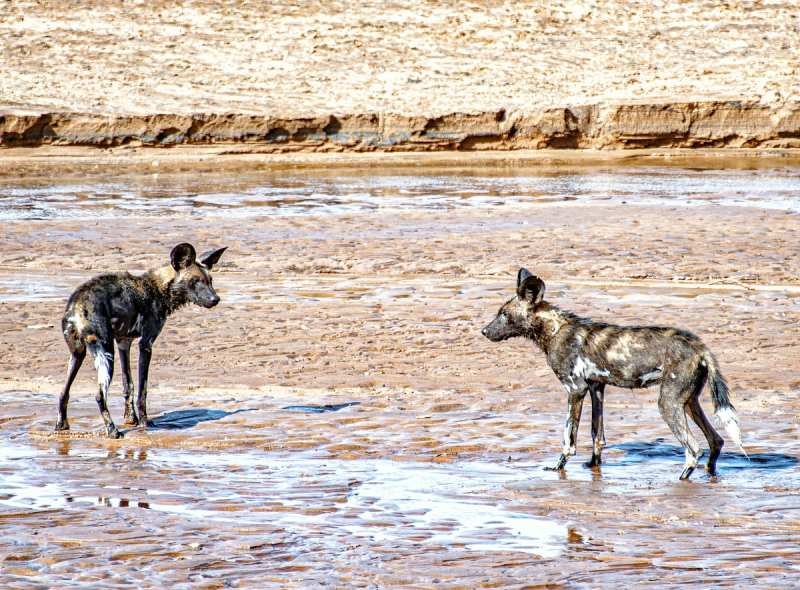
Even so, these populations are small. The largest single subpopulation holds only about 250 breeding-age dogs.
Where have African wild dogs disappeared from?
West Africa has lost almost all of its wild dogs. Only about 70 adults remain there, mainly in Senegal’s Niokolo-Koba National Park and the W-Arly-Pendjari parks shared by Benin, Burkina Faso and Niger.
Central Africa tells a similar story. In the Central African Republic, numbers fell from about 160 dogs in 2012 to 26 in 2017. And across North Africa, the species is gone.
So the loss is not only about numbers. It is also about whole regions going empty. Habitat loss, conflict with farmers, snares and disease from domestic dogs drove these losses.
Where can you see African wild dogs in the wild?
Your best chances are in northern Botswana, Zimbabwe’s Mana Pools and Hwange, South Africa’s Kruger area, and Zambia’s South Luangwa. Botswana’s private concessions give some of the most reliable sightings, because guides can follow packs off-road. Our guide to African wild dogs in Botswana covers the best areas and months to go.
Where do African wild dogs live? FAQs
What continent do African wild dogs live on?
Africa. They live only south of the Sahara, mostly in southern and East Africa. There are no wild populations on any other continent.
How many countries do African wild dogs live in?
The 2020 IUCN assessment confirms them in 19 countries. They may be extinct in 7 more, and they once lived in about 39.
Do African wild dogs live in the rainforest?
No. They avoid lowland rainforest, where prey is hard to chase and packs can’t keep contact. However, some packs live in upland forest in Ethiopia and Kenya.
Do African wild dogs live in the Serengeti?
Not on the central plains today. Packs vanished from there in the early 1990s. A few dogs still use the wider Serengeti ecosystem, including the Loliondo area to the east.
What biome do African wild dogs live in?
Mostly the savanna and dry woodland biome. They also use grassland, semi-desert and upland forest where prey and space allow.
Where do African wild dogs sleep?
They rest in the shade by day and sleep in the open with the pack. Only the breeding female and young pups use a den, and only for a few months each year.
Are there African wild dogs outside Africa?
Not in the wild. Outside Africa, you will only see them in zoos. The wild dog of Asia, the dhole, is a different species.
For the bigger picture, start with our main African wild dog guide.