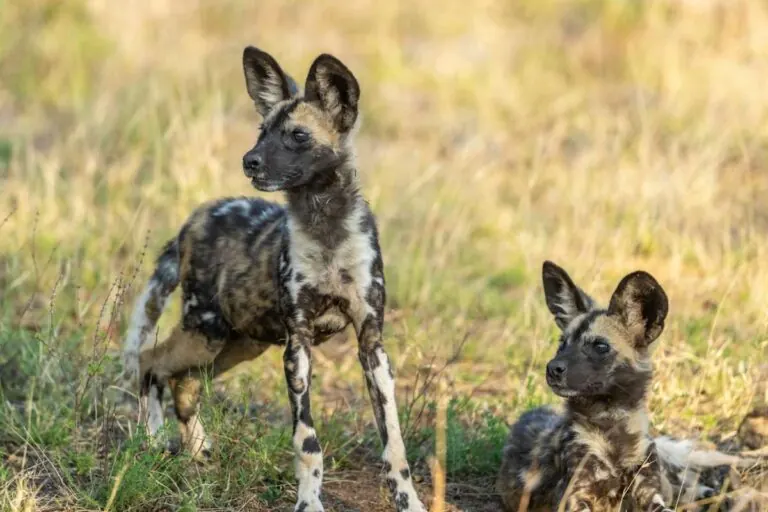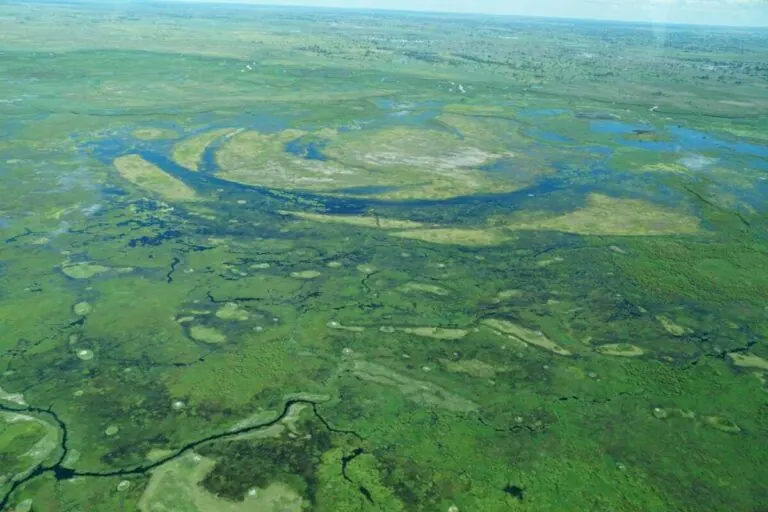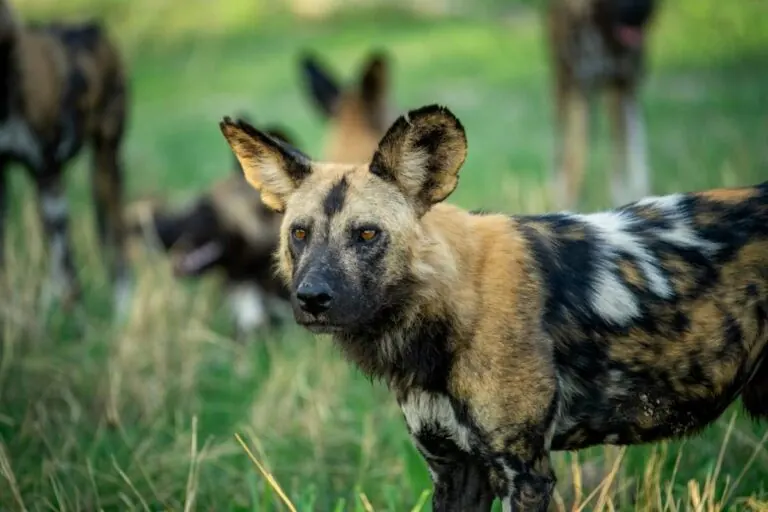
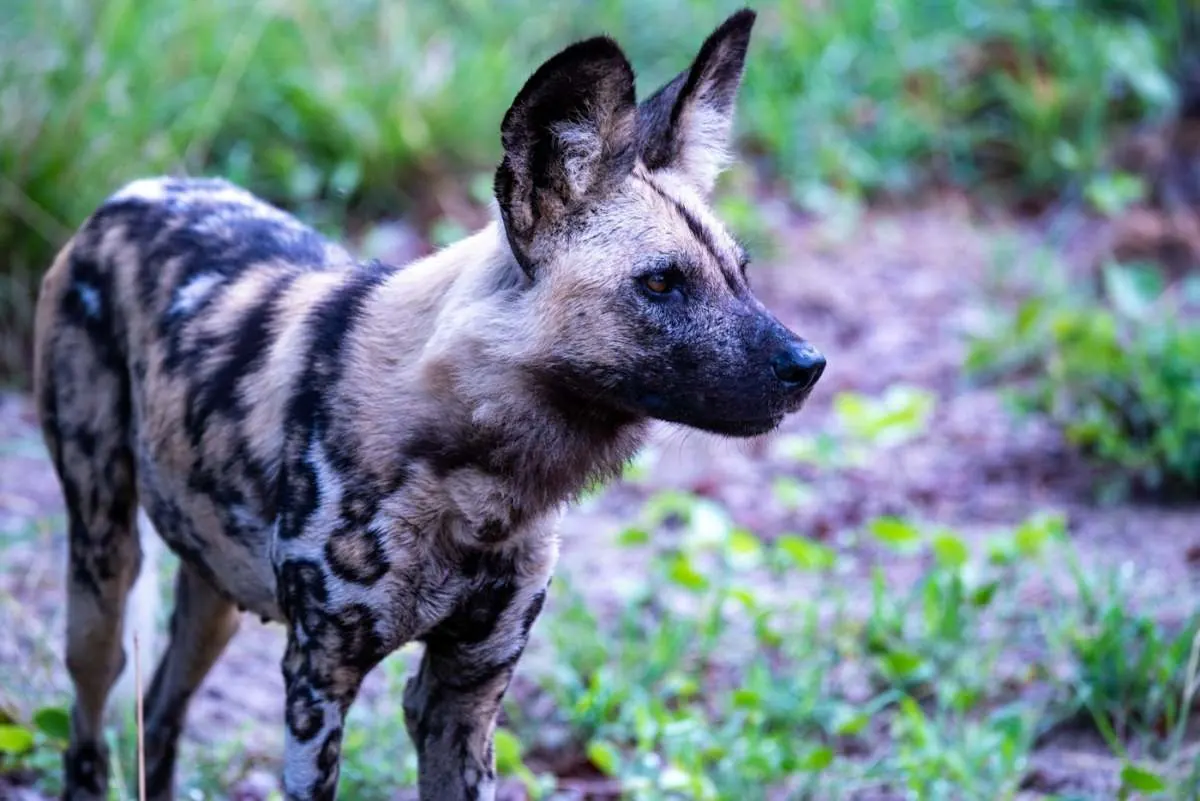
African wild dogs in Zimbabwe are found across the Greater Hwange Ecosystem, the Zambezi Valley and the south-east lowveld. Mana Pools and Hwange are well-known places to look for them, but they are only part of the country’s distribution. In February 2026, a reintroduction also returned wild dogs to Matusadona after decades of local extinction.
Whether you call them painted dogs, painted wolves or African wild dogs, you are talking about the same species: Lycaon pictus. A good Zimbabwe guide needs to answer two questions: where the animals live, and what a visitor can realistically expect to see.
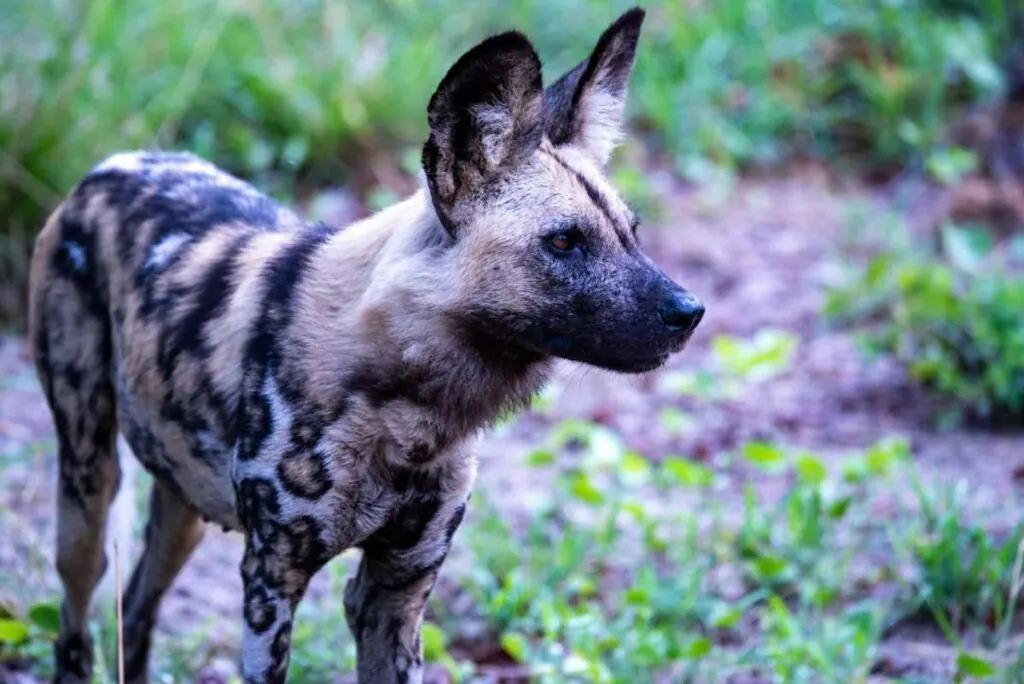
Where do African wild dogs live in Zimbabwe?
The African Wildlife Conservation Fund identifies three principal population landscapes: Greater Hwange, the Zambezi Valley and the south-east lowveld. This landscape-based view is more useful than assuming every pack stays within one national park.
Wild dogs can cross boundaries that look clear on a tourist map. Where they go affects their access to prey, their exposure to danger and the places where visitors may encounter them. Our guide to African wild dog habitat and range explains the wider African picture.
Greater Hwange Ecosystem
Hwange is both a safari destination and a major conservation landscape for painted dogs. The surrounding areas matter because a pack’s movements can take it beyond protected park boundaries.
Research published in Oryx on Hwange’s buffer zone followed 15 radio-collared packs. It found increased human-caused mortality when territories extended into the buffer zone. That historical study helps explain why protection outside a park can be as important as protection within it.
For a visitor, “Hwange has wild dogs” is only a starting point. Ask whether guides have recent information for the area you will actually visit. One camp’s sighting does not establish that a pack is accessible from another camp.
Mana Pools and the wider Zambezi Valley
Mana Pools belongs to the larger Zambezi Valley wild dog landscape. The park’s reputation makes it a natural starting point for people interested in painted dogs, but a famous destination is not a promise of a close encounter.
The Mana Pools management plan for 2023 to 2033 describes seasonal wildlife concentration on the valley floor. That is useful background for understanding how the landscape changes, but it is not a wild dog sighting forecast.
If walking is part of your trip, arrange it with an appropriately qualified guide and confirm current park conditions and permissions. Looking for a pack on foot requires more judgement than following a photograph’s location.
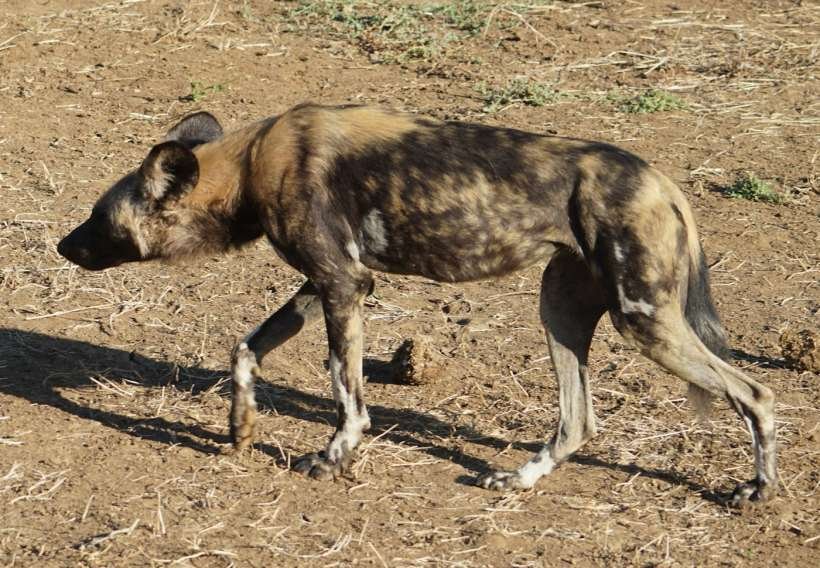
Gonarezhou and the south-east lowveld
Zimbabwe’s south-east lowveld deserves attention alongside Hwange and Mana Pools. The African Wildlife Conservation Fund works in this landscape, including its Lowveld Wild Dog and Gonarezhou Predator projects.
Conservation presence and tourism access are different matters. A monitored population may range over land that your itinerary does not reach. Before planning a wild dog-focused visit, check where ordinary visitors can go and whether guides have recent reports for those accessible areas.
Savé Valley Conservancy
Savé Valley is another important name in the lowveld landscape. Include it when considering Zimbabwe’s distribution, but verify arrangements with the particular property or operator you intend to visit.
This is especially important for conservancies: a place name can encompass different areas and access arrangements. Ask about the actual driving area rather than assuming the whole conservancy is available from one accommodation base.
How many African wild dogs are in Zimbabwe?
The African Wildlife Conservation Fund’s public overview estimates Zimbabwe’s population at 660 dogs in 86 packs. However, the page does not clearly identify the underlying survey year. It is therefore an attributed published estimate, not a verified census of Zimbabwe’s population in 2026.
| Evidence | Figure or finding | Scope | Important limitation |
|---|---|---|---|
| AWCF country overview | Approximately 660 dogs in 86 packs | Zimbabwe | Clear estimate year not supplied on the page |
| African Parks announcement, April 2026 | 20 dogs translocated in February 2026 | Matusadona reintroduction | A release count, not a national population estimate |
| Local pack monitoring | Observations of particular packs | A project landscape | Does not necessarily cover all dogs in that landscape or country |
Do not add the 20 Matusadona animals to the AWCF estimate and call the result a new national total. The national estimate’s timing is unclear, and animals moved within a country are not automatically additions to its population.
Pack numbers also answer a different question from individual numbers. A pack’s membership can change through births, deaths and dispersal. Neither a lodge sighting nor a count of monitored packs should be treated as a complete national census.
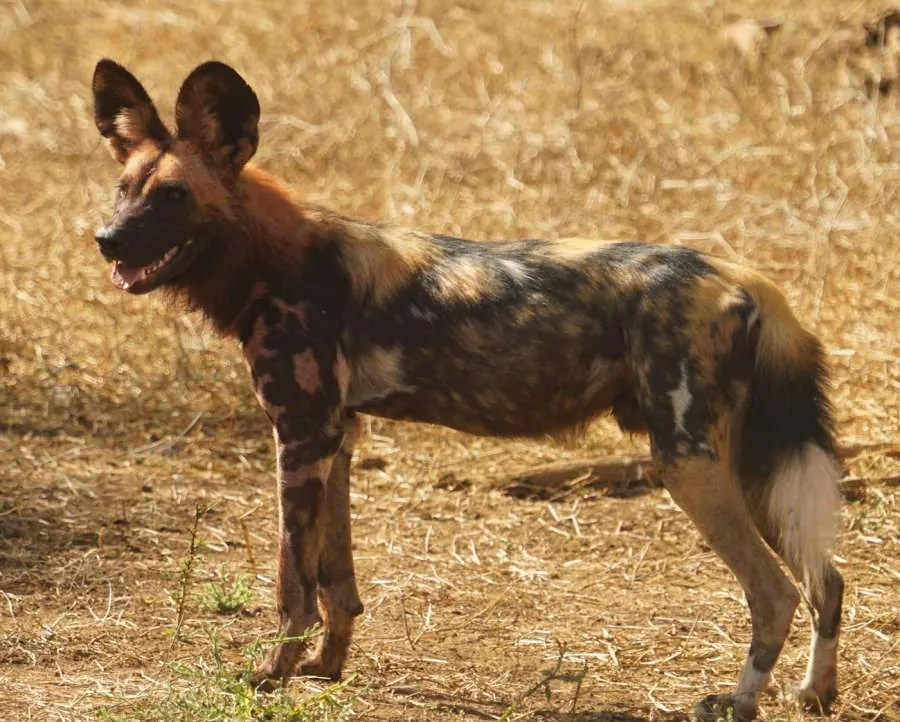
Mana Pools or Hwange: which suits your trip?
Choose between Mana Pools and Hwange by comparing the experience you want, accessible areas and recent pack information. There is no substantiated sighting-probability ranking presented here.
| Planning question | Mana Pools | Hwange |
|---|---|---|
| What landscape are you exploring? | Part of the wider Zambezi Valley | Part of the Greater Hwange Ecosystem |
| What should you ask your operator? | Current pack activity, seasonal access and walking arrangements | Recent activity in the camp’s actual driving area |
| What conservation context can you learn about? | Monitoring in Mana Pools and the Mid-Zambezi | Painted Dog Conservation’s work in and around Hwange |
| What should you avoid assuming? | A well-known pack will still be in an accessible place | A sighting elsewhere in the park applies to your camp |
Guided walking versus vehicle-based viewing
A walking experience may appeal to someone who values a slower encounter with the landscape. A vehicle-based itinerary may suit someone who prefers to spend more time exploring roads and viewing a range of wildlife.
Neither format guarantees dogs. Ask how your guide responds if the pack moves away, and whether the outing remains worthwhile without finding it. A responsible guide should be comfortable ending an approach or changing plans when conditions are unsuitable.
Recent activity matters more than an old reputation
Before booking, ask when guides last encountered wild dogs in the accessible area. Ask whether a pack has been moving through occasionally or using it regularly, and whether current restrictions affect viewing.
Request a realistic answer, not an exact den location. Sensitive location information is not necessary to judge whether an itinerary suits your goals.
Wild dogs returned to Matusadona in 2026
Matusadona adds a recent conservation story to Zimbabwe’s wild dog map. African Parks and ZimParks announced that 20 dogs were translocated between 15 and 17 February 2026, after decades of local extinction in the park.
The animals comprised two established packs, one of six and another of 14. They spent time in holding facilities before release, a soft-release process intended to help them adjust and develop attachment to the new area. The official announcement was published on 24 April 2026.
This is evidence of a conservation intervention, not proof that visitors will find an established roadside pack. Reintroduction and reliable tourism viewing are different milestones. If Matusadona interests you, ask the park or your operator about current access and monitoring information rather than relying only on the release announcement.
When can you see wild dogs in Zimbabwe?
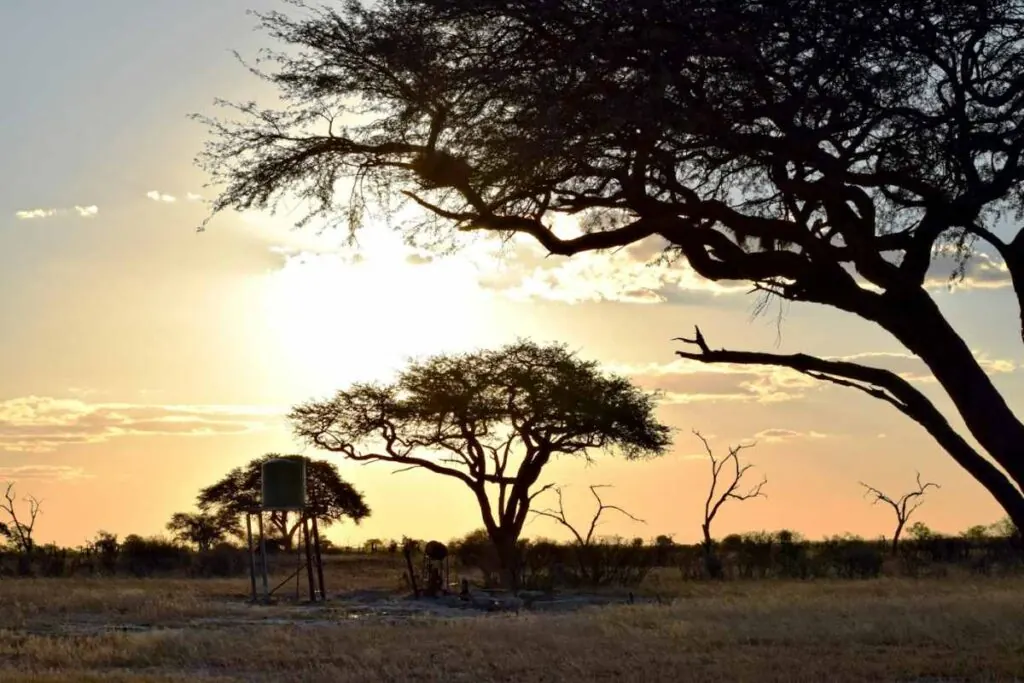
Wild dog viewing depends on pack movements, vegetation, access and the time you can spend searching. General dry-season wildlife advice can help you choose an itinerary, but it should not be converted into a nationwide wild dog calendar.
Seasonal access and visibility
Mana Pools’ management plan describes dry-season concentrations of large mammals on the valley floor. Use that as landscape context. It does not mean wild dogs gather at a particular waterhole or become easy to find every day.
Confirm road conditions, camp opening periods and walking arrangements for your dates. Those practical checks are especially important if the trip combines remote areas or depends on one specific activity.
Denning and pack movements
When a pack has young pups, its movements and feeding responsibilities change. Our guide to African wild dog pups and breeding explains that process.
A den can make a pack’s activity more concentrated, but it can also lead to viewing restrictions. Do not book on the assumption that finding a den gives you permission to approach it. Ask what the local policy allows and accept closures.
Questions to ask before choosing dates
- Have guides seen a pack recently in the area I can visit?
- Are road, camp or walking restrictions likely to affect my itinerary?
- Is any den-related access restriction currently in place?
- What other wildlife and activities will make the trip worthwhile if we miss the dogs?
What threatens Zimbabwe’s painted dogs?
Snares and risks outside park boundaries
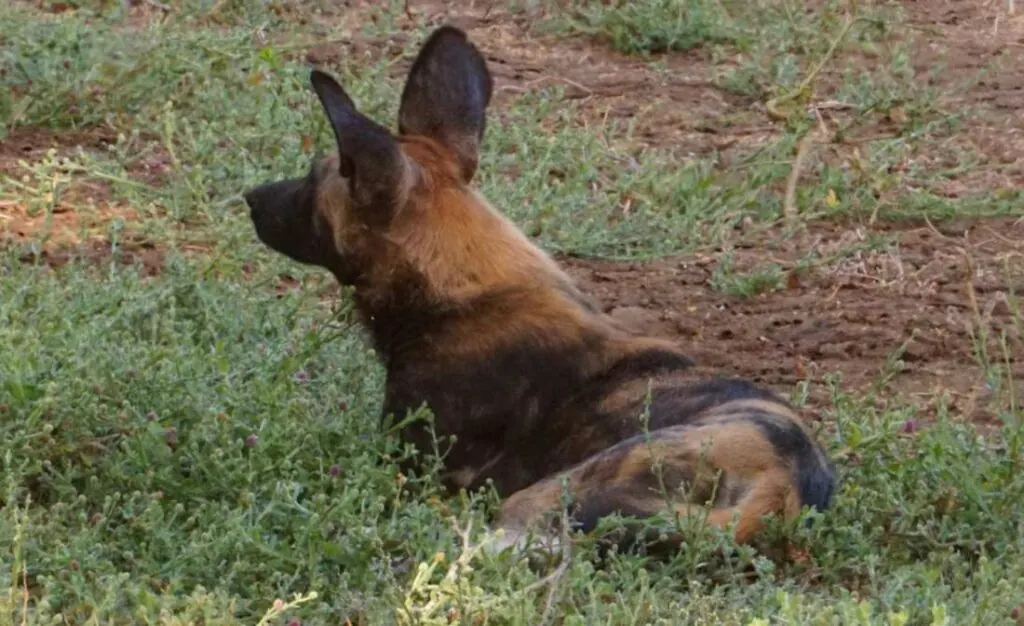
Wire snares set for other wildlife can catch painted dogs. Painted Dog Conservation’s FAQ explains that the dogs are often incidental victims and describes its snare-removal work.
This is why protection cannot stop at a national park gate. A pack following prey or dispersing through surrounding land can encounter hazards even if much of its range lies in a protected area.
Habitat fragmentation and conflict
Safe habitat must also be connected. A surviving pack needs more than a small isolated patch on a map. Our pack structure guide explains how dispersal and new pack formation fit into the species’ social life.
An African Wildlife Foundation interview published in 2023 describes Painted Dog Conservation’s anti-poaching and community work around Hwange. It also illustrates why cooperation with neighbouring communities belongs in conservation planning.
Disease and natural competitors
Disease is among the pressures identified in AWCF’s species overview. Natural competitors also affect a pack’s ability to survive and raise pups. A healthy-looking group in a safari photograph does not show all the risks it faces over a year.
Avoid treating every local decline as having one obvious cause. Explaining a particular population change requires evidence from the relevant place and period.
Who protects African wild dogs in Zimbabwe?
Painted Dog Conservation
Painted Dog Conservation works in Hwange and the Mana Pools and Mid-Zambezi landscape. Monitoring, community programmes and education are part of its approach.
Its visitor centre offers a way to learn about the dogs and their habitat. The organisation’s FAQ states that it does not run game drives as a tour operator. A conservation visit should therefore be planned separately from a safari booking; confirm current opening and visit arrangements directly.
African Wildlife Conservation Fund
AWCF’s work brings the south-east lowveld into the national conservation picture. Explore its official website for information about projects, research and ways to support them.
ZimParks and conservation partners
The Matusadona reintroduction shows how park authorities and partner organisations can work together on recovery. For visitors, the practical lesson is to use official park information and established operators rather than assuming that a conservation news story is a tourism offer.
How to watch wild dogs responsibly
Give the pack space to move. Do not block its route, surround resting animals or pressure a guide to approach pups. Follow the destination’s rules and accept that some sightings must end when the dogs leave an accessible area.
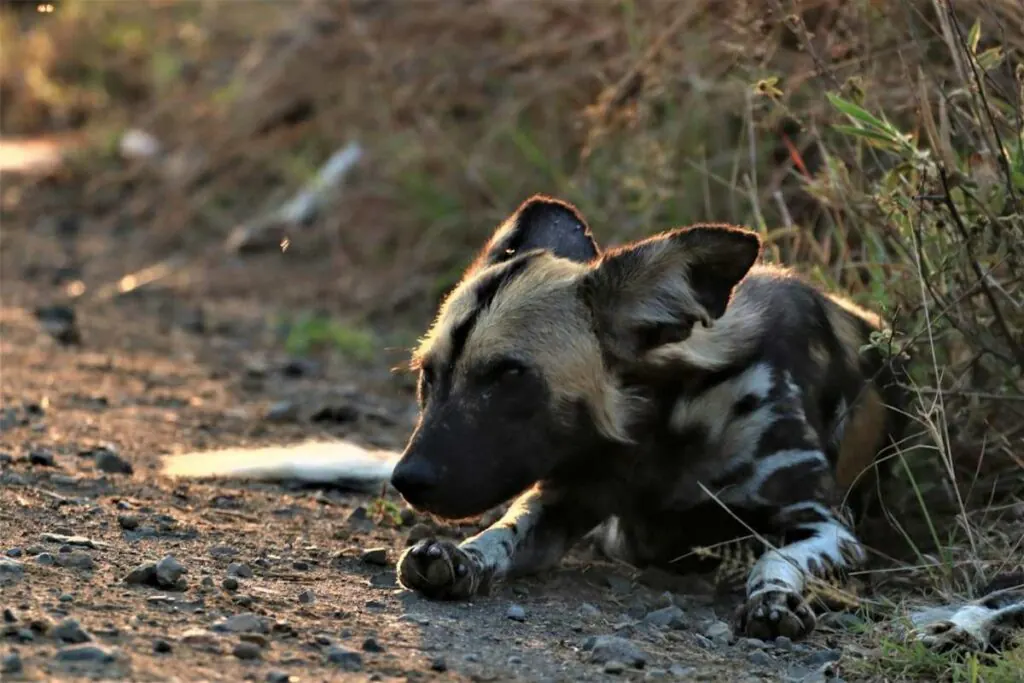
On foot, use a qualified guide and follow instructions about positioning, movement and when to stop. Do not attempt an approach because an online video makes it look easy. Our guide to African wild dogs and human safety provides further context.
If you photograph a sighting, follow any relevant reporting advice from local conservation organisations. Identification photographs can be useful, but a photograph is never worth disturbing a pack.
African wild dogs in Zimbabwe FAQs
Are painted dogs and African wild dogs the same animal?
Yes. Painted dog, painted wolf and African wild dog are names for u003cemu003eLycaon pictusu003c/emu003e. They are not feral domestic dogs.
Where can you see wild dogs in Zimbabwe?
Hwange and Mana Pools are well-known starting points. Zimbabwe’s wider distribution also includes the south-east lowveld, while Matusadona received reintroduced packs in 2026. Check recent activity and visitor access for the area you plan to visit.
How many wild dogs are in Zimbabwe?
AWCF’s public overview quotes approximately 660 dogs in 86 packs. Because the underlying estimate year is not clearly stated, that figure should not be described as a confirmed 2026 census.
Can you watch wild dogs on foot in Mana Pools?
A guided walking itinerary may offer an opportunity, depending on current conditions and permissions. Arrange it with a qualified guide and do not assume that locating a pack permits an approach.
Have wild dogs returned to Matusadona?
Yes. African Parks and ZimParks confirmed a February 2026 translocation of 20 dogs in two packs. The announcement establishes their return, not a guaranteed visitor sighting.
How can visitors support conservation?
Follow viewing rules, choose operators that can explain their conservation practices, and support established organisations through their official channels. Around Hwange, a conservation education visit can complement a safari without being a wild dog game drive.