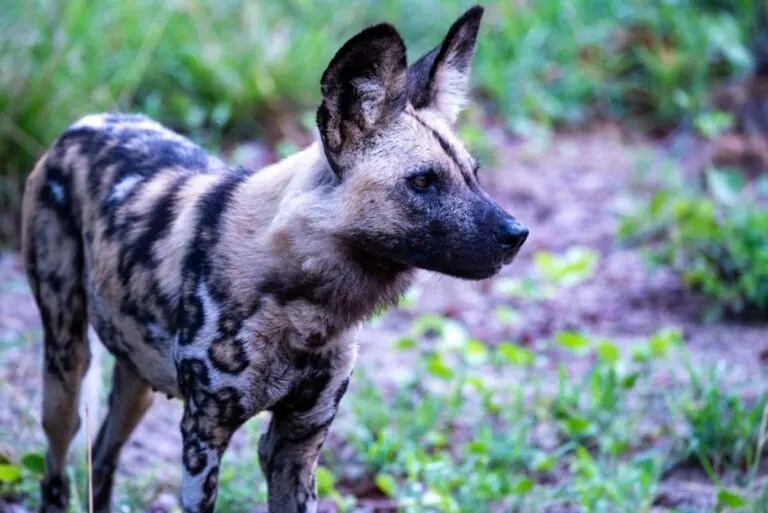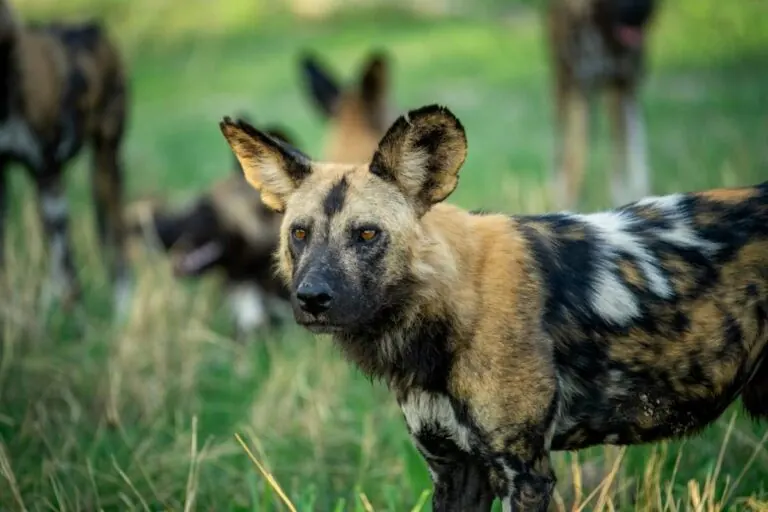
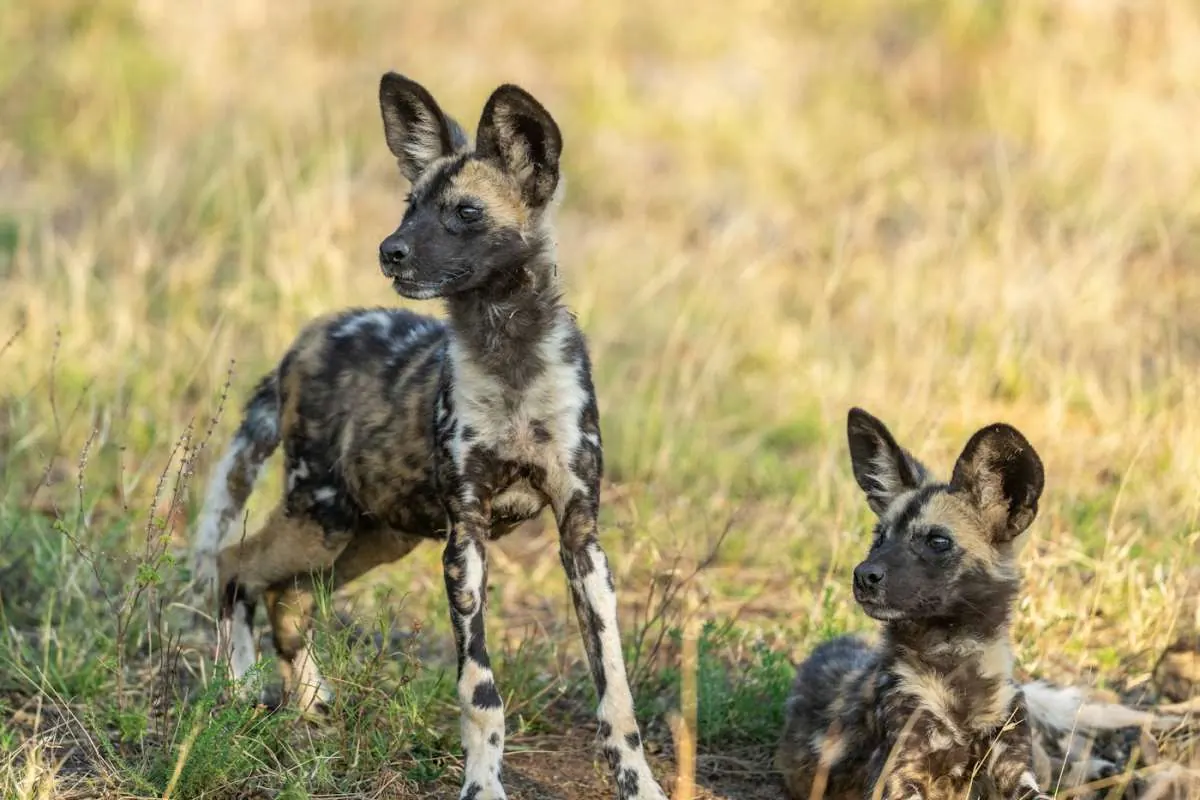
African wild dogs in South Africa live in the Kruger landscape and a network of other protected reserves, including Madikwe and Hluhluwe-iMfolozi. These endangered animals are also called painted dogs or painted wolves. For visitors, the important choice is between exploring a large landscape independently and joining guided drives in a reserve with a monitored population.
Seeing a pack is never guaranteed. A reserve can have wild dogs without having them near the roads, and a pack seen yesterday may have moved by morning. Knowing how each destination works is more useful than choosing a lodge from a single spectacular photograph.
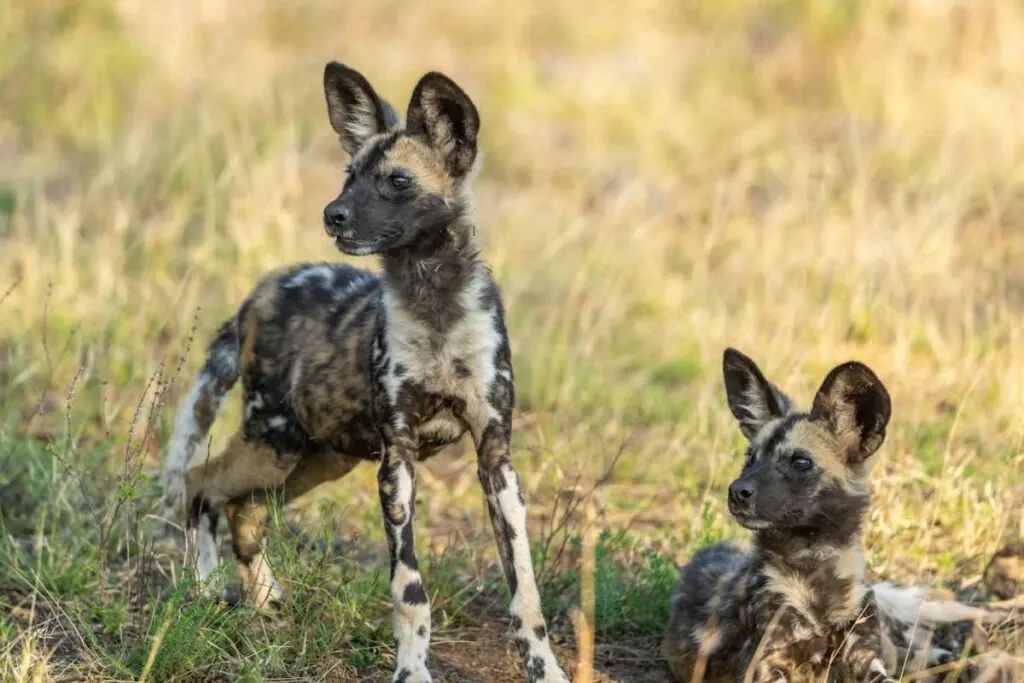
Where do African wild dogs live in South Africa?
South Africa’s wild dog distribution has two useful starting points: the extensive Kruger conservation landscape and smaller reserves whose populations receive coordinated management. The distinction helps explain both conservation work and the different safari experiences available.
For the continental picture, see our guide to where African wild dogs live.
Kruger National Park and the Greater Kruger landscape
Kruger is a major South African stronghold. Its importance extends beyond the park boundary into adjoining conservation areas. A peer-reviewed photographic survey published in 2014 describes Kruger and neighbouring areas as a core landscape for the species.
Kruger also offers public self-drive access. That makes it a practical option if you want to spend several days looking for wild dogs alongside other wildlife, rather than booking a trip around one species alone.
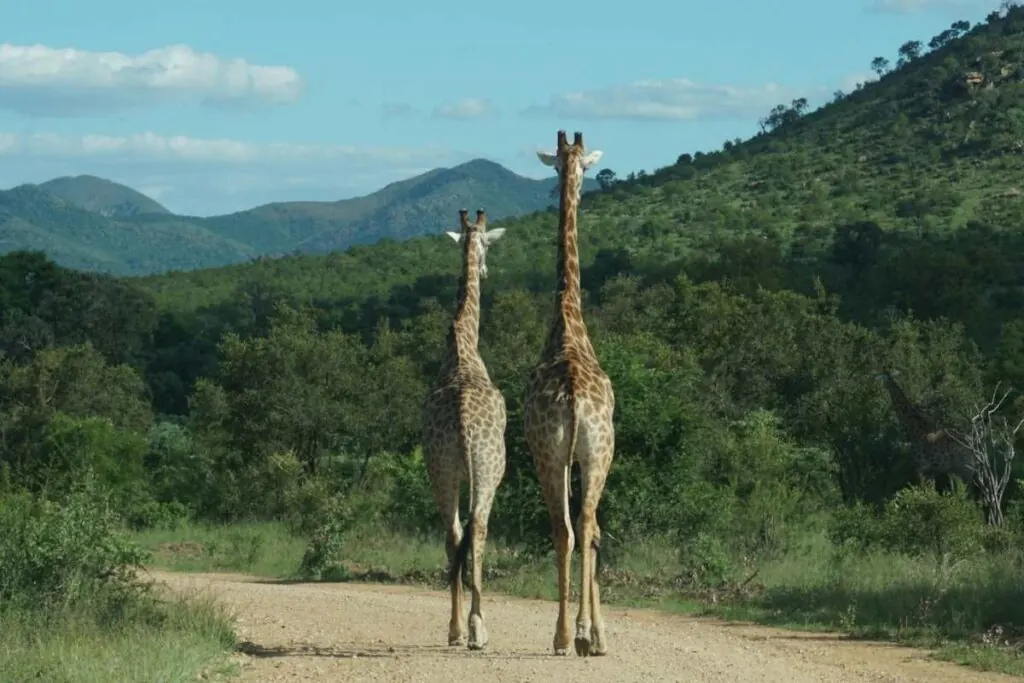
There is a trade-off: visitors can explore the road network, but cannot follow a pack wherever it goes. A sighting that begins beside your vehicle can end when the dogs enter the bush. Resist the temptation to race between distant reports. Choosing a manageable area and allowing time for repeated drives is a more realistic approach.
Sabi Sand and neighbouring private reserves
Sabi Sand and other adjoining reserves belong in a discussion of the wider Kruger landscape, rather than being treated as entirely separate national populations.
When comparing lodges, ask about recent pack activity in the property’s actual traversing area. A lodge’s location in Greater Kruger does not mean every nearby pack is accessible to its vehicles. Guiding arrangements, reserve boundaries and viewing policies affect what a drive can cover.
A guided stay may suit travellers who want help interpreting tracks and behaviour. However, the guide’s experience and recent local information matter more than an old claim that wild dogs are “regularly seen.”
Madikwe Game Reserve
Madikwe is another established wild dog location. Its population is part of South Africa’s history of reintroductions and coordinated reserve management. The national mammal assessment documents Madikwe within this wider conservation context.
Treat Madikwe as a destination to evaluate on its own terms. Ask your accommodation provider how drives operate, whether a pack is currently using the accessible area, and whether den-related restrictions apply. Confirm visitor arrangements before assuming that the public self-drive model used in Kruger applies here too.
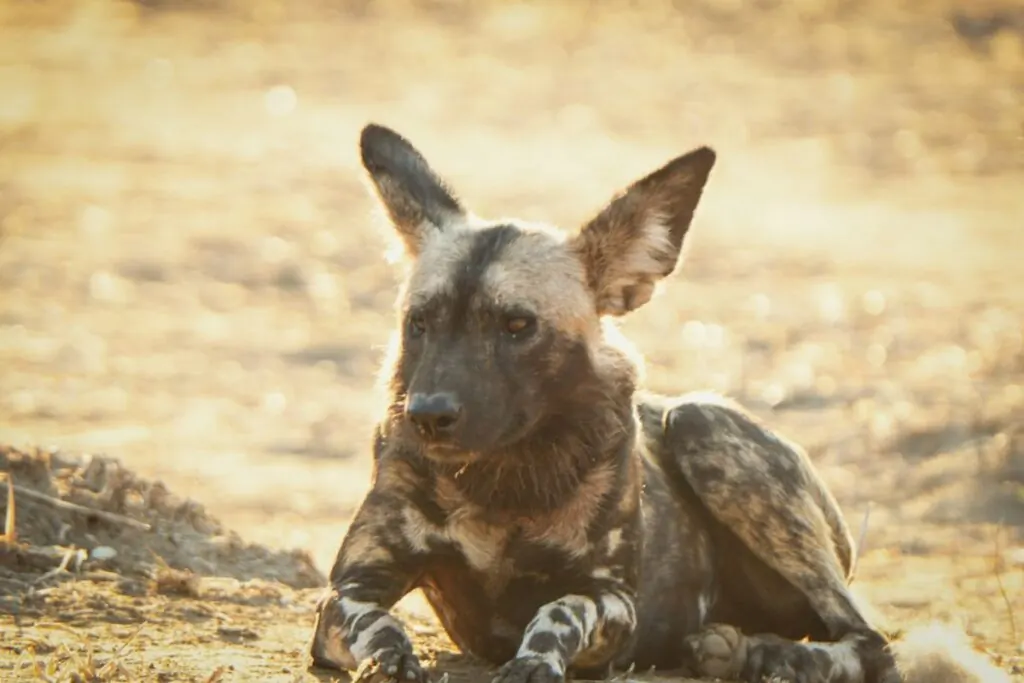
Hluhluwe-iMfolozi and KwaZulu-Natal reserves
Hluhluwe-iMfolozi is an important KwaZulu-Natal wild dog site. Wildlife ACT’s park profile describes its wild dog population and notes that dispersing animals can change local numbers.
The wider provincial network includes other protected areas with conservation programmes. Presence, tourism access and a bookable monitoring experience are three different things, so check each separately. A reserve listed in a conservation report is not automatically somewhere visitors can join a drive to see its dogs.
How many African wild dogs are in South Africa?
Published figures differ, and an estimate should always be read with its date, geographic coverage and counting method. There is no newly verified national census presented in this article.
The figures below illustrate why a number found online cannot simply be labelled the current South African population.
| Source | Figure reported | Coverage and date | How to interpret it |
|---|---|---|---|
| Wildlife ACT species profile | Around 550 individuals | South Africa; clear census year not supplied on the page | An attributed organisation estimate, not a verified 2026 census |
| Marnewick and colleagues, PLOS ONE | Estimated 151 wild dogs | Kruger; 2008 to 2009 survey, published in 2014 | A historical park estimate, not today’s park or country total |
| South African mammal Red List assessment | Population segments assessed separately | Historical national assessment | Useful for understanding population structure and management |
Wildlife ACT’s species profile supplies the approximately 550 figure. The older PLOS study used tourist photographs and statistical analysis to estimate abundance. Its value here is showing how a survey works, rather than supplying today’s number.
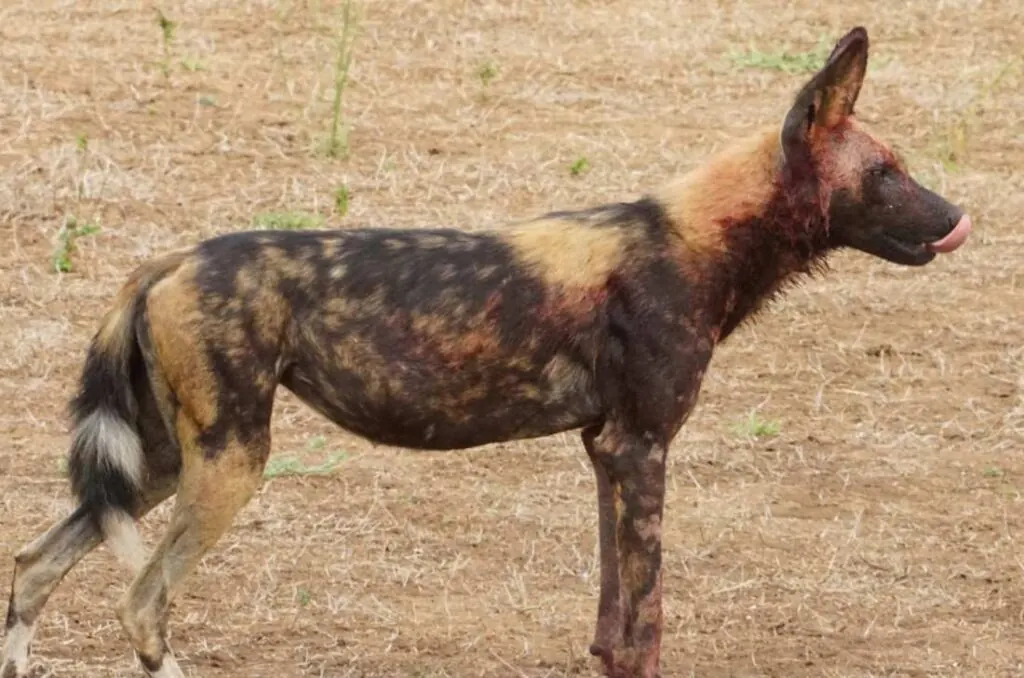
Do not add figures from different years or overlapping areas. A count for a private reserve adjoining Kruger may overlap with dogs using the larger landscape. Similarly, a figure including pups is not directly comparable with one counting adults or mature breeding individuals.
For safari planning, a national total answers a conservation question. Recent local pack activity answers a different question: whether there may be a viewing opportunity during your stay.
Why do some populations need active management?
Some South African wild dogs live in separate protected reserves. Conservation teams coordinate those populations so that isolation does not leave each group dependent on its own limited breeding opportunities.
What is a managed metapopulation?
A metapopulation is a collection of local populations considered together. In a managed reserve network, people help provide connections that animals cannot reliably make by dispersing across the landscape themselves.
That can involve moving individuals or packs between suitable reserves. The dogs remain wild animals; management does not turn them into domestic dogs or make every sighting predictable.
Why translocations matter
Wildlife ACT describes collaboration through the Wild Dog Advisory Group of South Africa and the KwaZulu-Natal Wild Dog Management Group. Its overview of conservation strategies explains how partners coordinate decisions across reserves.
Successful moves require more than available land. Managers need information about the animals, habitat suitability and conditions at the receiving reserve. Monitoring after a release helps determine how the group settles and whether further intervention is needed.
Our guide to African wild dog pack structure explains why keeping social relationships in mind is important when thinking about these animals.
Which destination suits your wild dog safari?
There is no evidence-based sighting league table in this guide. Instead, use the following comparison to choose a safari format that matches your interests.
| Destination | Useful starting point | What to ask before booking | Main limitation |
|---|---|---|---|
| Kruger National Park | Public road-based exploration and self-drive | Which accessible areas have recent reports? | Packs can move beyond the road network |
| Greater Kruger private reserves | Lodge-based guided viewing | Does the lodge’s traversing area include recent pack activity? | Access differs between properties |
| Madikwe | A reserve stay with wild dogs as a target species | What is the current pack situation and viewing policy? | Previous sightings do not establish today’s availability |
| Hluhluwe-iMfolozi | A KwaZulu-Natal itinerary with a wild dog conservation context | What visitor options and local restrictions apply? | Pack movements change local viewing opportunities |
If wild dogs are your main goal, ask specific questions. “Do you have wild dogs?” is only the beginning. Better questions include when guides last saw the pack, whether it is using the accessible area, and whether any viewing restrictions are in place.
Choose a trip you would still enjoy without a wild dog sighting. That removes pressure to chase a pack or push a guide to break a rule.
When should you look for wild dogs in South Africa?
Winter is a useful planning window in many South African wildlife areas. Wildlife ACT recommends May to September for general wildlife viewing and describes typical wild dog denning around May to August in its seasonal guide.
Those dates are guidance, not a nationwide schedule. Regional conditions and individual packs differ. Denning can concentrate activity around a site, but a known den may be closed to visitors precisely because pups need protection.
| Planning period | Possible advantage | What still needs checking |
|---|---|---|
| Winter, roughly May to September | Often clearer wildlife visibility in relevant safari regions | Local vegetation, weather and recent sightings |
| Typical denning months, roughly May to August | A pack may use a more concentrated area | Actual den timing and whether viewing is permitted |
| Other months | Wild dogs can still be encountered | Local pack activity and practical access |
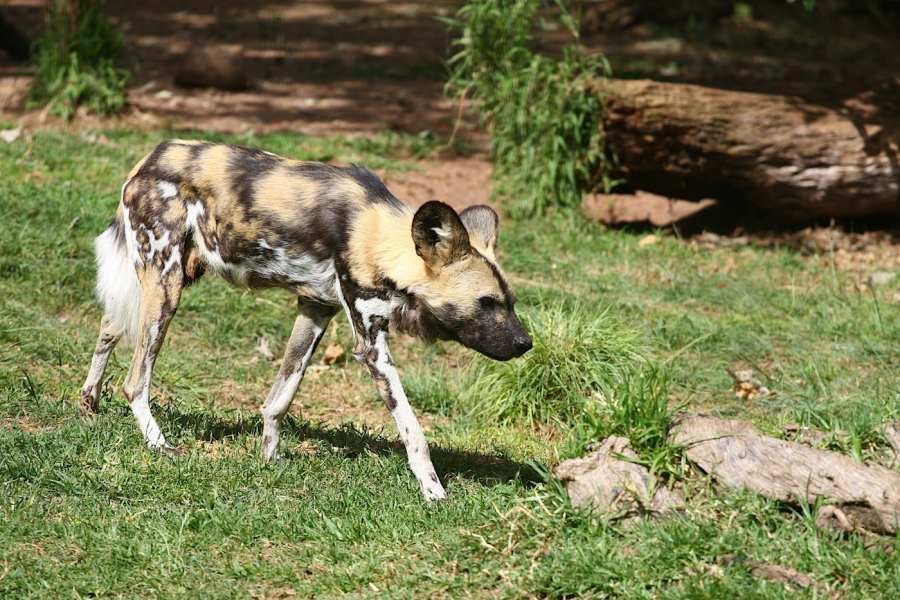
Ask about drive departure times as well as months. Early and late drives may give opportunities to watch an active pack, but do not assume dogs hunt on a fixed timetable. For their wider behaviour, read how African wild dogs hunt.
What threatens wild dogs in South Africa?
Habitat fragmentation makes movement between safe areas difficult. Dogs dispersing beyond protected land can face roads, conflict and other hazards. Disease is another concern, while snares intended for other animals can injure or kill wild dogs.
The national mammal assessment discusses these pressures alongside the need to manage isolated populations. They help explain why a population can require intensive attention even when visitors see healthy packs in a reserve.
Natural competitors also influence where dogs can live and raise pups. Conservation therefore involves both keeping animals alive and retaining enough suitable space for their packs to function.
How to watch wild dogs responsibly
Follow the rules of the destination, even when the pack moves out of sight. In Kruger, SANParks rules prohibit off-road driving and entry onto closed roads. Do not assume a private reserve’s practices apply inside a national park.
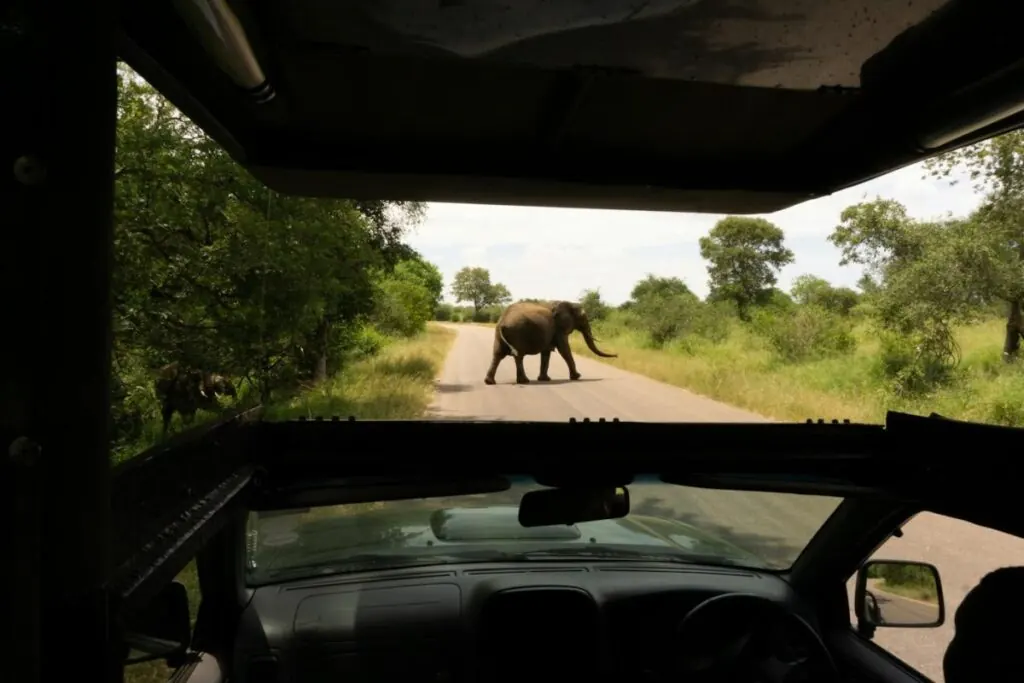
Keep a route open for moving animals, avoid surrounding the pack, and follow a guide’s instructions at a den. Never feed or call dogs closer for a photograph. Use binoculars or a longer lens instead of trying to reduce the distance yourself.
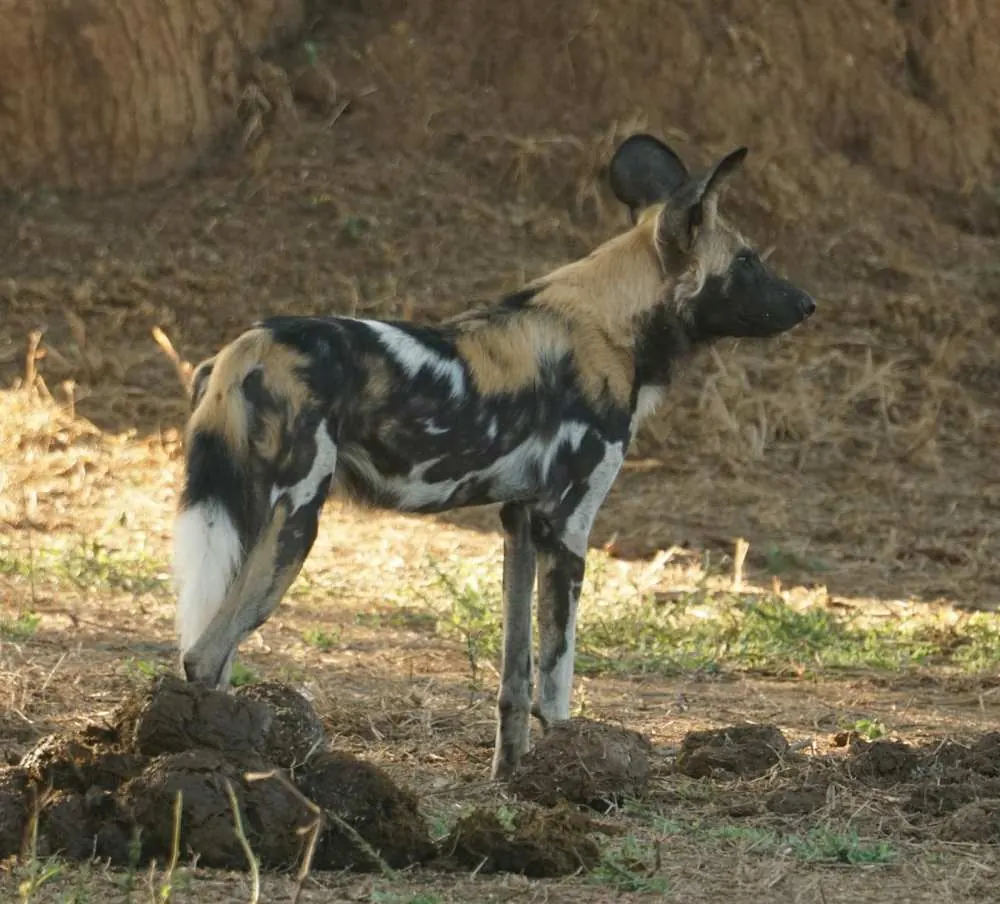
For questions about encounters with people, see whether African wild dogs are dangerous. Seeing them safely depends on respectful behaviour, not on treating them as harmless pets.
African wild dogs in South Africa FAQs
Are African wild dogs found in South Africa?
Yes. They occur in the Kruger landscape and several other protected reserves. Some populations are managed together through coordinated conservation programmes.
Where can you see wild dogs in Kruger?
There is no permanent roadside location that guarantees a sighting. Ask park staff about recent reports in accessible areas and stay on designated roads.
Are there wild dogs in Madikwe?
Madikwe has an established wild dog conservation history. Check the current pack situation and viewing arrangements with the reserve or your accommodation before booking around them.
Can you see wild dogs on a self-drive safari?
Yes, a self-drive encounter is possible in Kruger. However, you must follow park road and gate rules, and cannot follow a pack off-road.
Are managed wild dogs still wild animals?
Yes. Monitoring and conservation translocations do not domesticate them. They retain their own social behaviour and remain subject to the conditions of their habitat.
Is South Africa better than Botswana for wild dogs?
The better choice depends on your safari format, budget and recent local information. Compare public self-drive access with guided reserve or concession stays. Our u003ca href=u0022https://african-wilddogs.com/african-wild-dogs-botswana/u0022u003eBotswana wild dog guideu003c/au003e explains the main Botswana options.