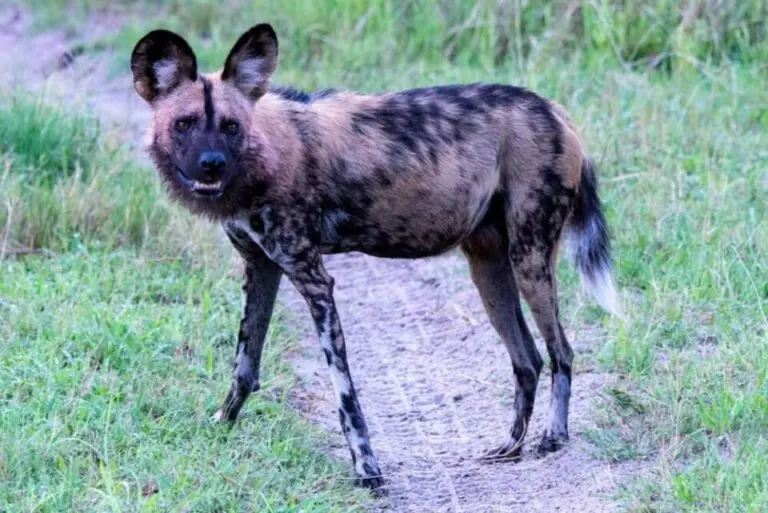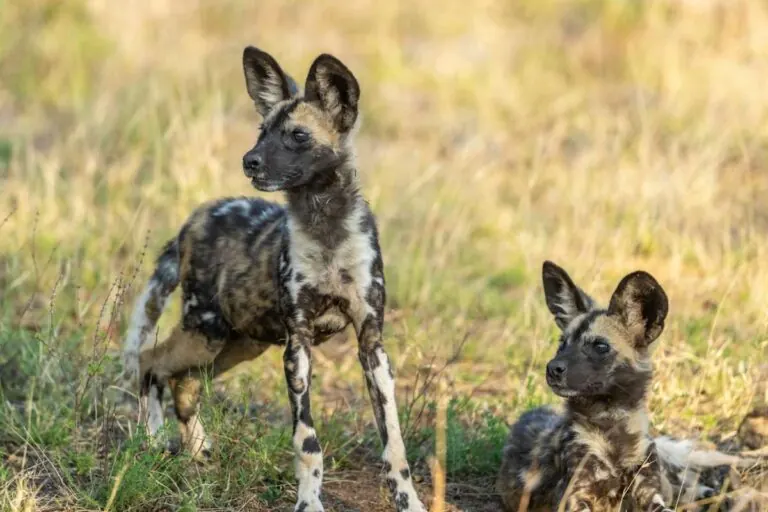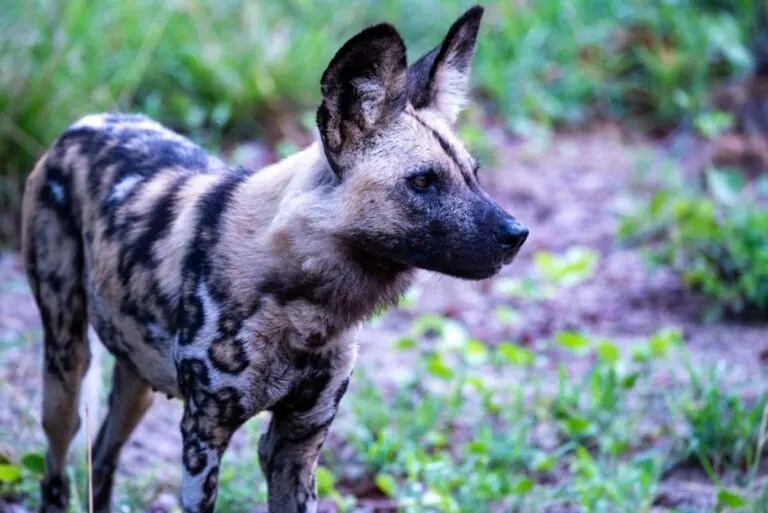
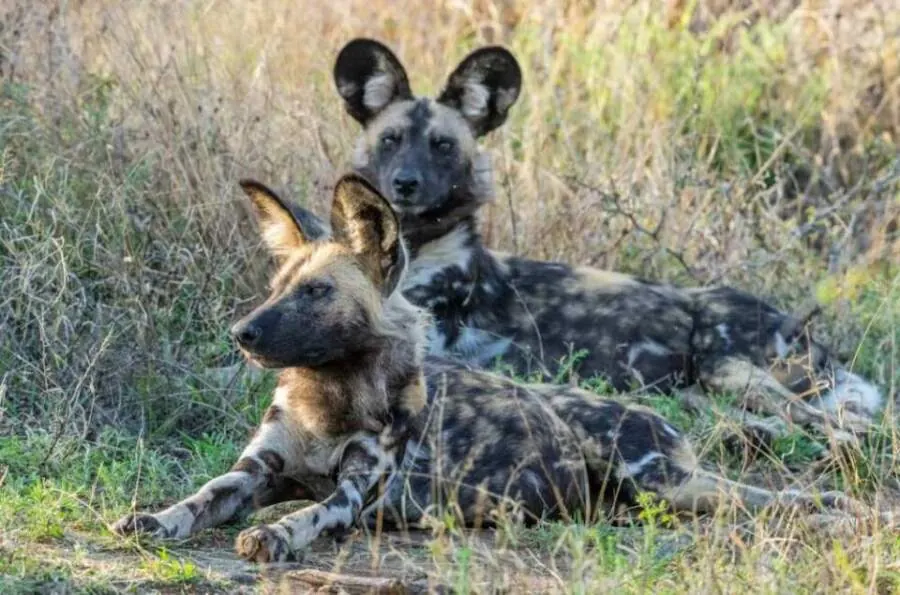
African wild dogs are endangered because habitat loss and fragmentation expose them to conflict, snares, road deaths and infectious disease. Prey depletion adds pressure on hunting packs. These threats affect both individual survival and the breeding groups needed to sustain the population. The IUCN SSC Canid Specialist Group’s latest reassessment summary highlights connected habitat and reduced human-caused mortality as conservation priorities.
The African wild dog (Lycaon pictus), also called the painted dog, can face several hazards in the same landscape. Protecting a den inside a reserve does little to reduce a snare or collision risk along a route the pack uses outside it.
What are the main threats to African wild dogs?
The main pressures affect wild dogs in different ways. Their relative importance varies between landscapes, so the following table is a summary rather than a worldwide ranking.
| Pressure | How it can affect wild dogs | What a response needs to address |
|---|---|---|
| Habitat loss and fragmentation | Reduces usable space and makes movements more hazardous | Habitat quality, connections and survival outside reserve boundaries |
| Conflict with livestock owners | Can lead to deliberate killing after actual or suspected losses | Livestock protection, reliable reporting and rapid support |
| Wire snares and road traffic | Cause injury or death during ordinary movement and hunting | Poaching hotspots, dangerous crossings and incident response |
| Infectious disease | Can cause rapid losses within social groups | Surveillance and veterinary planning |
| Prey depletion | Alters the food resources available to packs | Protection of prey alongside protection of predators |
| Increasing temperatures | Can affect activity and demographic performance | Local climate exposure and long-term monitoring |
For field-based descriptions of several direct hazards, Painted Dog Conservation’s threat overview discusses snares, roads, disease and expanding settlement in its conservation context.
Are African wild dogs endangered or critically endangered?
The 2025 IUCN assessment lists African wild dogs globally as Endangered under criterion C2b. The classification reflects a small breeding population, continuing decline and extreme fluctuations. The species is not globally classified as Critically Endangered.
A global category does not describe every local population equally. A well-monitored pack in a protected landscape may have different prospects from dogs passing through a heavily settled area. Conversely, a local reintroduction or an unusually productive breeding season does not establish species-wide recovery.
The survival of a few successful packs cannot establish recovery across the species. Breeding groups need to persist through losses and produce new generations over time.
How does habitat fragmentation threaten African wild dogs?
Habitat loss removes usable land. Fragmentation changes how the remaining land connects. For an animal that moves between feeding areas, denning sites and potential mates, the condition of the intervening landscape matters.
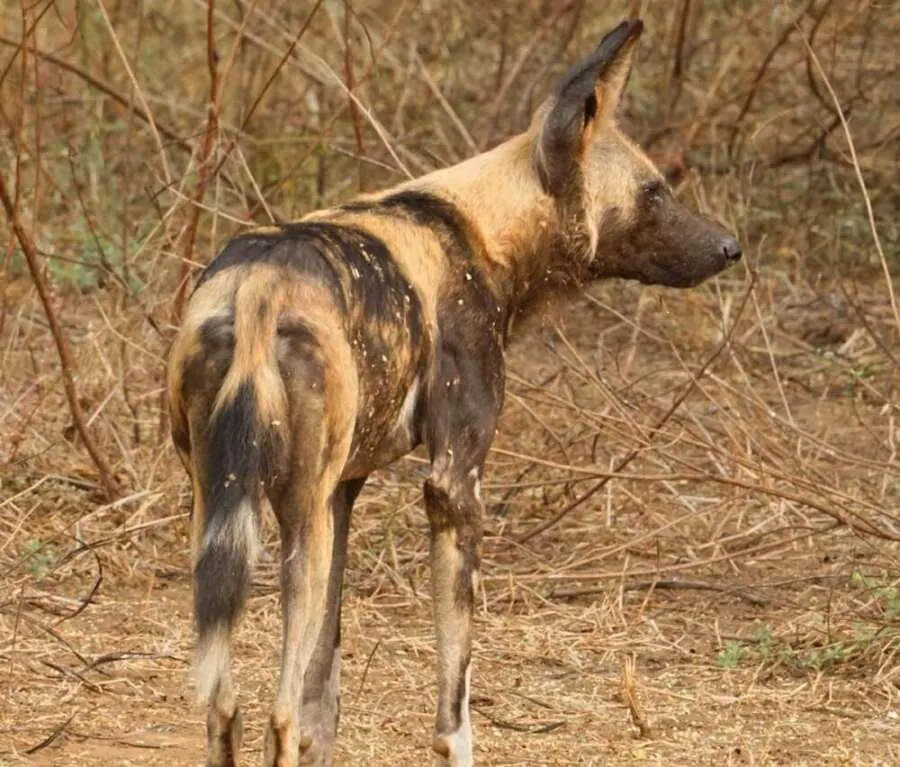
The African Wildlife Foundation identifies fragmentation as a major threat and explains how it increases exposure to conflict and disease. A reserve can protect important habitat while dogs still encounter danger beyond its boundary.
For example, a map may show two protected areas close together. That does not tell us whether the space between them contains a busy road, dense settlement, a restrictive fence or an area with high snaring pressure. The connection needs to work for animals on the ground.
Our guide to where African wild dogs live provides the wider habitat context.
Can wild dogs still travel between populations?
Yes, in some landscapes. A 2026 study published in Ecology documented long-distance movements between distant ecosystems in Zambia. These observations show that movement connections remain possible despite human pressures.
However, a successful journey and successful reproduction are separate outcomes. A disperser may cross a landscape without finding suitable mates or establishing a breeding group. A GPS track records movement; later observations are needed to establish whether the dispersers bred.
A functional corridor allows animals to travel, survive and reach suitable habitat. Its value depends on conditions along the route.
How does human–wildlife conflict threaten African wild dogs?
People living beside wildlife may depend on a small number of livestock for income and food. Preventing losses is therefore part of protecting wild dogs, rather than a separate concern.
The African Wildlife Foundation’s conservation overview describes livestock predation, persecution and the use of reinforced livestock enclosures among coexistence measures. Its account links conservation with practical support for neighbouring communities.
Retaliation can follow a real livestock loss or a suspected one. Identifying the predator responsible helps target prevention rather than blaming whichever species happens to be seen nearby.
Livestock protection also needs to be practical. A damaged enclosure, unsuitable grazing arrangement or delayed response can leave households exposed to repeated losses. Education works better alongside usable prevention measures and reliable support.
How do snares and roads kill wild dogs?
Snares can catch animals they were not intended for
Painted Dog Conservation explains that wire snares set for other animals can also catch painted dogs. An animal does not need to be deliberately targeted to suffer a fatal injury.
Snaring also connects predator protection with prey protection. Removing a dangerous wire protects animals moving through that location, while preventing bushmeat poaching helps retain the food resources on which predators depend.
Treating an injured dog can prevent an immediate death. Continuing patrols and reducing repeat snaring are needed to make the surrounding habitat safer.
Roads create risks along movement routes
Road deaths are included in Painted Dog Conservation’s account of threats. Dogs can encounter vehicles as they travel, disperse or pursue prey.
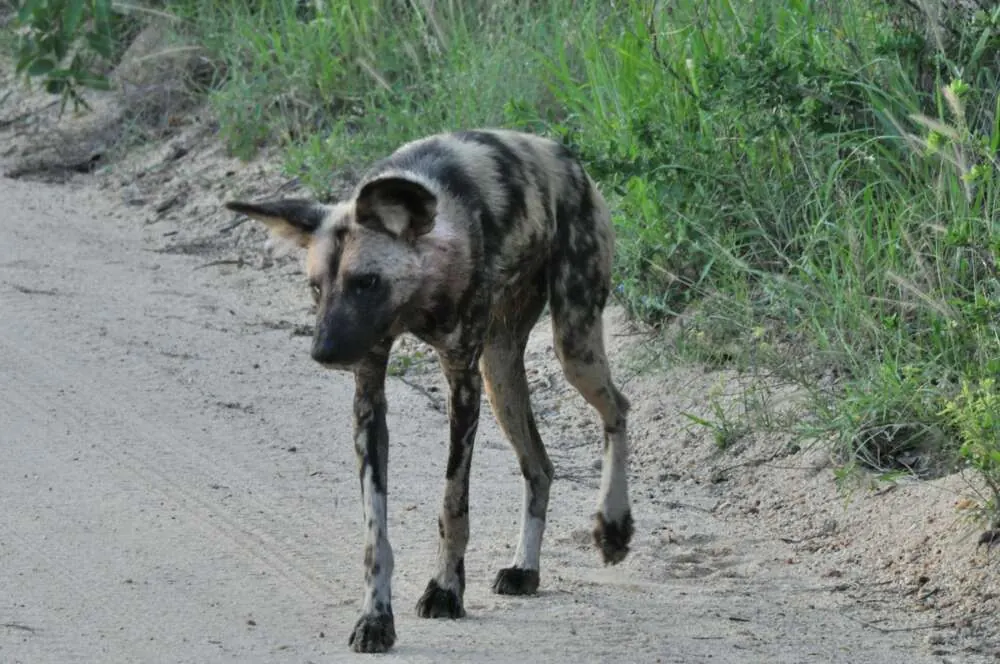
Repeated collisions along a particular route identify a local hazard. Speed reduction, warnings or crossing measures need to fit that location, with follow-up records showing whether losses decline.
How can disease threaten an entire pack?
Rabies and canine distemper are among the threats described by Painted Dog Conservation. Disease can cause abrupt losses rather than the gradual changes associated with habitat deterioration.
The 2025 IUCN assessment cites an estimated 20 packs lost within three months during a canine distemper epidemic in Kenya’s Laikipia County in 2017. This is a historical outbreak documented in the current assessment, not a new 2025 or 2026 event.
Domestic dogs can be relevant to disease management, but their presence does not prove they caused a particular outbreak. Identifying the pathogen and investigating transmission are essential to choosing an appropriate response.
Surveillance and veterinary planning help distinguish confirmed disease from unexplained disappearance. Vaccination strategies must match the pathogen and local circumstances; domestic-dog vaccination alone cannot be assumed to prevent every wildlife outbreak.
Why can losing a few dogs threaten a breeding pack?
A loss can affect more than the number of animals remaining. The latest IUCN assessment explains that the death of a dominant breeder can lead a pack to break up. That outcome is possible rather than inevitable, but it shows why breeding-group stability matters.
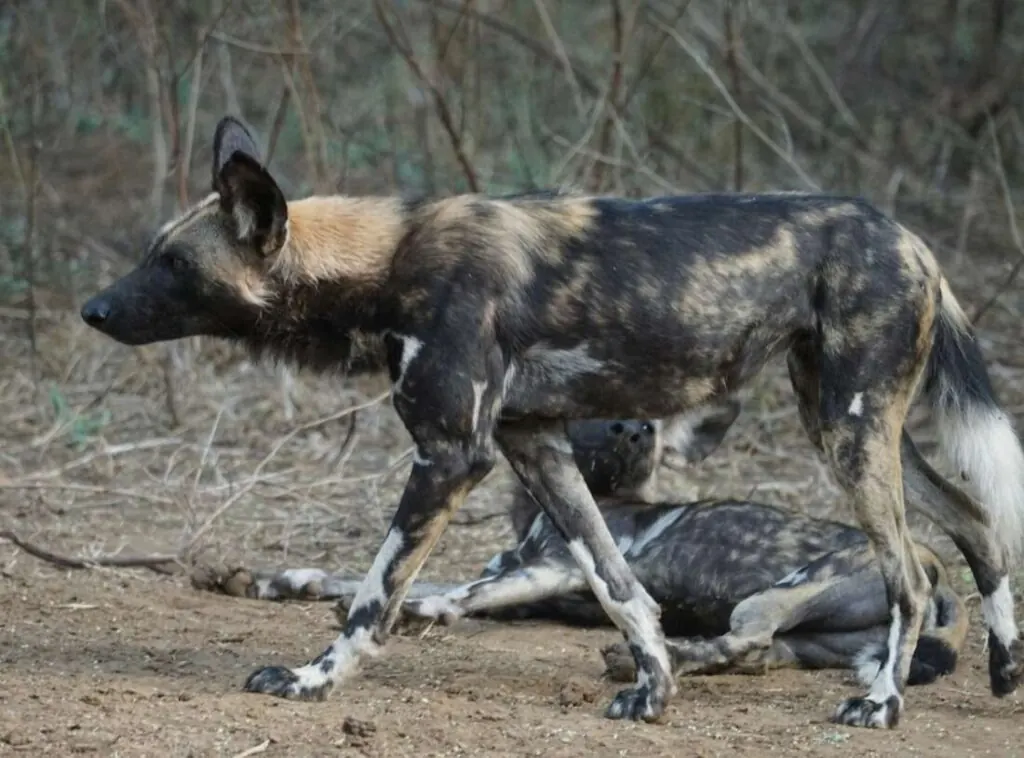
Wild dogs also depend on cooperation while raising young. A study in the 2026 volume of the Journal of Zoology describes pack members supplying food to the lactating female and pups during denning. Losing helpers can therefore reduce the support available to the next generation.
Our guide to African wild dog pack structure explains breeders and other members. Counting survivors alone does not tell us whether the group remains intact or produces another litter.
Why do large litters not guarantee recovery?
Births are only the first stage. Pups must survive, grow and eventually contribute to future breeding groups. A photograph of a large litter is encouraging, but it cannot establish those later outcomes.
Pups born, young surviving and breeders established are different measures of population renewal. Our article on African wild dog pups explains their development.
How does prey depletion affect African wild dogs?
African wild dogs need a viable prey base as well as suitable habitat. Bushmeat poaching can affect that food supply even when wild dogs themselves are not being targeted.
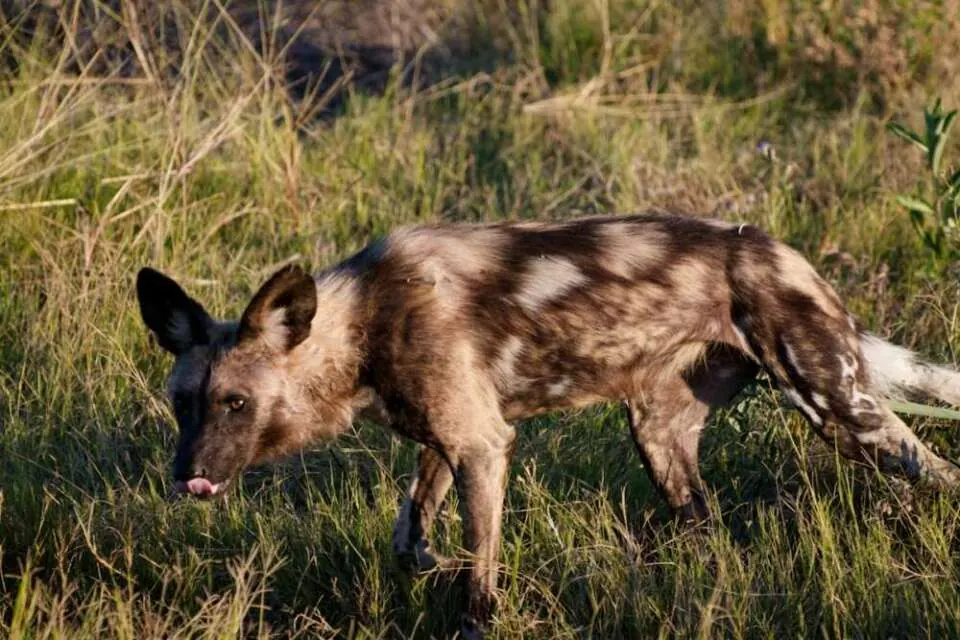
A 2026 study in Animal Behaviour examined hunting movements and effort in 13 packs across two ecosystems. Under the studied conditions, larger packs moved more and expended greater hunting effort, while not killing larger prey. The researchers interpreted this as evidence that prey depletion can reduce the benefits of hunting in larger groups.
This finding is more specific than saying that cooperation always makes hunting easier. The benefits depend on the resources available. It also does not mean that smaller packs are universally preferable: group size affects reproduction and other aspects of survival as well.
Protecting prey therefore belongs alongside protecting wild dogs. Our guide to what African wild dogs eat provides the diet context.
Are lions and hyenas responsible for their endangered status?
Lions can injure or kill wild dogs, and larger competitors can steal their prey. The 2025 IUCN assessment describes the pressure from lions and spotted hyenas. Avoiding these competitors can influence where wild dogs hunt and move.
Natural competition should be distinguished from added human pressures such as snaring, conflict and habitat damage. A pack can face both at once, but the presence of a competitor alone does not explain species-wide decline or justify removing other native carnivores.
Conservation needs to assess prey, competitors and human-caused losses together in each landscape.
Is climate change a threat to African wild dogs?
Evidence links temperature with wild dog demography, but observed relationships and future model predictions need to be kept separate.
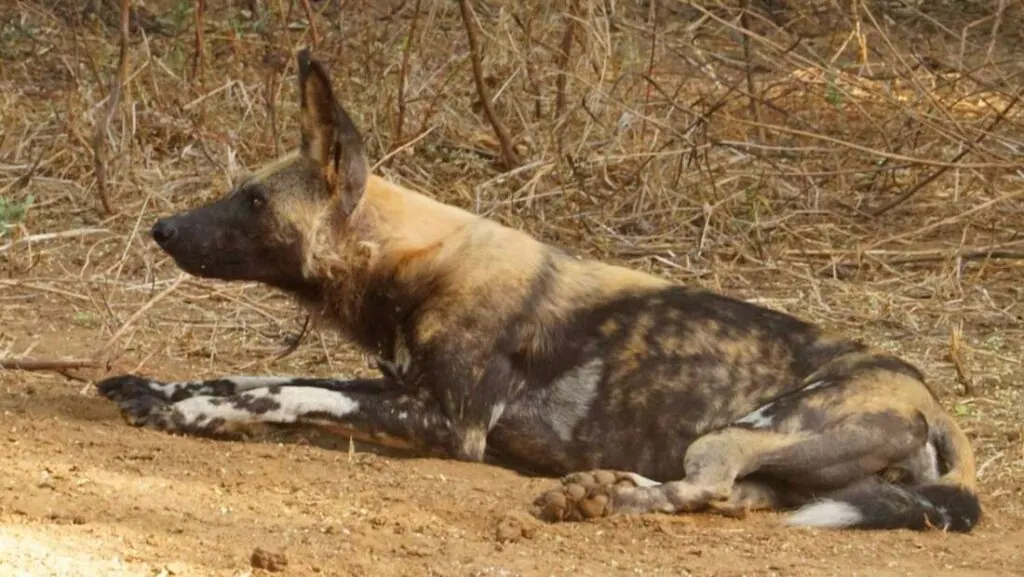
A 2017 study of high temperatures and reproductive success analysed long-term data from Botswana, Kenya and Zimbabwe. It associated hotter conditions with reduced reproductive performance and examined changes in foraging behaviour. The observations concern reproduction, rather than every possible effect of heat.
A later 2023 study in Global Change Biology used an individual-based model incorporating demographic responses to temperature. It predicted population collapse above a temperature threshold under the modelled conditions.
That result is a projection, not an observation that every wild dog population has already collapsed. It is also not a reliable calendar date for extinction across Africa. Its interpretation depends on the population data, demographic relationships and scenarios used.
A study published in April 2026 in Movement Ecology, using GPS data collected in Botswana from 2011 to 2018, examined a different question: whether temperature changed close encounters between predators. It found no evidence that wild dog–lion encounter probability or spatial overlap changed with temperature in the studied population. The wild dog analysis excluded denning periods. This result does not negate earlier reproductive findings; it shows why climate effects should be described by population, life stage and outcome.
Heat can interact with food availability and existing mortality pressures. Its effects need to be assessed locally alongside ongoing threats such as snares, conflict and habitat damage.
What is the biggest threat to African wild dogs?
Habitat loss and fragmentation are major underlying pressures, as described by the African Wildlife Foundation. They reduce usable space and increase exposure to other hazards. However, there is no single immediate cause of death that ranks first everywhere.
A disease outbreak may dominate losses in one period, while snares or conflict are more urgent elsewhere. The highest local priority depends on what is killing dogs, disrupting breeding or making movements unsafe.
The threats also reinforce one another. A corridor with suitable vegetation may still be dangerous if snaring remains intense, and a protected pack may still struggle if prey declines.
What can conservation do to help?
The most useful response matches an identified problem with a measurable outcome.
| Management focus | Example of an action to evaluate | Evidence of improvement to look for |
|---|---|---|
| Safer habitat connections | Protect or restore routes used by dispersers | Survival during movement and subsequent breeding |
| Livestock coexistence | Improve enclosures and incident response | Fewer verified losses and fewer retaliatory incidents |
| Snaring pressure | Patrol documented hotspots and respond to injured animals | Reduced snare encounters and repeat incidents |
| Disease | Establish surveillance and veterinary plans | Confirmed diagnoses, timely response and monitored outcomes |
| Prey availability | Protect prey and monitor their populations | Sustained food resources alongside pack performance |
| Local restoration | Carefully planned reintroduction with long-term follow-up | Survival, social stability and reproduction after release |
A recent example is the 2026 return of wild dogs to Matusadona National Park. African Parks reported two translocated packs, a soft-release process, GPS monitoring and community early-warning arrangements.
The release is a restoration milestone. Survival and reproduction over the following years will show whether it establishes a lasting local population.
Frequently asked questions
What is the main reason African wild dogs are endangered?
Habitat loss and fragmentation are major underlying pressures. Conflict, snares, roads and disease can then cause direct losses. The most urgent immediate threat differs between landscapes.
Are African wild dogs critically endangered?
Globally, African wild dogs are u003cstrongu003eEndangeredu003c/strongu003e, under the 2025 IUCN assessment. This species-wide classification should be distinguished from any regional assessment or local disappearance.
Why are African wild dogs killed by people?
Actual or suspected livestock losses can lead to deliberate killing. Dogs can also be caught accidentally in snares intended for other animals. Preventing both forms of loss requires livestock protection and safer habitat.
Are they endangered because they cannot hunt successfully?
No. Hunting ability cannot protect a pack against snare injuries, collisions, disease or persecution. A depleted prey base can also change the effort needed to obtain food.
Can domestic dogs spread disease to African wild dogs?
Domestic dogs can contribute to shared-pathogen risks, but a specific outbreak needs investigation. Their presence alone does not identify the source or route of infection.
Why are protected areas not enough on their own?
Wild dogs can travel outside reserves and disperse between landscapes. Their survival also depends on safe routes, prey and coexistence beyond protected boundaries.
Can African wild dogs recover?
Local restoration is possible, including through carefully planned reintroduction. Lasting recovery requires evidence of survival, reproduction and reduced threats over time, rather than release numbers alone.